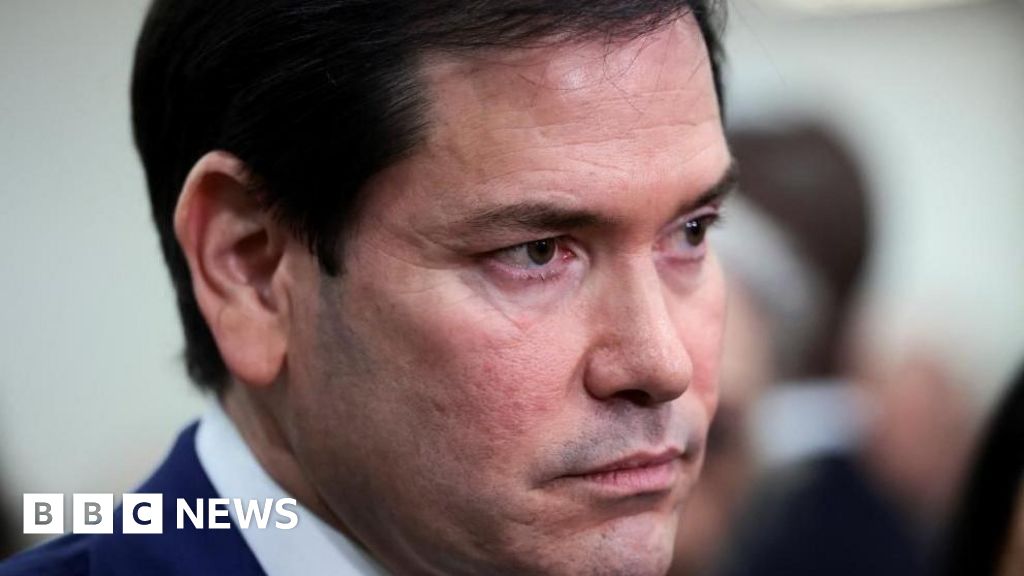
US Secretary of State Marco Rubio will meet with Denmark after White House statements that President Trump had considered options, including military force, to acquire Greenland, prompting Danish warnings that any attack would jeopardize NATO. European leaders issued a joint statement defending Danish and Greenlandic sovereignty while Trump aides publicly promoted acquisition, elevating diplomatic tensions and Arctic security risk that could widen geopolitical risk premia and pressure defense- and NATO-exposed assets.
Market structure: Geopolitical chatter around Greenland disproportionately benefits defense primes (Lockheed Martin LMT, Northrop Grumman NOC, RTX) and Arctic logistics/mining explorers (small-cap miners, shipping firms servicing polar routes), while tourism/airlines and Danish assets face headline risk. Short-term pricing power shifts toward U.S. defense contractors because procurement decisions can reallocate budgets within 3–12 months; mining/infrastructure upside is multi-year and capital-intensive. Cross-asset: expect a 3–7 day risk-off spike—USD and Treasuries bid, equities down 1–3% on headlines; oil could move +3–6% on conflict premium and gold +2–5% as safe haven. Risk assessment: Tail scenarios (invasion or NATO fracture) are low probability (<5%) but high impact—would trigger sanctions cycles, commodity shocks and >10% equity drawdowns in Europe. Immediate risk window is days; short-term (weeks–months) is uncertainty premium priced into defense contractors and FX; long-term (years) is Arctic resource access and capex cycles. Hidden dependencies include defense supply-chain bottlenecks (engines, semiconductors) and Congressional appropriations timing that materially affect revenue realization within 6–18 months. Key catalysts: White House statements, Danish/NATO diplomatic responses, and U.S. defense budget hearings. Trade implications: Direct tactical plays are to increase convexity to defense and safety assets: buy concentrated, time-limited exposure to LMT/NOC/RTX via calls or staged stock buys over 1–12 months; hedge with gold (GLD/GDX) and longer-duration Treasuries (TLT) for 1–3 months. Relative-value: long U.S. defense vs short airline travel (AAL, DAL) to capture reallocation of government vs consumer spend. Use options to control downside—buy puts on airlines and call spreads on defense. Contrarian angle: Consensus treats this as pure headline risk; institutional memory (Crimea 2014, Ukraine 2022) shows defense spending sustains beyond headlines—expect 10–25% multi-quarter revenue tailwinds for primes if Congress appropriates additional funds. However, risk of multilateral NATO procurement could shift some upside to European primes (BA.L, MBT.L) and compress U.S. margin expansion—avoid one-sided, long-only bets without monitoring funding bills. If market volatility overshoots (VIX +5–10 pts), tactical mean-reversion trades in beaten-up European cyclicals can be fruitful within 2–6 weeks.
AI-powered research, real-time alerts, and portfolio analytics for institutional investors.
Request DemoOverall Sentiment
moderately negative
Sentiment Score
-0.40
