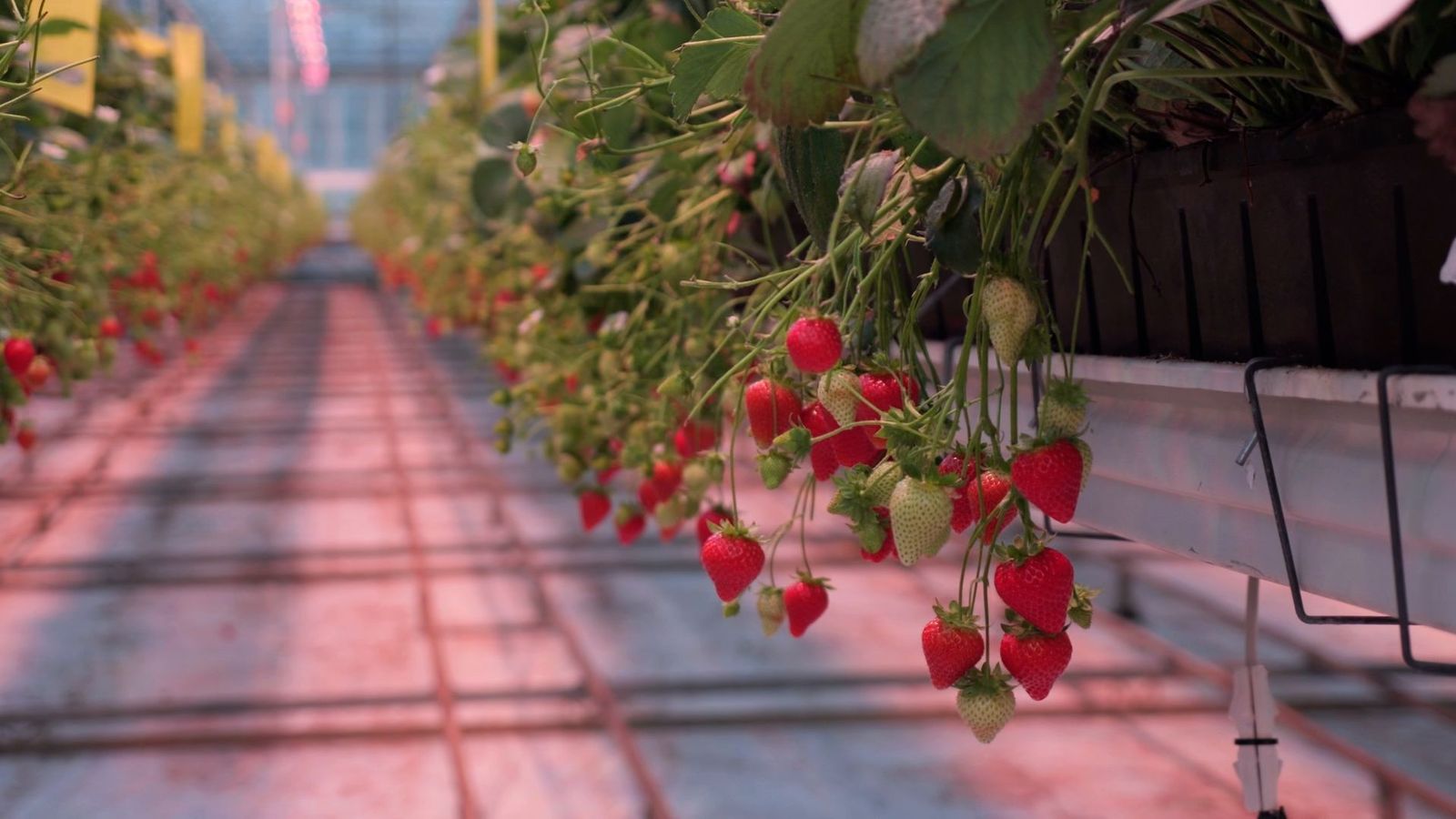
The Summer Berry is using LED lighting in 36,000 sq m of glasshouses in Chichester to produce commercially viable winter strawberries for the first time, supplying about 1.5 million punnets over the season, creating year‑round work for roughly 50 staff and reducing reliance on imports. While the technology and partial renewable power cut food miles and bolster domestic supply resilience, experts warn the large heating and lighting demands mean the carbon and cost outcomes hinge on the energy source—a salient point given the UK grows only about 16% of its fruit.
The Summer Berry is operating 36,000 square metres of glasshouses in Chichester using LED lighting to produce commercially viable winter strawberries, targeting about 1.5 million punnets over the season and providing year-round employment for roughly 50 people. Management attributes consistent berry sweetness, size and yield to artificial lighting that supplements low natural sunlight, and the site is partially powered by renewable energy with bees used for pollination.
Experts and the article highlight a key trade-off: while domestic year-round production cuts food miles and import reliance (the UK grows only about 16% of its fruit), reproducing summer conditions requires substantial heat and light, so carbon footprint and operating economics “hinge on the energy source.” This is the primary risk to the production model’s sustainability and cost profile.
Market impact is currently mild and cautiously positive: winter supply into supermarkets (including the Christmas window) could command retailer interest and improve supply resilience, but profitability depends on energy costs, the mix of renewables on-site, and whether consumers accept out-of-season domestic strawberries at commercial prices.
AI-powered research, real-time alerts, and portfolio analytics for institutional investors.
Overall Sentiment
mildly positive
Sentiment Score
0.28
