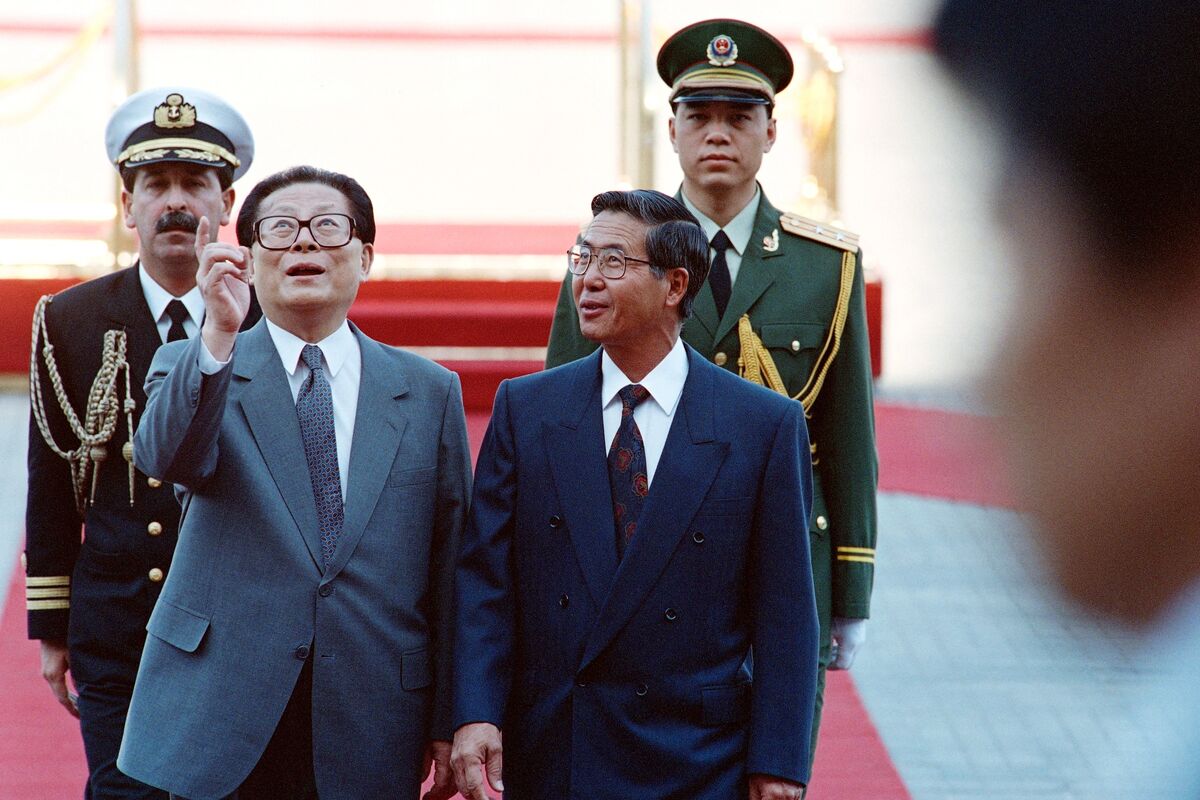
Keiko Fujimori, who narrowly won Peru’s presidential election, inherits a long-standing shift toward China: Alberto Fujimori’s 35-year-ago Beijing trip helped drive Peru’s broader Latin American realignment. The article frames this as a constraint on Donald Trump’s effort to reassert US dominance in the Western Hemisphere, suggesting policy reversal will be difficult. Overall, the outlook is cautiously negative for any rapid US-driven geopolitical pivot.
The market takeaway is less about Peru itself than about the ceiling on U.S. coercive power in regions where China already has embedded trade, financing, and political relationships. That matters because “re-shoring” and “friend-shoring” stories are often priced as if policy alone can redirect supply chains; in practice, capital stock and customer relationships move on multi-year cycles, not campaign timelines. The immediate equity read-through is modest, but the longer-term implication is that Latin American resource flows will keep gravitating toward the highest bidder, which is structurally supportive for China-linked commodity demand and for miners with low-cost export access.
For Trump-linked assets, the more relevant issue is narrative decay: headlines that showcase limited U.S. leverage undermine the premium on perceived geopolitical decisiveness. DJT is not a direct macro beneficiary of foreign-policy theater; if anything, a visible policy mismatch can compress the “Trump can move markets” reflex that occasionally lifts the name on election-related momentum. Near term, this is mostly sentiment, but into 1-3 months it becomes a positioning issue if investors keep extrapolating electoral rhetoric into policy deliverables.
The contrarian view is that the market may be underestimating how sticky China’s commercial footprint is in Peru’s mining and infrastructure ecosystem. If Washington’s push remains mostly rhetorical, the winner is not a broad EM basket but specific firms with pricing power over strategic minerals and logistics bottlenecks. The main falsifier is a concrete U.S. financing or trade package that changes project economics within the next quarter; absent that, the status quo likely persists for 6-18 months.
AI-powered research, real-time alerts, and portfolio analytics for institutional investors.
Request DemoOverall Sentiment
mildly negative
Sentiment Score
-0.20
Ticker Sentiment
