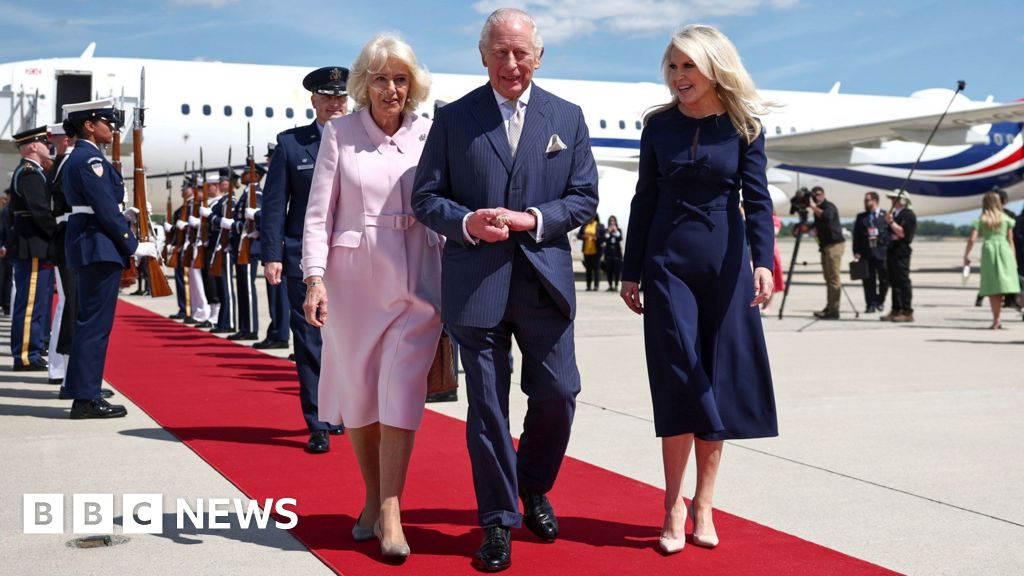
King Charles begins a four-day US state visit and is set to address Congress on Tuesday, urging defense of democratic values, reconciliation, and renewal of the US-UK partnership. The visit comes amid tight security following a Washington DC shooting and a backdrop of strained ties over Iran, while also highlighting diplomacy on trade, tariffs, and defense cooperation. Market impact appears limited, though the rhetoric may be watched for signals on transatlantic policy alignment.
The immediate market relevance is less about diplomacy and more about signaling: this is a coordinated attempt to stabilize the UK-US policy channel at a moment when trade, security, and tariff frictions are becoming more persistent. That matters most for sectors exposed to cross-Atlantic regulatory drift — defense primes, aerospace, and multinational industrials — because even small reductions in policy noise can tighten discount rates and support multiple expansion. The soft-power framing also suggests the UK is trying to preserve preferential access in future procurement and tariff negotiations, which is positive for firms with large UK-US supply chains.
The second-order read is that defense and security spending may become a cleaner political sell on both sides of the Atlantic. If the message lands, expect renewed rhetorical support for NATO, Ukraine resourcing, and domestic resilience infrastructure, which benefits companies with backlog-heavy exposure and long-cycle contract visibility. Conversely, any market enthusiasm should be tempered by the fact that state-visit optics rarely override the underlying push-pull between protectionism and fiscal constraints; the real catalyst will be whether this event is followed by concrete carve-outs, procurement approvals, or tariff relief within the next 30-90 days.
The most underappreciated angle is supply-chain normalization in agriculture and branded consumer goods. A tariff-free beef batch is small in economic terms, but it is a template for broader “managed trade” deals that can reduce input-cost volatility for importers and narrow pricing power for domestic producers. If that framework expands, UK exporters with US exposure and US retailers sourcing specialty goods could see modest margin tailwinds, while pure domestic substitutes face incremental competitive pressure.
The contrarian view is that the visit may be a short-lived sentiment boost if it masks deeper policy divergence. Markets may be overpricing the chance that symbolism translates into faster trade liberalization; in reality, the biggest risks are geopolitical shocks, domestic politics, and election-cycle rhetoric that can reverse any goodwill in weeks. For now, the setup favors tactical positioning around beneficiaries of lower policy friction rather than a broad beta-on UK-US relations trade.
AI-powered research, real-time alerts, and portfolio analytics for institutional investors.
Request DemoOverall Sentiment
neutral
Sentiment Score
0.05
