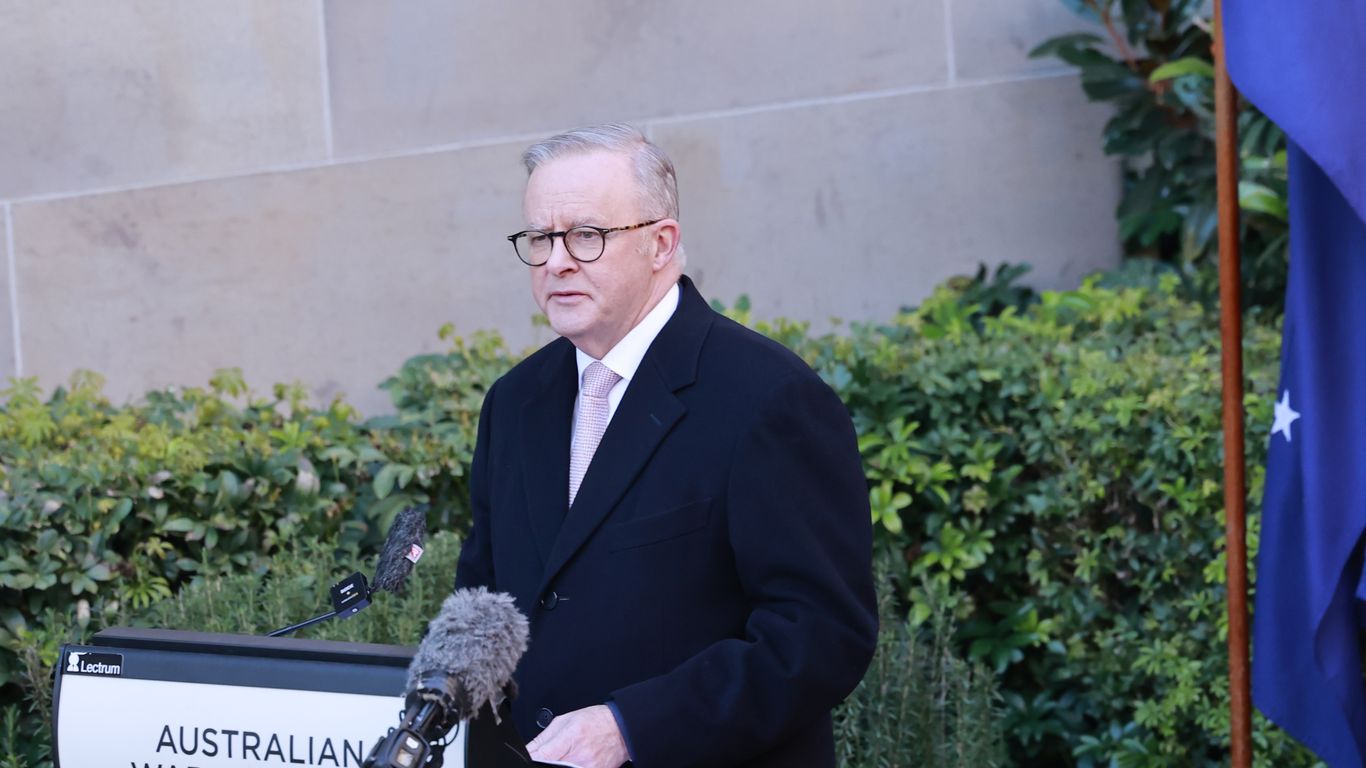
Australia has accused Iran of orchestrating antisemitic attacks on Australian soil, citing credible intelligence linking Iran's Revolutionary Guard Corps (IRGC) to the incidents. In response, Prime Minister Anthony Albanese announced the expulsion of Iran's ambassador and the suspension of Australia's Tehran embassy, marking an unprecedented diplomatic escalation. This move, coupled with Australia's intent to legislate the IRGC as a terrorist organization, signals a significant hardening of Canberra's stance against Tehran, potentially influencing geopolitical risk assessments and international engagement with Iran.
Australia has initiated a significant diplomatic and security escalation with Iran, citing credible intelligence from its security agency, ASIO, that Tehran orchestrated antisemitic arson attacks on Australian soil. The response includes the unprecedented expulsion of Iran's ambassador, the suspension of Australia's embassy in Tehran, and a legislative move to list Iran's Revolutionary Guard Corps (IRGC) as a terrorist organization. This action, based on ASIO's findings that the IRGC used a 'complex web of proxies' for attacks in Sydney and Melbourne, marks a material hardening of a Western-aligned nation's policy towards Iran. The event carries a strongly negative sentiment and a hawkish tone, contributing to the broader geopolitical risk landscape. While the direct market impact is assessed as moderate, it elevates the potential for further coordinated sanctions against Iran and adds a new dimension to tensions in the Middle East, potentially impacting assets sensitive to regional stability.
AI-powered research, real-time alerts, and portfolio analytics for institutional investors.
Overall Sentiment
strongly negative
Sentiment Score
-0.70
