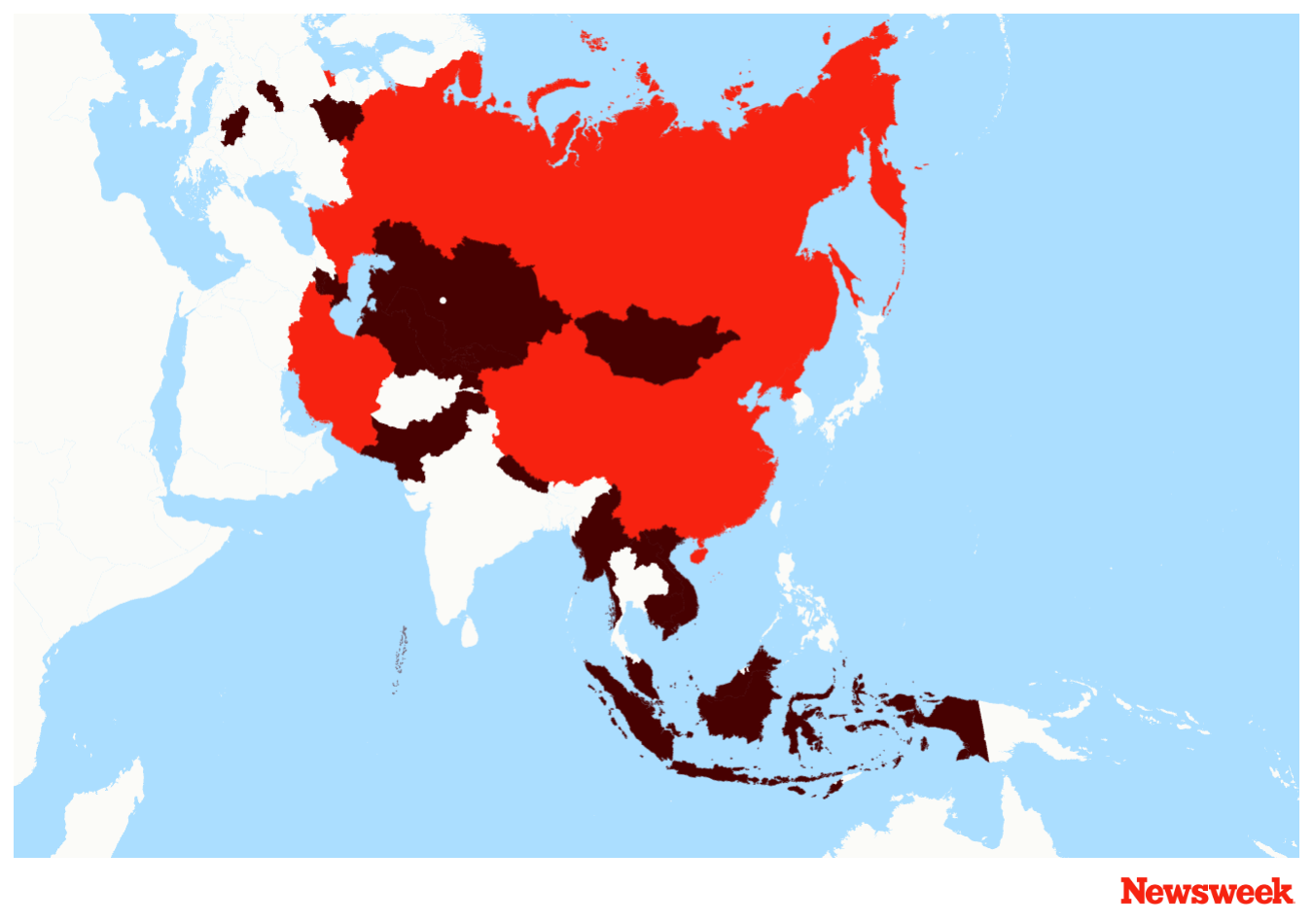
China's upcoming September 3 World War II commemoration will host the first-ever gathering of leaders from Russia, Iran, and North Korea, signaling a significant deepening of ties among these authoritarian states and a challenge to the U.S.-led global order. The event, which will also feature a display of new Chinese weaponry and an attendee list notably tilted towards non-democracies, underscores Beijing's growing geopolitical influence and the accelerating formation of a new 'Axis of Upheaval,' potentially impacting global stability and defense sector dynamics.
The upcoming September 3rd event in Beijing marks a significant geopolitical development, representing the first-ever joint public appearance of the leaders of China, Russia, Iran, and North Korea—a bloc termed the 'Axis of Upheaval.' This gathering at a military parade underscores a deliberate and deepening strategic alignment among these nations, unified by their opposition to the U.S.-led global order. The event's composition highlights a notable shift towards authoritarianism; analysis from the Asia Society think tank indicates that only six of the 26 expected national leaders govern democracies, a decrease from seven of 24 attendees in 2015. Furthermore, China's plan to use the parade to showcase 'new-generation' missiles, hypersonic systems, and submarine drones signals a military dimension to this alignment, not just a diplomatic one. The convergence carries a high market impact score (0.6), reflecting the potential for this bloc's formalization to increase global instability and reconfigure international security dynamics.
AI-powered research, real-time alerts, and portfolio analytics for institutional investors.
Request DemoOverall Sentiment
moderately negative
Sentiment Score
-0.50
