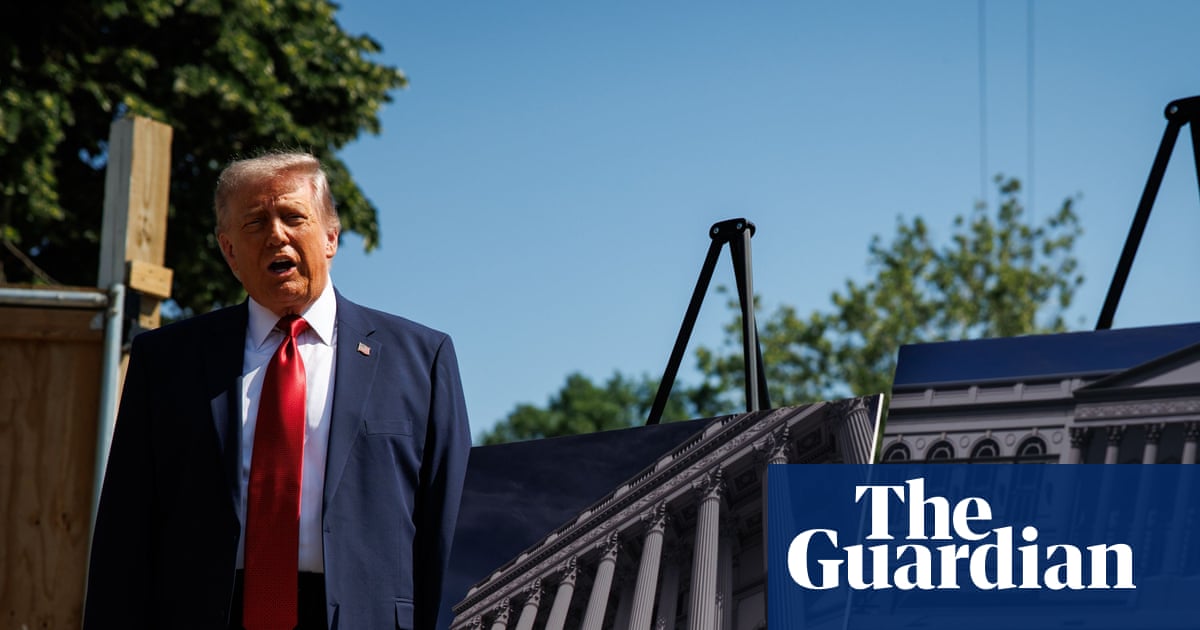
Senate Republicans are expected to drop a $1bn security funding proposal tied to Trump’s White House ballroom after backlash within their own party. The dispute complicates a roughly $70bn bill to restore ICE and border patrol funding ahead of the Memorial Day recess and November midterms. The ballroom project remains politically controversial and is also facing litigation in federal court.
The immediate market read-through for ICE is not operational but political: the funding fight raises the probability of a stop-start appropriations process, which is usually a modest positive for agencies and contractors that benefit from continued urgency around border enforcement. The larger second-order effect is that the coalition behind immigration spending looks less durable, so any incremental budget expansion now carries a higher probability of being diluted, delayed, or re-litigated in the House. That caps the near-term multiple expansion case for ICE and related defense-border services names, even if headline funding remains intact.
The more important catalyst is the midterm clock. As cost-of-living sensitivity rises, Republicans have an incentive to strip out high-visibility, low-popularity add-ons, which reduces tail risk of a clean win for Trump’s favored projects but also increases the odds of broader legislative paralysis. In practice, that means more volatility around weekly procedural votes than around final passage: the stock impact should be measured in days-to-weeks of uncertainty rather than a durable fundamental reset unless the bill actually fails or is significantly amended.
The contrarian angle is that the backlash itself may be bullish for ICE over a 3-6 month horizon. If lawmakers abandon the controversial attachment, the core enforcement funding becomes easier to pass on its own merits, and investors may ultimately prefer a cleaner bill over a politicized package that risks defeat. The market may be overpricing reputational drag on ICE while underpricing the possibility that removing the distraction improves passage odds and reduces execution risk for the agency’s budget priorities.
For litigation-sensitive exposure, the legal overhang around the ballroom itself is a reminder that politically contested capital projects can stay frozen in court even when leadership is supportive. That matters more for contractors and donors than for ICE directly, but it reinforces a broader theme: headline-driven funding announcements can reverse quickly if they become election liabilities. The setup favors tactical trading over strategic positioning until the Senate vote clears and the House reaction is visible.
AI-powered research, real-time alerts, and portfolio analytics for institutional investors.
Request DemoOverall Sentiment
mildly negative
Sentiment Score
-0.15
Ticker Sentiment
