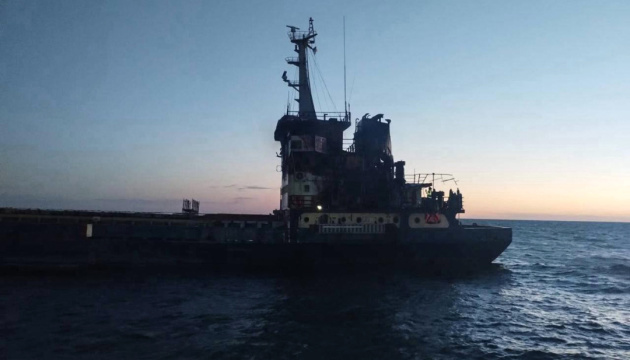
Russia attacked three foreign merchant vessels in the Black Sea overnight, causing fires aboard all three ships and minor injuries to two crew members on a Vanuatu-flagged vessel. Ukraine said the maritime corridor remains operational despite the strikes, but the incident highlights ongoing risks to Black Sea shipping and regional cargo transport.
This is less a one-off headline than evidence of a sustained maritime risk premium forming in the Black Sea. The important second-order effect is not the damaged hulls themselves, but the growing probability that insurers, charterers, and cargo owners start repricing transit through the corridor on a rolling basis, which can raise effective freight costs even if throughput remains technically open. That typically shows up first in spot freight, then in longer-term contract renegotiations, and only later in visible volume declines.
The most exposed assets are any shipping or agricultural supply chains that rely on “good enough” continuity rather than guaranteed security. Expect incremental rerouting, slower vessel turnarounds, and more expensive war-risk coverage to pressure margins for dry bulk and product tankers with Black Sea exposure, while benefitting alternative corridors, adjacent ports, and defense-adjacent surveillance/drone countermeasure suppliers. The real economic damage may be to seasonal export timing: even brief disruptions around loading windows can create a catch-up surge followed by a void, which is more disruptive to rates and working capital than the average headline suggests.
Catalyst-wise, the key horizon is days to weeks for another strike to reinforce the premium, versus months if a credible escort/air-defense regime materially lowers perceived transit risk. The contrarian point is that markets may underreact because physical tonnage losses appear small; however, maritime insurance is path-dependent, and once underwriters tighten terms, the cost shock can persist long after headlines fade. If incidents continue, the move is more likely to broaden into food logistics, tanker rates, and defense procurement than into a direct commodity price spike.
From a positioning standpoint, this favors buying optionality on shipping risk rather than outright directional commodities. The higher-probability trade is to own beneficiaries of elevated security spend and alternative logistics, while fading Black Sea-exposed transport margins on any strength. If attacks escalate further, the trade becomes less about vessel damage and more about a persistent friction tax on regional trade flows.
AI-powered research, real-time alerts, and portfolio analytics for institutional investors.
Request DemoOverall Sentiment
strongly negative
Sentiment Score
-0.65
