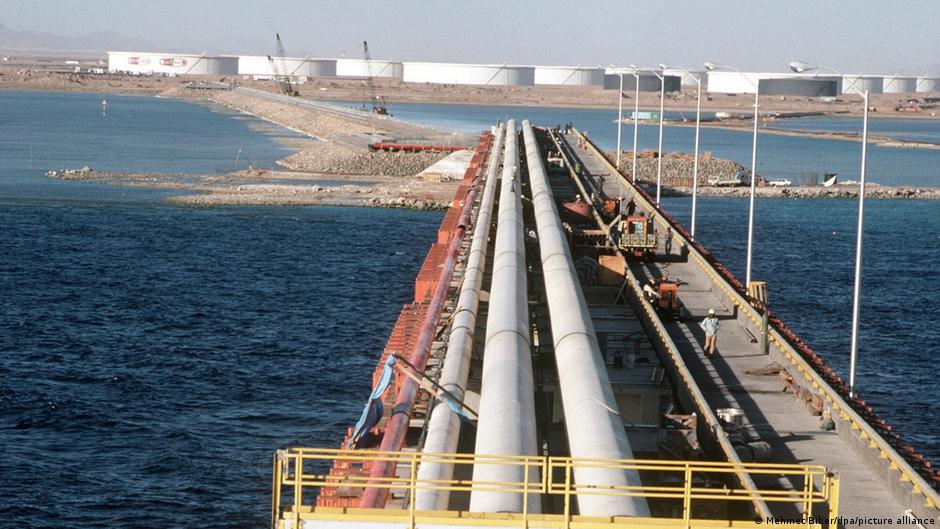
The Iran war has shut the Strait of Hormuz, stranding hundreds of oil and gas tankers and threatening roughly 15 million barrels per day of crude flows. Gulf states are accelerating bypass infrastructure, including Saudi Arabia’s 7 million bpd pipeline, the UAE’s 1.8 million bpd link to Fujairah, and Iraq’s proposed $4.6 billion Basra–Haditha line that could eventually carry up to 3 million bpd. The crisis is a major geopolitical shock with broad implications for oil markets, shipping, and regional infrastructure spending.
The market is underpricing how asymmetric the bypass buildout is: the near-term benefit goes to Gulf exporters with existing spare corridor optionality, while the longer-dated consequence is a structural widening between “pipeline-secure” barrels and landlocked or negotiation-dependent barrels. That creates a two-tier regional supply stack where Saudi/UAE incremental exports become materially more resilient than Kuwait/Qatar/Bahrain, which should translate into lower outage risk premia for the former and a persistent discount for the latter’s exposed production profile.
The second-order winner is not just oil supply security but capital allocation across the Gulf. If governments treat this as a national security capex cycle, expect a multi-year wave of spend in steel pipe, pumps, compressors, port handling, and rail freight systems—benefiting industrials and EPC contractors more than upstream operators. The more important macro effect is that every incremental bypass barrel reduces the probability that a future Hormuz shock forces an all-out supply scramble, which compresses tail-risk pricing in Brent options even if spot crude stays elevated.
The key risk is execution time: the market may extrapolate too quickly from announced plans to usable capacity. Large projects with cross-border routing, sovereign coordination, and right-of-way issues are still a 2-4 year story, so the supply cushion remains thin through the next 6-12 months and any renewed disruption would still cause a sharp spike. The contrarian angle is that the current policy push may be enough to cap the long-dated geopolitical premium, even if it cannot prevent near-term price dislocations.
Consensus is likely too focused on headline oil price strength and not enough on relative-value dispersion across equity and credit exposures to Middle East trade routes. The more interesting trade is not outright long energy beta, but long firms that monetize infrastructure substitution and short names whose cash flows depend on uninterrupted Gulf shipping and port throughput. In other words, this is a winner-picks-winner / loser-loses-loser setup rather than a simple crude bull thesis.
AI-powered research, real-time alerts, and portfolio analytics for institutional investors.
Request DemoOverall Sentiment
moderately negative
Sentiment Score
-0.35
