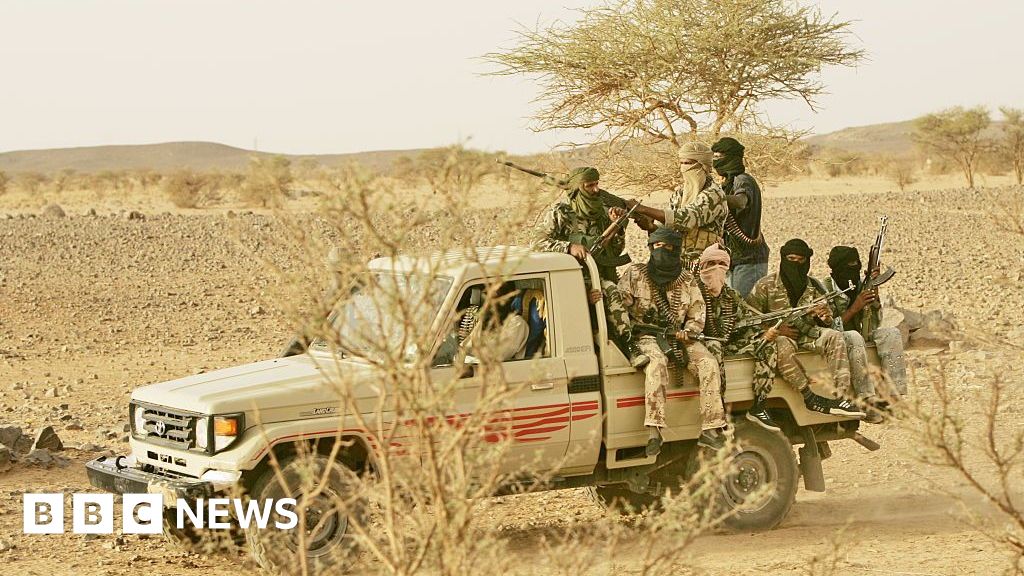
Islamist militants linked to al-Qaeda have imposed a strategic blockade on critical trade routes in western Mali, particularly in the Kayes region, disrupting the supply of fuel and food and burning commercial vehicles. This represents a significant shift by the militants towards economic asphyxiation, threatening Mali's stability, isolating its capital Bamako, and impacting the country's vital gold production. The escalating insurgency also poses a substantial risk to regional trade and stability, with potential spillover effects on neighboring countries and challenging the Malian government's authority.
A strategic shift by the al-Qaeda-linked group JNIM has escalated the insurgency in Mali, moving from military confrontation to a campaign of 'economic asphyxiation' by blockading key trade corridors. The blockade targets the Kayes region, a critical logistics hub responsible for approximately 80% of the country's gold production and the primary route for imports from Senegal and Mauritania. This has already resulted in localized fuel price increases of around 10% and electricity cuts in the capital, Bamako. The Malian military's response, which initially downplayed the threat as an 'information war,' has so far failed to fully secure these routes, indicating a potential erosion of state control and increasing sovereign risk. The disruption has significant regional implications, directly threatening the $1.4 billion in annual exports from Senegal to Mali and raising concerns about the insurgency's westward expansion, thereby amplifying geopolitical risk across the Sahel.
AI-powered research, real-time alerts, and portfolio analytics for institutional investors.
Request DemoOverall Sentiment
strongly negative
Sentiment Score
-0.85
