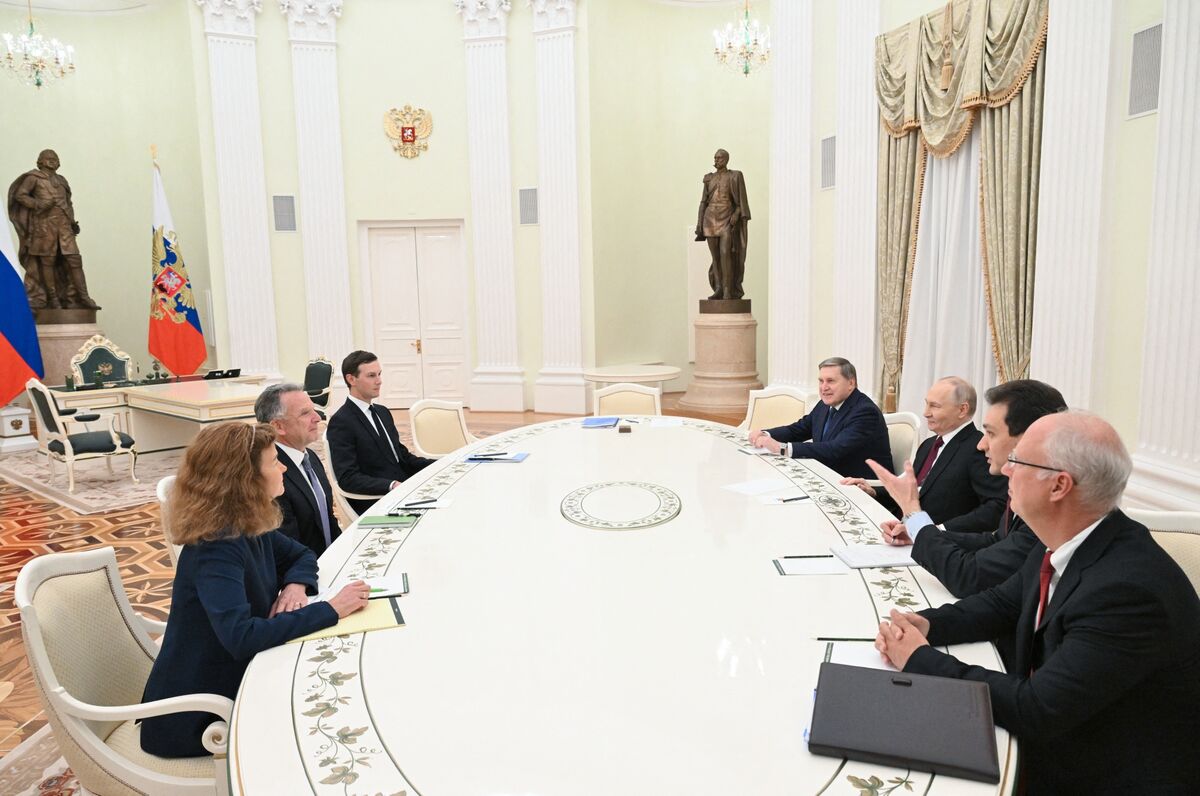
US and Ukrainian negotiators reported agreement on a “framework of security arrangements” and discussed necessary deterrence capabilities as part of talks aimed at ending the war with Russia, while also reviewing recent US engagements with Russia. The outcome signals incremental diplomatic progress but leaves substantive negotiations ongoing, implying limited near-term market impact while preserving upside risk should talks advance materially toward a durable ceasefire.
Market structure: A US-Ukraine framework that keeps negotiations alive but not settled favors defense primes (LMT, NOC, RTX) and cybersecurity (PANW, FTNT) because governments will fund deterrence capabilities and sustain procurement cycles; heavy equipment and materials (CAT, NUE) gain if reconstruction expectations firm. It mutes immediate tail-risk premium in oil and safe-haven assets, so expect modest downward pressure on crude and gold and a reallocation into cyclicals and defense over weeks–months.
Risk assessment: Key tail risks include a talks breakdown that would spike oil >20% in days, re-impose market-disruptive sanctions, or see US Congressional funding blocked (a 30–60 day electoral/political risk window). Hidden dependencies: munitions/semiconductor supply chains and US budget appropriations; if either bottlenecks, defense revenue could be pushed out 6–24 months despite headline agreements.
Trade implications: Favor conviction-weighted long positions in large-cap defense (2–3% positions in LMT and NOC, 6–18 month horizon) and a 1–2% position in CAT for reconstruction exposure over 12–36 months. Trim integrated energy exposure (reduce XOM/CVX by 2–4%) and establish a 3-month put spread on USO to capture a potential 8–15% downside if risk premium compresses; buy duration (2–3% TLT/IEF) if 10y breaks below 3.75%.
Contrarian angles: Market consensus prices sustained high defense spend but underestimates that political fatigue could cap commitments — favors large-scale suppliers over small-cap contractors. Conversely, reconstruction and materials demand may be underpriced; consider selective longs in steel (NUE) and cement (VMC) for a 12–36 month asymmetric upside if multi-year rebuild funding materializes.
AI-powered research, real-time alerts, and portfolio analytics for institutional investors.
Request DemoOverall Sentiment
neutral
Sentiment Score
0.10
