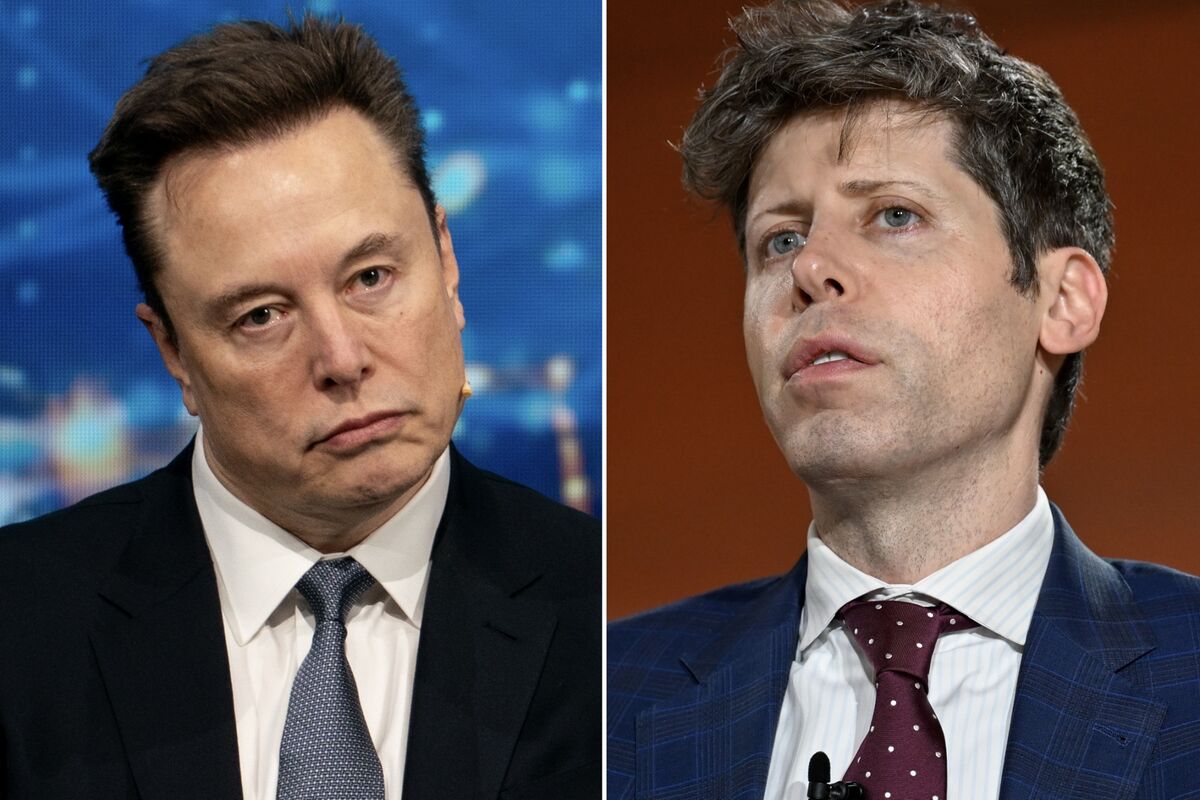
A US District Judge overseeing the Musk-OpenAI case told Elon Musk and OpenAI executives to curb social media posts after Musk’s public jabs on X ahead of opening statements. The article centers on courtroom conduct and litigation management rather than any new legal ruling or financial disclosure. Market impact appears limited, with the main relevance being governance and headline risk for OpenAI and Musk-linked businesses.
This is less about courtroom theater and more about forcing both sides into a cleaner information regime. When a governance dispute becomes a social-media contest, the downside is that reputational volatility starts to leak into settlement optics, employee morale, and partner confidence; the judge’s intervention is effectively a push to reduce that optionality. In the near term, that likely helps the incumbent platform side more than the insurgent: OpenAI benefits if the narrative shifts from personality-driven conflict to product execution, while Musk loses a low-cost amplifier that can shape public perception without legal discovery.
The second-order effect is on AI capital allocation and partnership risk, not just the litigation headline. Large enterprises and cloud partners are increasingly sensitive to governance stability, so anything that makes OpenAI look more institutionally controlled is mildly positive for distribution and hiring retention over the next 1–3 months. Conversely, if Musk escalates outside the courtroom, the market may interpret it as a signal that settlement odds are falling, which increases the probability of a longer legal overhang and a wider governance discount on any OpenAI-adjacent exposure through Microsoft, partners, and private-market comparables.
The contrarian read is that social-media restraint is not bullish by itself; it may simply mean the public narrative premium gets stripped out, revealing that the real catalyst is still discovery and judicial scheduling. If the case drags, the short-term winner may be the broader AI complex because headline risk decays while model adoption continues, making this a time-decay event rather than a fundamental one. The overdone move would be to treat a quieter courtroom as a resolution signal — it is more likely a volatility compression signal until a substantive ruling or settlement emerges.
For trading, the cleanest edge is in volatility, not direction. Any escalation that revives Musk’s public campaign would be a short-term risk-off event for governance-sensitive AI names, but a judge-enforced pause should modestly suppress event risk premia over the next few weeks.
AI-powered research, real-time alerts, and portfolio analytics for institutional investors.
Request DemoOverall Sentiment
neutral
Sentiment Score
-0.05
