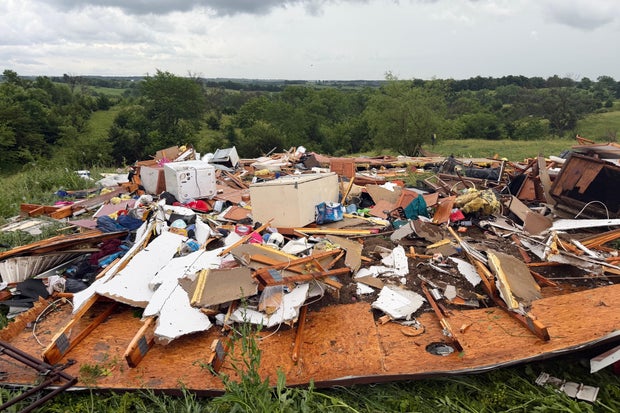
Severe storms and tornadoes across the Midwest killed at least 1 person in Iowa, knocked out power to more than 221,000 customers in Illinois, and damaged buildings across roughly 11 cities in Illinois and Wisconsin. The outbreak also forced ground stops at Chicago O'Hare and Midway, contributing to more than 1,000 delayed or canceled flights, while survey crews assess damage that could take several days. A separate heat wave is now affecting the East Coast, with Philadelphia declaring a heat health emergency and record temperatures possible in multiple cities.
This is not a generic weather headline; it is a concentrated shock to the Midwest’s physical logistics stack. The first-order hit is to local utilities and airports, but the second-order effect is the more tradable one: a multi-day disruption window where restoration crews, insurance adjusters, materials suppliers, and freight operators all become bottlenecks at the same time. That creates a brief but meaningful earnings tailwind for companies with heavy storm-response exposure, while anything dependent on just-in-time regional flow faces higher expediting costs and service slippage.
The power-restoration path matters more than the storm itself. If outage restoration lands in the 48-72 hour range, the market will treat this as transitory and likely over-discount the operational drag on utilities and transport; if it stretches into the workweek, the issue shifts from lost load to equipment replacement, overtime labor, and claims severity. The more interesting angle is that rural tornado damage often inflicts disproportionate capex on agriculture-adjacent infrastructure, which can quietly tighten local inventories of building materials, trailers, transformers, and repair crews for weeks.
The contrarian view is that the market may overreact on airlines and underreact on insurers and rebuild beneficiaries. Flight cancellations are visible, but they are typically deferred revenue, not lost demand; by contrast, property and casualty names with Midwest catastrophe exposure can see a real reserve read-through over the next 1-2 quarters if survey teams expand the damage footprint. The heat wave overlay raises the probability that utility crews remain stretched, increasing the chance of delayed restoration costs and secondary outages even after the tornado headline fades.
AI-powered research, real-time alerts, and portfolio analytics for institutional investors.
Request DemoOverall Sentiment
strongly negative
Sentiment Score
-0.55
