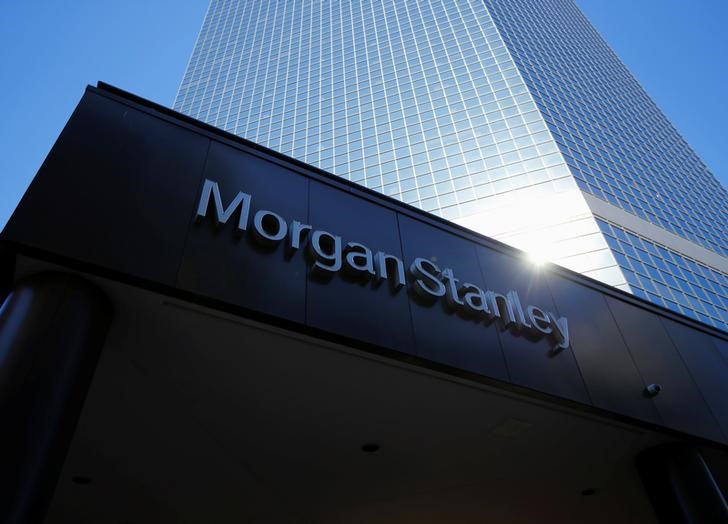
Morgan Stanley initiated Arxis Inc. with an overweight rating and a $44 price target, while Goldman Sachs and Baird also turned positive with $53 and $55 targets, respectively. The company’s IPO raised about $1.3 billion gross, with $1.22 billion in net proceeds and $746 million used to repay term-loan borrowings. Arxis has risen about 25% since its April 16 IPO and trades at $35.10, implying roughly 19x Morgan Stanley’s 2028 EBITDA estimate and 33.8x current EV/EBITDA.
The market is effectively re-rating Arxis as a scarcity asset in aerospace/defense, but the more important second-order effect is that the IPO proceeds materially de-lever the balance sheet before the company has to prove its growth algorithm. That reduces near-term equity risk and can support a higher multiple than a typical industrial IPO, especially given the unusually high proprietary-content mix that should keep gross margins sticky through cycle noise. The analyst coverage cluster is also self-reinforcing: once multiple bulge-bracket firms anchor valuation off forward EBITDA, the stock can stay “expensive” longer than fundamentals alone would justify.
The real underappreciated loser is not a named competitor but the broader pool of late-stage private industrials with similar defense exposure: ARXS sets a new public comp for high-quality niche hardware, which can compress private-market expectations and make future IPOs harder to clear at premium valuations. For listed peers, this can create a short-term sympathy bid if investors rotate into “compounder defense” names, but it also raises the bar for any company without the same margin structure or proprietary content.
The key risk is that the current setup is vulnerable to a post-IPO digestion phase over the next 4-12 weeks. The stock has already moved meaningfully above IPO price, so any commentary about order timing, integration of acquired assets, or margin normalization could trigger multiple compression faster than earnings revisions can catch up. Longer term, the valuation only works if organic growth stays above industrial GDP and the company continues to translate M&A into EPS accretion rather than just revenue scale.
Contrarian view: the market may be over-discounting the durability of the premium because the narrative is still anchored on addressable markets, not proof of through-cycle free cash flow. If the next few quarters show any hesitation in defense booking cadence or industrial end-market softness, the stock could rerate from “quality compounder” to “just another post-IPO story” very quickly. In that scenario, the downside is likely more about multiple compression than fundamental deterioration.
AI-powered research, real-time alerts, and portfolio analytics for institutional investors.
Request DemoOverall Sentiment
moderately positive
Sentiment Score
0.62
Ticker Sentiment
