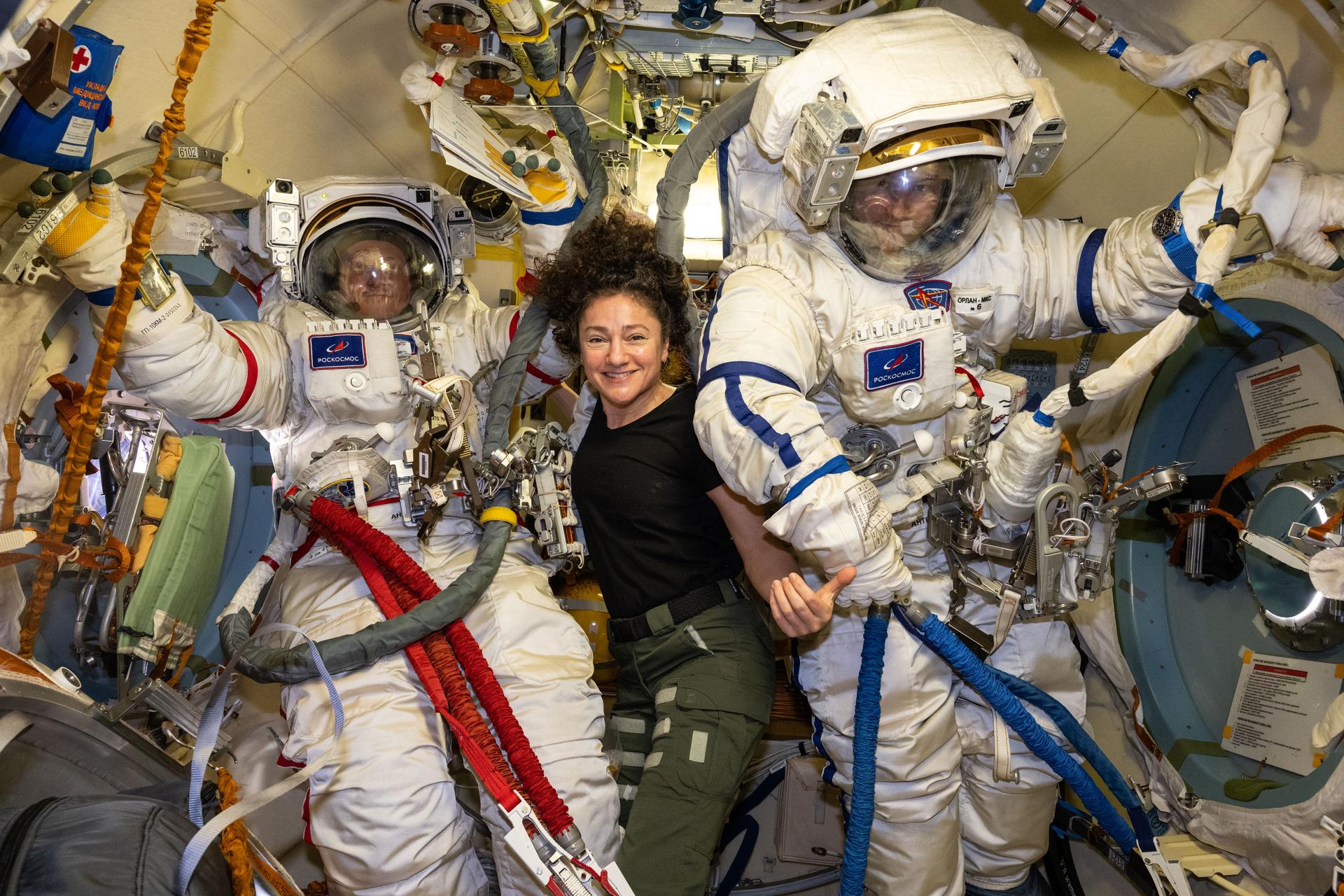
The article is largely a factual update on International Space Station operations, including installation of the CLARREO Pathfinder and Space Test Program-Houston 11 payloads and preparations for a May 27 spacewalk. Crew activities also include biotechnology and botany experiments, such as cartilage cell growth, clover seed photography, and alfalfa cultivation in microgravity. The upcoming EVA will install a solar radiation experiment and retrieve the Biorisk container, but the news is routine and not market-moving.
This is a quiet but important signal that orbital infrastructure is shifting from pure transport/logistics toward a higher-value research and validation layer. The near-term beneficiaries are less the headline launch names and more the picks-and-shovels ecosystem: robotics, lab automation, payload integration, compact sensing, and data verification. The second-order effect is that each successful external install de-risks future ISS-adjacent commercial station procurement, which should modestly improve the probability of follow-on orders for vendors with flight heritage in autonomy, environmental sensing, and biohardware.
The biotech and botany work matters because microgravity is becoming a low-cost stress test for long-duration human systems, not just a science demo. If these experiments continue to show usable signal, they strengthen the case for downstream commercial applications in cell culture, regenerative medicine, and controlled-environment agriculture. That favors companies selling enabling tools more than pure research IP; in particular, firms with exposure to lab consumables, sterile fluid handling, compact imaging, and space-validated biotech workflows are likely to see a slow-burn demand tailwind over the next 12-24 months.
The contrarian point is that investors often overestimate the immediacy of monetization from orbital science. Most payloads still translate into incremental rather than step-function revenue, and the market tends to fade these announcements unless they lead to funded missions, procurement awards, or defendable IP. The real catalyst is not the experiment itself, but a visible bridge from demonstration to repeatable commercial adoption; absent that, the trade is more about sentiment around innovation than near-term earnings.
Risks are mostly executional and timing-based: a spacewalk issue, payload anomaly, or delayed data readout could push perceived value out by quarters. Over a days-to-weeks horizon, this is noise; over months, it can determine whether space-robotics suppliers get a second contract or just a press release. The market should also be careful not to extrapolate any single biology result into a broader life-sciences re-rating until there is reproducibility and a path to ground-based commercialization.
AI-powered research, real-time alerts, and portfolio analytics for institutional investors.
Request DemoOverall Sentiment
neutral
Sentiment Score
0.05
