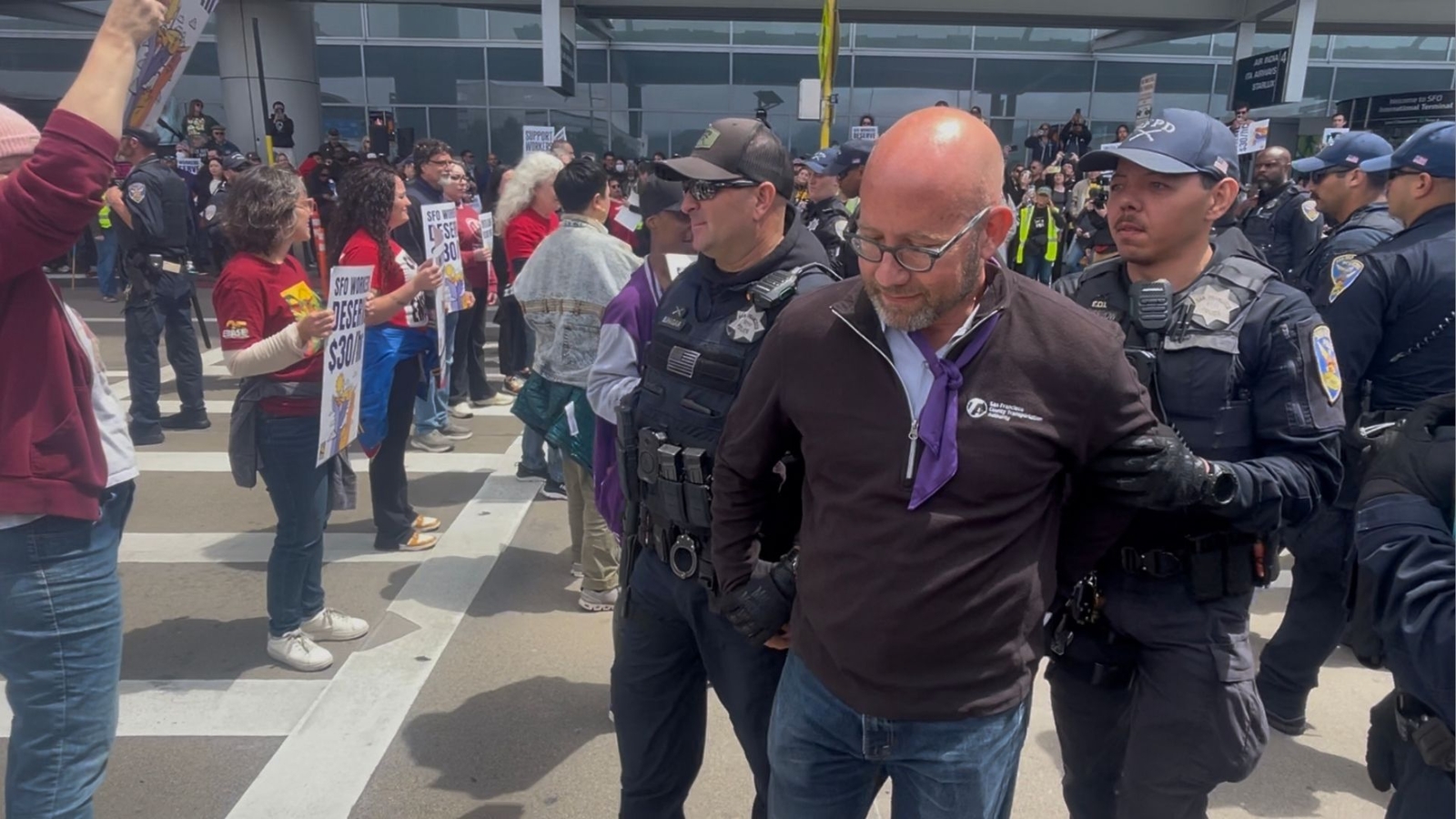
Hundreds of unionized workers at San Francisco International Airport blocked access to the International Terminal departure drop-off area during a May Day rally, disrupting vehicle flow and redirecting traffic to other areas. The protest is tied to ongoing SEIU-USWW contract talks and a push for higher minimum salaries, with baggage handlers, wheelchair agents, aircraft cleaners and catering crews involved. Domestic terminals were unaffected, and traffic was later reduced to one lane.
This is a near-term operational risk, not a thesis-breaker, but it matters because airport throughput is a high-fixed-cost system where even short-lived access constraints can create outsized queueing and missed connections. The immediate losers are the airport operator and adjacent travel-demand beneficiaries that rely on smooth international flows; the second-order effect is higher friction for airlines with tight turn times and premium-heavy international schedules, where a modest number of disrupted drops can cascade into rebooking and customer-service costs.
The more interesting read-through is to ground transport and airport-adjacent commerce: rideshare, taxi, parking, and concession traffic can see temporary mix shifts rather than outright demand loss. If disruptions persist beyond a day, the pain compounds through airline IRROPs, baggage delays, and crew positioning, which can spill into the next morning bank and disproportionately hit carriers with weaker operational buffers. The domestic/international split also matters: domestic traffic being unaffected limits the macro significance, but it concentrates the disruption on longer-haul itineraries where recovery is slower and customer dissatisfaction is more expensive.
Consensus will likely treat this as a one-day nuisance, which is probably correct unless negotiations broaden. The underappreciated risk is labor normalization: even small concessions can raise wage benchmarks for other airport contractors, creating an expense floor across the ecosystem over the next 6-12 months. That is a second-order margin headwind for airport service vendors and potentially for the airport authority if labor friction becomes recurrent and forces higher service costs or capex to reduce bottlenecks.
AI-powered research, real-time alerts, and portfolio analytics for institutional investors.
Request DemoOverall Sentiment
mildly negative
Sentiment Score
-0.15
