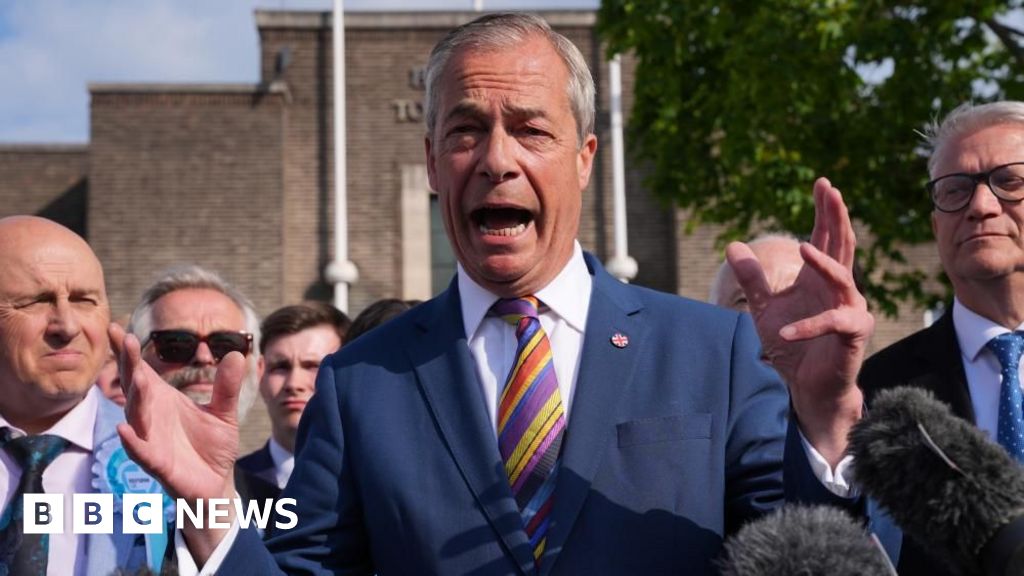
Reform UK said it won hundreds of seats, took control of more councils in England, and captured its first London borough in Havering, with Nigel Farage calling it a "truly historic shift" in British politics. The party also gained control of councils including Barnsley, Wakefield, Sunderland and Gateshead, while a projected national vote share put Reform at 26% ahead of the Greens (18%), Labour (17%), the Conservatives (17%) and the Liberal Democrats (16%). The results point to a stronger-than-expected electoral showing for Reform, though the article is primarily political rather than market-moving.
This is less a one-night local election story than evidence of a durable fragmentation of the UK voter coalition, which matters for asset pricing because it raises the probability of policy volatility, coalition drift, and weaker signaling value from Westminster polling. The market implication is not an immediate growth shock, but a higher premium for assets exposed to UK consumer confidence, public-sector labor relations, and local-service delivery where procurement and planning decisions can become less predictable over the next 6-18 months.
The second-order effect is on the Conservative Party’s path back to power: if Reform continues to siphon anti-incumbent and anti-establishment votes, the centre-right vote becomes structurally split, making a hung parliament or minority government a more persistent baseline. That tends to compress the expected policy range for domestically oriented UK equities because neither major party can count on a clean mandate; sectors reliant on stable regulatory follow-through, housing supply reform, and infrastructure execution should trade with a higher discount rate.
The most interesting market read-through is sentiment rather than fundamentals: this kind of result usually lifts volatility around UK political headlines without immediately changing earnings. The more vulnerable areas are mid-cap domestics tied to discretionary spend and municipally influenced activity; the more resilient are multinationals earning dollars and euros. If the trend persists into national polling over the next few months, it becomes a positioning event for sterling and UK duration, not just a protest-vote narrative.
Contrarian view: the consensus may be overestimating how quickly local momentum converts into general-election seats. Protest parties often peak in low-salience contests and then face strategic voting, leadership scrutiny, and message dilution under first-past-the-post; the gap between vote share and seats can stay wide for years. That means the better trade is not a blanket bearish UK bet, but selective hedging of domestic UK exposure against a stable-to-slightly-bullish stance on export earners and quality large caps.
AI-powered research, real-time alerts, and portfolio analytics for institutional investors.
Request DemoOverall Sentiment
mildly positive
Sentiment Score
0.15
