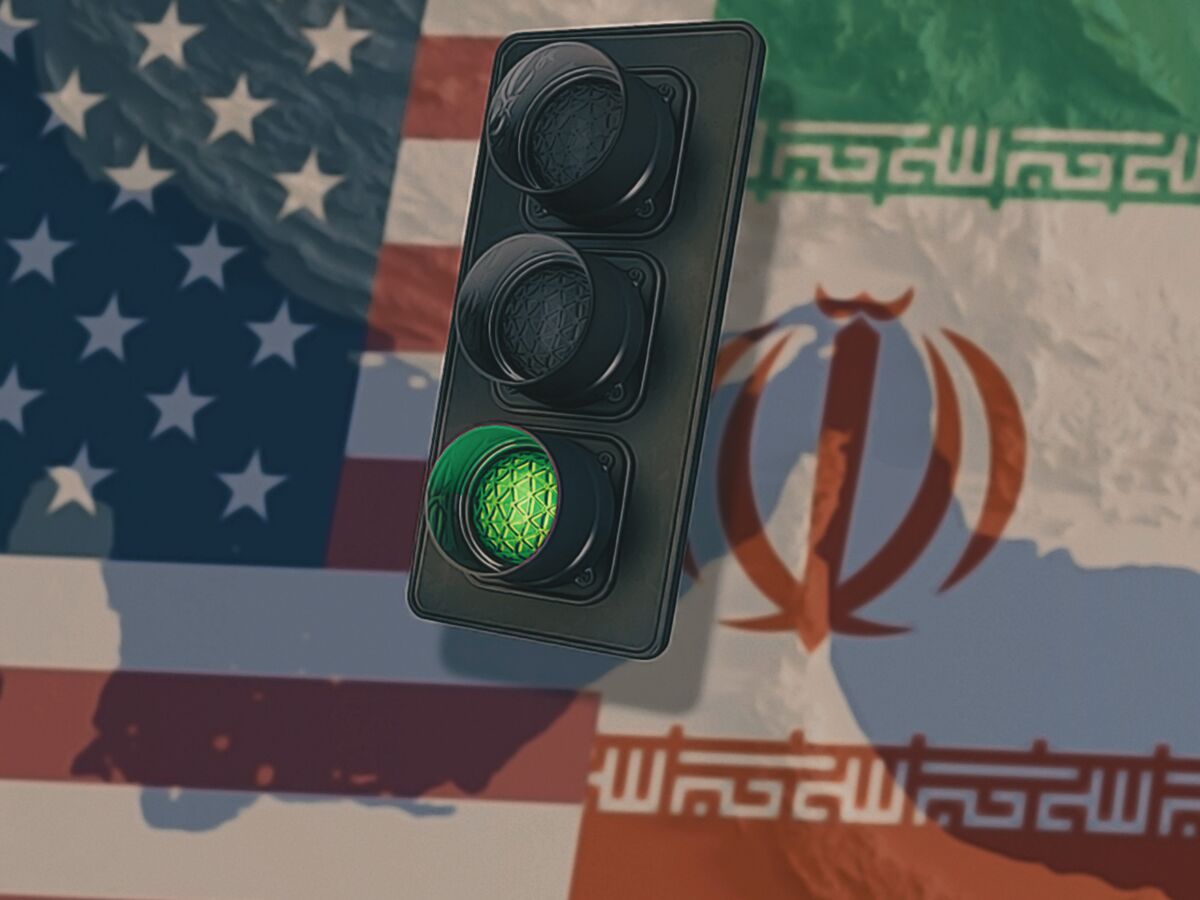
Trump said the Strait of Hormuz will be completely open by Friday, while oil prices fell on hopes of easing disruption risk in a key energy chokepoint. G7 meetings are set to focus on AI risks in the financial sector, and Anthropic is preparing talks with Trump officials on foreign access limits to its advanced models. India’s May trade deficit narrowed to $28.21 billion, with exports up 18% to $45.20 billion and imports up 20.6% to $73.41 billion.
The market is treating this as a near-term de-escalation, but the bigger signal is that energy risk premium is now a policy variable, not a pure physical one. That matters because even if flows normalize, the discount rate on Gulf supply risk should not fully reset: traders will fade headlines faster, but refiners, shippers, and insurers will demand a structural buffer until there is signed, observable enforcement. The first-order move is lower crude; the second-order move is a wider dispersion between spot-sensitive refiners and upstream producers with hedging programs.
The more interesting trade is not direction in oil but volatility. A soft reopening headline compresses prompt barrels, yet any delay, ambiguity in the memorandum, or mismatch between rhetoric and implementation would reprice front-month crude much more violently than the outright level suggests. That makes the next 1-3 weeks attractive for long gamma in energy rather than a simple directional short, especially because geopolitical headlines can reverse a 5-8% move in hours while fundamentals barely change.
On AI, the policy overhang around foreign access is a quiet positive for a small set of U.S.-only compute, model, and cybersecurity beneficiaries. If the administration pushes restrictions, the market should start discounting a bifurcation: domestic leaders with protected distribution and enterprise trust get a relative multiple premium, while globally exposed AI names face slower monetization and more compliance drag. The risk is that this turns into a broad-sector de-risking if financial-sector AI controls widen to model-risk and data-governance constraints, which would hit adoption timelines more than capex budgets.
India’s trade data is less about the headline deficit and more about import intensity staying elevated despite strong exports. That supports the view that any growth impulse is still leakier than consensus expects: energy demand, industrial input imports, and supply-chain restocking can keep the current account vulnerable if oil rebounds. The short-term upside is for cyclical importers and industrials if the peace deal sticks; the downside tail is that a crude re-spike quickly overwhelms the modest improvement in trade balance and pressures INR-sensitive assets.
AI-powered research, real-time alerts, and portfolio analytics for institutional investors.
Request DemoOverall Sentiment
neutral
Sentiment Score
-0.05
