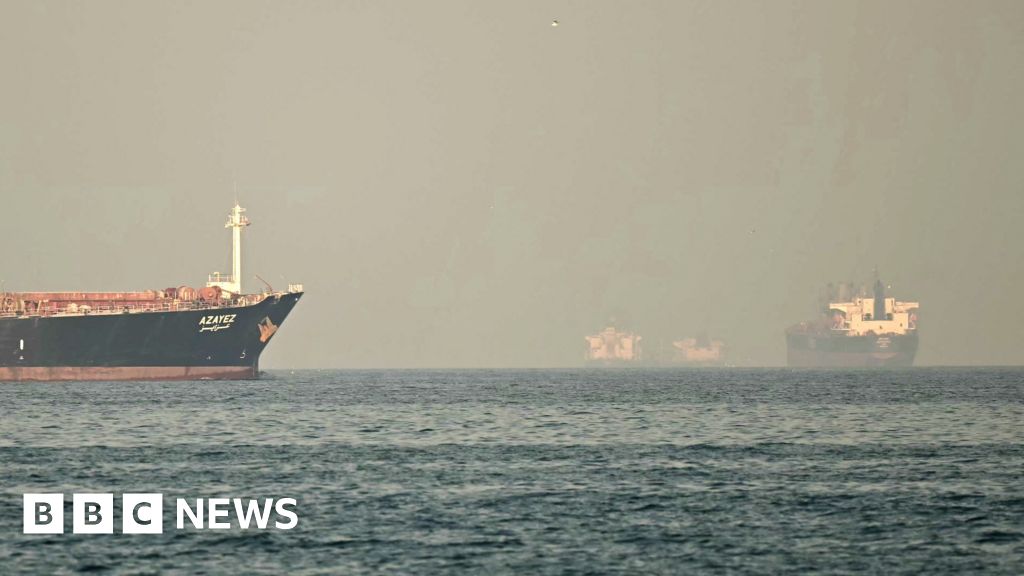
Two vessels were struck near the Strait of Hormuz amid escalating Iran-US-Israel strikes, and Iran has warned ships not to transit the chokepoint that carries roughly 20% of global oil and gas. International shipping has largely halted at the strait entrance with about 150 tankers anchored and insurers sharply raising costs; Maersk is rerouting ships around the Cape of Good Hope. Over-the-counter Brent trades have jumped roughly 10% to near $80/bbl and some analysts warn prices could exceed $100 if the disruption persists; OPEC+ agreed a modest 206,000 b/d output increase to help cushion markets. The incident poses material near-term upside risk to oil prices and meaningful operational and insurance stress to shipping and energy-related trades.
Market structure: Immediate winners are upstream oil producers and commodity traders (short-term pricing power); losers include container carriers, airlines, and refiners facing reroute/freight-cost shocks. Expect oil supply risk premium to add $10–30/bbl within weeks if Strait remains contested; OPEC+ spare capacity (≈2–3 mb/d) can blunt but not eliminate spikes above $100/bbl if chokepoint closures last >2–6 weeks.
Risk assessment: Tail scenarios include a protracted closure causing global oil flows to be rerouted for months, oil >$150/bbl, runaway inflation and equity drawdowns; counter-tail is decisive US naval protection reopening route within 7–14 days capping upside. Hidden dependencies: tanker insurance/war-risk premia, Suez reroute days (+7–12 days), and fuel-cost passthrough to freight rates; these amplify second-order inflation and supply-chain bottlenecks.
Trade implications: Expect commodity vols to rise, USD to strengthen, core govt yields to rise (sell-off as inflation fears mount) and gold to rally as haven; credit spreads for logistic firms widen. Use liquidity windows now to establish hedges: energy long via ETFs/futures, defense/insurer longs, short cyclical transport and airline exposure, and reduce duration in fixed income for 1–3 month horizon.
Contrarian angles: Consensus assumes persistent closure; a rapid US-led protection scenario would see mean reversion in oil and shipping premiums — a low-cost convex play is to buy limited-cost OTM puts on XLE/USO after initial pop. Historical parallels: 2019 short disruptions (tankers/attacks) caused short-lived spikes (4–8 weeks) then mean-reversion once alternate routing and strategic releases occurred, so size positions for 1–3 month outcomes, not permanent regime change.
AI-powered research, real-time alerts, and portfolio analytics for institutional investors.
Request TrialOverall Sentiment
strongly negative
Sentiment Score
-0.70
