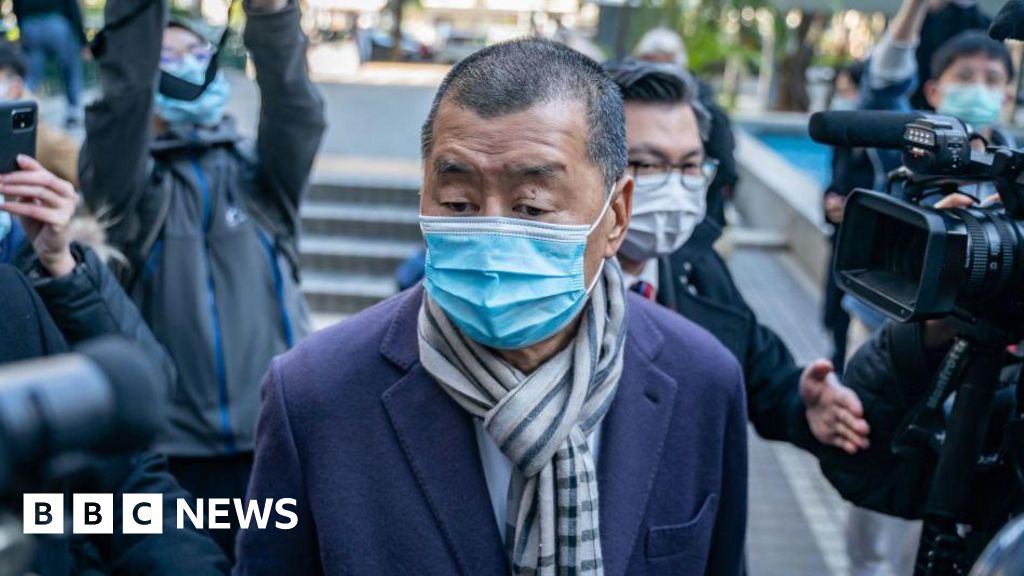
Hong Kong media tycoon Jimmy Lai successfully appealed and had his 2022 fraud convictions—related to alleged illegal subletting of Apple Daily office space—quashed by the Court of Appeal, but remains incarcerated after a separate 20-year sentence under the national security law. Lai, detained since 2020 and founder of the pro-democracy Apple Daily (shuttered in 2020), faces ongoing health concerns and supporters view his prosecutions as political persecution; the case has drawn criticism from the UK and US and underscores elevated political and legal risks for Hong Kong’s rule-of-law and investment climate.
Market structure: This ruling increases political-legal tail risk for Hong Kong’s independent media, small caps and landlord/SME segments while favoring large mainland-linked blue chips and state-favored sectors that benefit from policy certainty. Expect a near-term widening in risk premia: 2–4% extra discount to HK small-cap valuations vs. large caps over the next 1–3 months, squeezing margins for advertising, local retail and property-exposed firms. Cross-asset: bid for USD/USTs and gold is likely on risk-off; HKD liquidity/short-term HIBOR may spike if capital exits accelerate.
Risk assessment: Tail risks include further national-security prosecutions, targeted sanctions, or accelerated delistings (low probability, high impact) that could trigger a 15–30% repricing in the most exposed names over 3–12 months. Immediate (days) effect = volatility spike; short-term (weeks/months) = measurable outflows (0.5–2% AUM from HK funds); long-term = structural shift of IPO flow to Shanghai/Shenzhen reducing HK primary market by an estimated >30% over 2–4 years. Hidden dependency: ETF/ETF-authorized participant liquidity and custody risk could cause outsized NAV dislocations.
Trade implications: Tactical hedges (1–3 month HSI put spreads) and portfolio rebalancing into US duration (TLT/USTs) and gold (GLD) are favored over outright long HK exposure. Relative value: short EWH (iShares MSCI Hong Kong) vs. long 0700.HK (Tencent) or BABA for selective resilience; expected alpha window 3–12 months if volatility persists. Entry signals: implement within 1–2 weeks; trim if HSI implied vol falls >5 vol points or policy clarification reduces legal uncertainty.
Contrarian angle: Consensus treats Hong Kong as uniformly toxic; that overstates contagion — state-linked and systemically important financial names are likely to receive support, creating mispricings in beaten-down small caps (20–40% oversold vs. fundamentals). Historical precedent (2019 unrest) shows large rebounds within 12–18 months once capital controls/corporate support appear; risk is that Beijing accelerates consolidation, which could re-rate select large caps positively over 12–36 months.
AI-powered research, real-time alerts, and portfolio analytics for institutional investors.
Request TrialOverall Sentiment
moderately negative
Sentiment Score
-0.45
