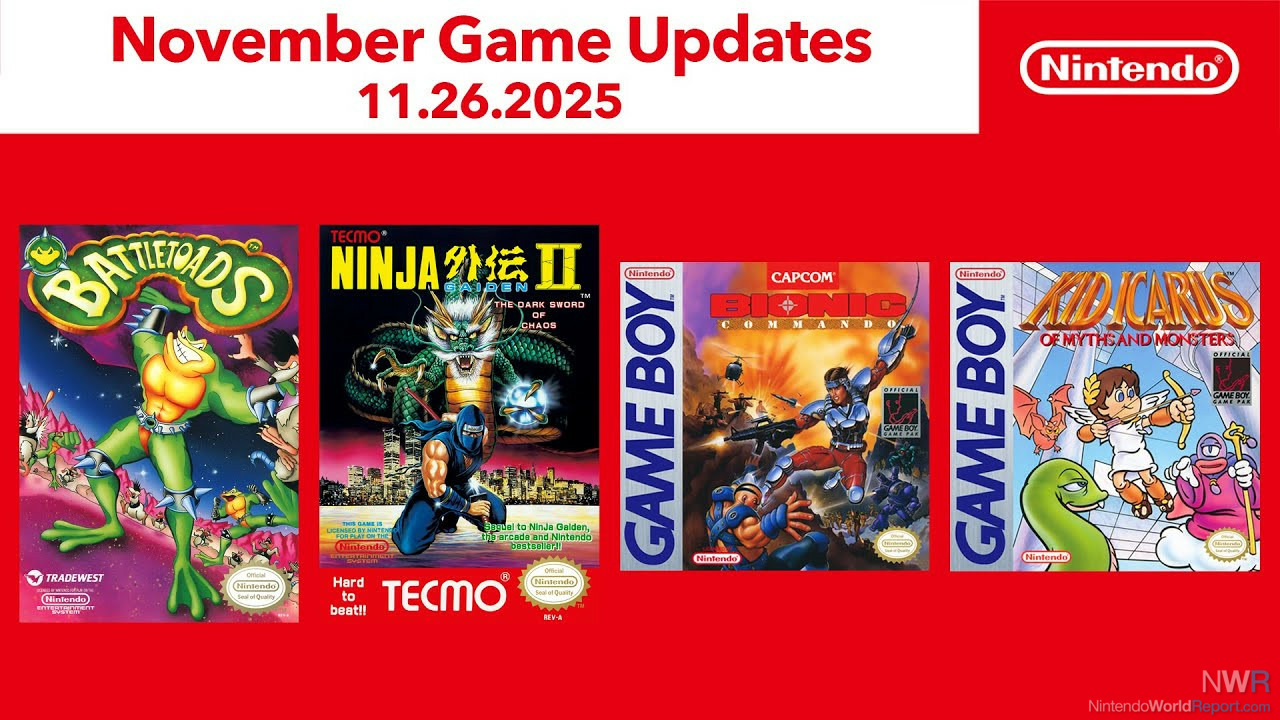
Nintendo updated its Nintendo Switch Online libraries for base subscribers, adding two NES titles (Ninja Gaiden II: The Dark Sword of Chaos and Battletoads) and two Game Boy titles (Kid Icarus: Of Myths and Monsters and Bionic Commando). Several of the additions are notable as first-time re-releases on Nintendo platforms or the first re-release ever, which may modestly support subscriber engagement and content value but is unlikely to have a material impact on Nintendo's near-term financials or market performance.
Market structure: This release is a low-cost, high-engagement content push that accrues to Nintendo (platform owner) — marginal revenue comes from retention/ARPU uplift in Nintendo Switch Online rather than unit hardware sales. Direct winners: Nintendo’s digital/subscription revenue line; losers: marginal sellers of physical retro cartridges and one-off re-release bundles. Competitive dynamics shift only slightly in Nintendo’s favor vs. Sony/MSFT on subscription stickiness; expect at most a mid-single-digit uplift to subscriber growth rates over 1–2 quarters if followed by more catalog cadence.
Risk assessment: Tail risks are licensing/partner disputes (e.g., cross-licensing with IP holders) or regulatory scrutiny of platform bundling—each low probability but capable of compressing digital margins if escalated. Immediate effect (days): small engagement bumps; short-term (weeks–months): measurable sub growth and ARPU uplift (+0.5–2% range plausible); long-term (quarters–years): incremental reinforcement of a recurring-revenue mix that can modestly expand valuation multiples if sustained. Hidden dependencies include marketing cadence (Nintendo Direct) and UX discoverability; catalysts: Directs, subscription price moves, and any MSFT licensing announcements.
Trade implications: The information justifies tactical, not thematic, exposure to Nintendo’s digital economics rather than broad gaming cyclicals. Use modest-sized, time-limited positions to capture subscription momentum while limiting earnings/console-cycle risk. Cross-asset impacts are negligible; expect no meaningful move in FX/bonds absent larger corporate news.
Contrarian angles: Consensus will underweight the value of low-cost catalog refreshes; a sequence of these releases can compound retention and justify a valuation re-rate (think +3–8% equity re-rating over 6–12 months if subscriber trends accelerate). Conversely, the market often overreacts to single-content drops; avoid paying up for permanent upgrades — wait for a demonstrable subscriber inflection or repeat cadence before scaling exposure.
AI-powered research, real-time alerts, and portfolio analytics for institutional investors.
Request DemoOverall Sentiment
neutral
Sentiment Score
0.10
