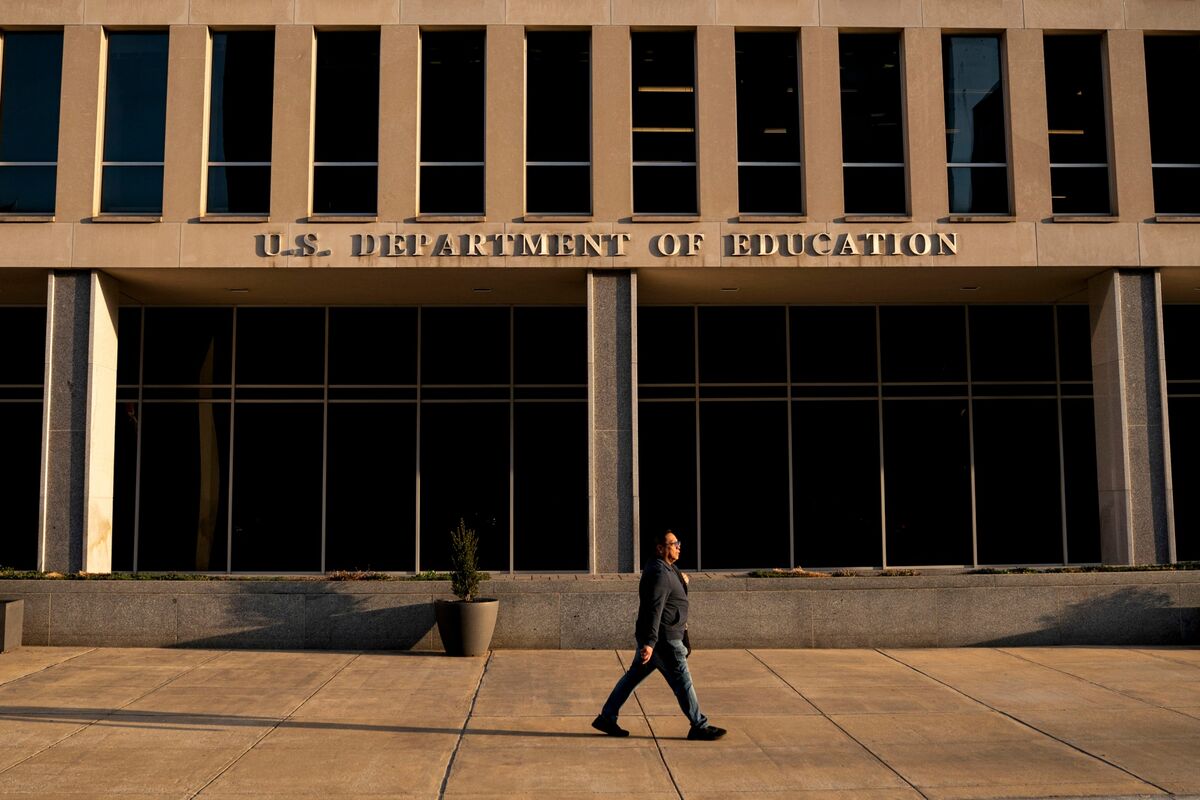
With the Supreme Court reportedly allowing the move, President Donald Trump has aggressively pursued the dismantling of the Department of Education, which he labeled a 'bloated and radical bureaucracy.' His administration has already cut roughly half the department's staff and terminated billions in grants and contracts, with an executive order further directing Education Secretary Linda McMahon to facilitate its complete closure. This signals a profound shift in federal education policy and funding.
The Trump administration is actively pursuing the dismantlement of the U.S. Department of Education, a policy shift with significant fiscal and sector-specific implications. Citing the department as a 'bloated and radical bureaucracy,' the administration has already implemented substantial measures, including a 50% reduction in staff and the termination of billions of dollars in grants and contracts. This action is reinforced by an executive order directing the department's closure, reportedly sanctioned by a Supreme Court decision. The move signals a profound redirection of federal fiscal policy away from centralized education funding. While the overall market impact is rated as moderate, the direct consequences for entities reliant on federal education revenue streams are severe, creating significant headwinds for the education sector and its associated service providers.
AI-powered research, real-time alerts, and portfolio analytics for institutional investors.
Request DemoOverall Sentiment
moderately negative
Sentiment Score
-0.40
