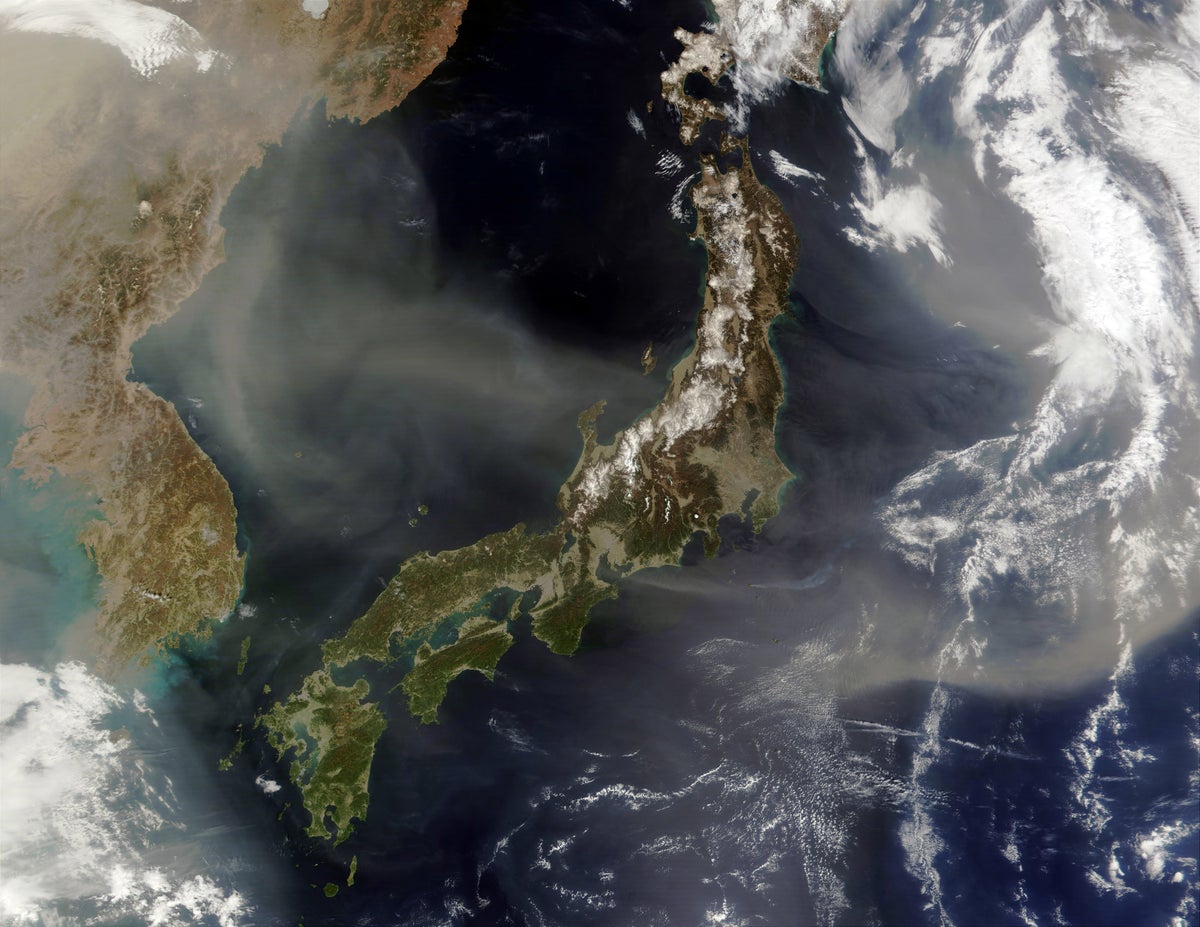
Japan’s 2011 Tohoku-Oki earthquake caused nationwide ground movement of up to 5-6 millimeters, with researchers attributing the slip to ScS seismic waves bouncing off Earth’s core. The study identifies a previously unrecognized earthquake hazard that could trigger delayed slip minutes after the main shock. While scientifically important, the article is primarily research-focused and does not describe an immediate market-moving event.
The investable implication is not that earthquakes got bigger, but that the loss distribution for critical infrastructure is fatter than models currently assume. The market’s default approach to seismic risk is still event-local: asset hardening, proximity to fault lines, and direct ground motion. This result introduces a system-wide, delayed trigger channel that could force a re-rating of utilities, telecom, transportation, and nuclear operators in Japan and any other core-adjacent seismic region.
Second-order, the biggest beneficiary is not reconstruction spend but the diagnostics stack: GNSS, satellite geodesy, early-warning software, and resilient networking vendors. If regulators accept that damaging motion can arrive minutes after the main shock, operators will need higher-frequency positioning, automatic shutoff logic, and fault-tolerant control systems rather than just stronger buildings. That shifts capex from one-time physical reinforcement toward recurring monitoring, data subscriptions, and edge automation.
The near-term market reaction is likely muted because the event is rare and the study is backward-looking, but that is exactly where the opportunity sits. The catalyst path is a follow-on paper, a Japanese regulatory review, or a smaller but more operationally relevant trigger event that tests whether this mechanism matters outside the Tohoku case. If that happens, names exposed to seismic downtime without layered sensing could underperform over months, while infrastructure-tech vendors could see multiple expansion over 1-2 years.
The contrarian view is that investors may overstate this as a broad new catastrophe risk when it is more likely a tail-process issue requiring specific geologic alignment. That means the trade is less about blanket shorting Japan and more about separating software/monitoring winners from hard-asset operators with weak redundancy. The mispricing is probably in the low-beta infrastructure names that trade as if their downtime risk ends when shaking stops.
AI-powered research, real-time alerts, and portfolio analytics for institutional investors.
Request DemoOverall Sentiment
neutral
Sentiment Score
0.00
Ticker Sentiment
