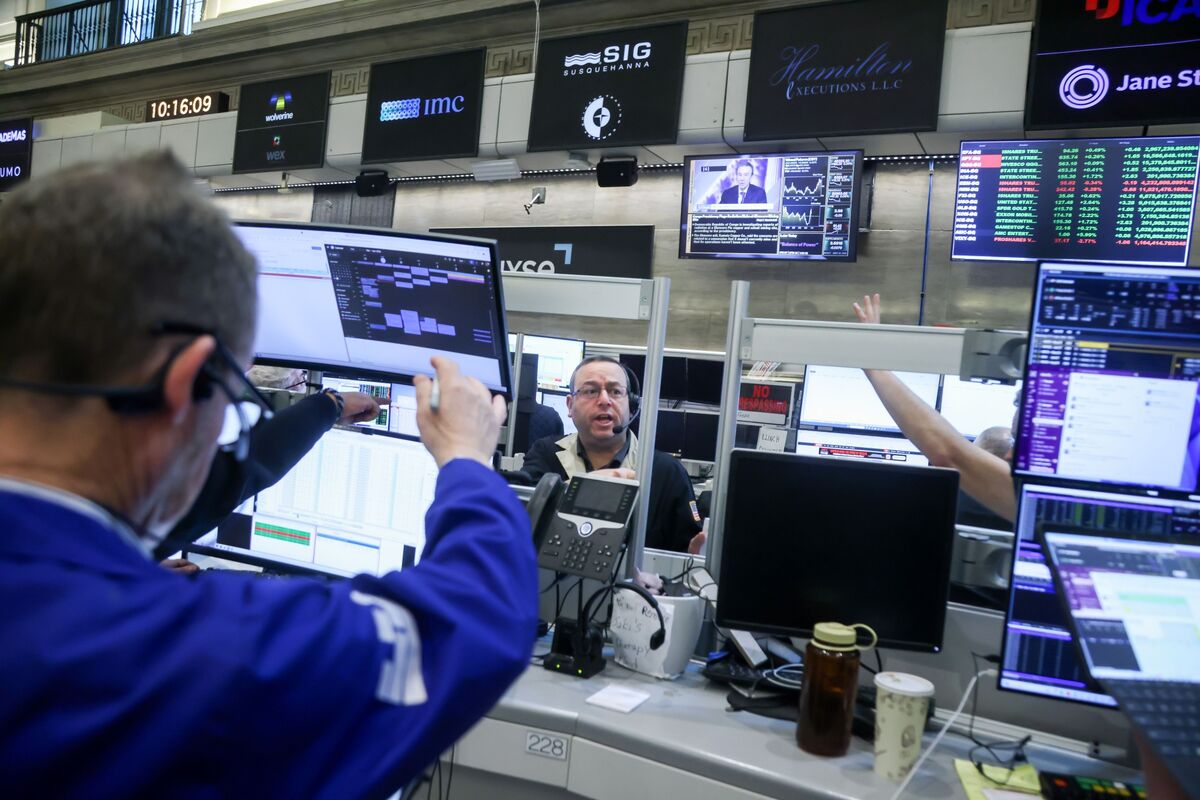
U.S. equities rose Thursday, with the S&P 500 up 0.1%, the Dow up 0.4%, and the Nasdaq 100 flat near record highs, as investors bet the fragile Iran ceasefire will hold and labor-market data improved. Energy and real estate led sector gains. The setup is broadly risk-on, with the Nasdaq 100 on the verge of its longest winning streak since 2017.
The market is effectively pricing a soft landing plus a de-escalation premium, which is a fragile combination. If the ceasefire holds, the second-order winner is not just crude-linked equities but the broader “remove tail risk” trade: lower implied vol, tighter credit spreads, and a rotation into rate-sensitive cyclicals that have lagged the mega-cap complex. The problem is that this kind of rally is usually front-loaded; once the geopolitical headline fades, the market has to stand on labor data alone, and that support is weaker if the labor improvement is mostly a slowing-from-hot narrative rather than true re-acceleration.
Energy’s strength here is counterintuitive: a ceasefire should reduce risk premium, but the sector can still outperform if investors are treating any Middle East calm as temporary and keeping a volatility bid in oil-related equities. That means the best expression may be companies with balance-sheet strength and capital-return discipline, not the highest beta to spot prices. Real estate’s bid is more interesting structurally: it implies investors are moving down the duration curve, betting that labor resilience keeps recession odds contained and rates lower for longer, which can extend the recent multiple expansion.
The main reversal catalyst is any sign that the ceasefire is a pause rather than a regime change. A single renewed missile/drone headline would likely reverse the “risk-on” trade within 1-3 sessions, while a weaker labor follow-through over the next 1-2 months would challenge the soft-landing narrative and expose crowded longs in housing and small caps. More subtly, if bond yields back up on better growth data, the market could punish the very sectors that are benefiting today, even if equities remain near highs.
Consensus seems to be underestimating how narrow the leadership is becoming beneath the headline indices. When indices are making records on lower-quality breadth, the market becomes more sensitive to any disappointment in macro data or geopolitics, and that usually argues for hedging rather than chasing. The move is probably directionally right but tactically late, which makes the risk/reward better for relative-value and volatility structures than outright beta.
AI-powered research, real-time alerts, and portfolio analytics for institutional investors.
Request TrialOverall Sentiment
mildly positive
Sentiment Score
0.35
