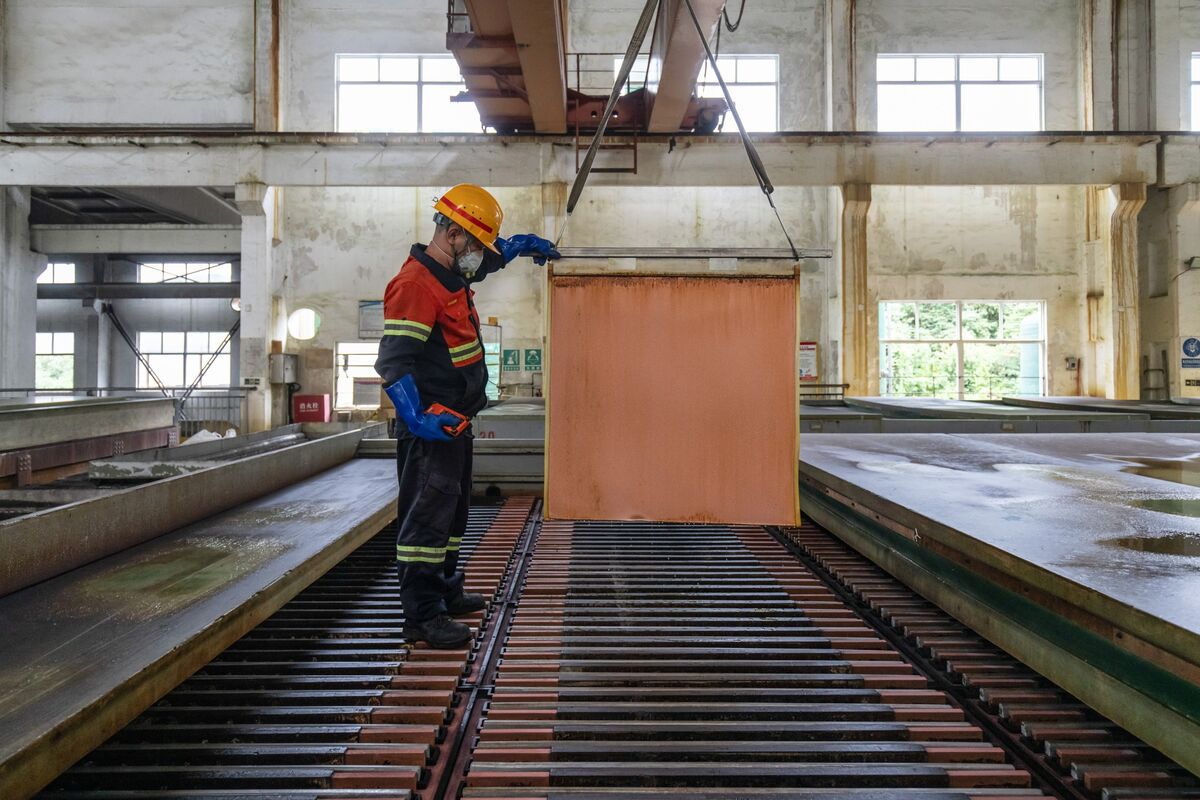
China's refined copper output declined to 1.27 million tons in July from a record 1.3 million tons in June, according to the statistics bureau. This reduction signals the immediate impact of Beijing's intensified campaign against industrial overcapacity, reflecting a broader policy shift that could influence global copper supply and pricing dynamics.
China's refined copper output registered a modest decline in July, falling to 1.27 million tons from a record high of 1.3 million tons in June. This retreat is not attributed to market-driven factors but is a direct consequence of the Chinese government's intensified campaign to curb industrial overcapacity. The policy-driven nature of this supply reduction is a significant development for the global copper market, given China's role as a dominant producer. While the month-over-month drop is marginal, it signals a potential shift from production-at-all-costs to a more managed industrial output, which could introduce a new variable into global supply-side forecasting. The development indicates Beijing's increasing focus on industrial rationalization, a theme that could have broader implications for commodity markets.
AI-powered research, real-time alerts, and portfolio analytics for institutional investors.
Request DemoOverall Sentiment
mildly negative
Sentiment Score
-0.20
