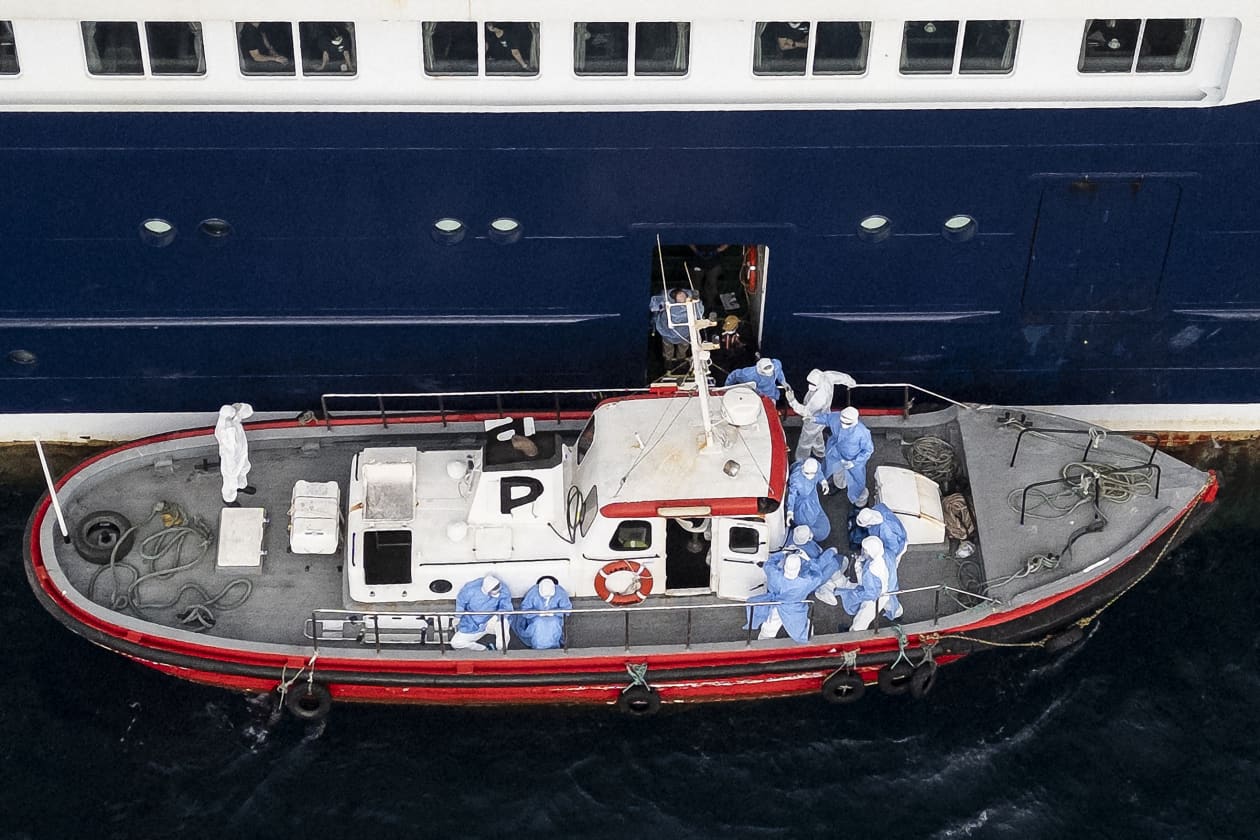
Eight cases of hantavirus have been reported on the MV Hondius cruise ship anchored off Cape Verde, including three confirmed Andes strain infections and the ship's doctor. The Andes virus can spread between humans, making this a more concerning public-health event than a typical isolated case. The outbreak is negative for cruise/travel sentiment, though the direct market impact is likely limited unless the situation widens.
This is not a broad “pandemic trade” so much as a micro-shock to a fragile travel system: the market should treat it as a confidence event first and a medical event second. Cruise operators, port services, and niche expedition travel are most exposed because their customer base is highly discretionary and tends to cancel on headlines before there is any material change in fundamentals. The second-order effect is on insurers and medical evacuation providers, where even a small cluster can force tighter underwriting and higher trip-premium pricing across remote itineraries.
The key nuance is contagion architecture. A strain with human-to-human transmission potential changes the tail from localized quarantine to a rolling reputational overhang, especially for brands that market “remote” and “adventure” experiences. That means the earnings risk is not just one vessel being immobilized for days; it is booking softness for several quarters if consumers generalize the incident to the entire cruise category, similar to how isolated ship events can alter consumer behavior faster than analysts revise spreadsheets.
Healthcare and biotech read-through is more muted but not zero. The event can modestly lift attention on diagnostic testing, infectious-disease surveillance, and hospital preparedness vendors, but this is usually a sentiment-driven move unless cases expand beyond containment. The real catalyst to watch is whether any secondary transmission appears onshore; if that happens, the trade shifts from travel-specific to broader risk-off in leisure and transportation, with duration measured in weeks rather than days.
Contrarianly, the selloff risk may be concentrated in the most obvious names, while the better shorts are in premium expedition operators and ancillary cruise-linked spend, not the largest diversified cruise lines. If containment holds and no further export cases emerge, the initial headline damage can reverse quickly because this is a low-frequency event and investors tend to over-penalize the whole category before the booking data actually turns.
AI-powered research, real-time alerts, and portfolio analytics for institutional investors.
Request DemoOverall Sentiment
strongly negative
Sentiment Score
-0.70
