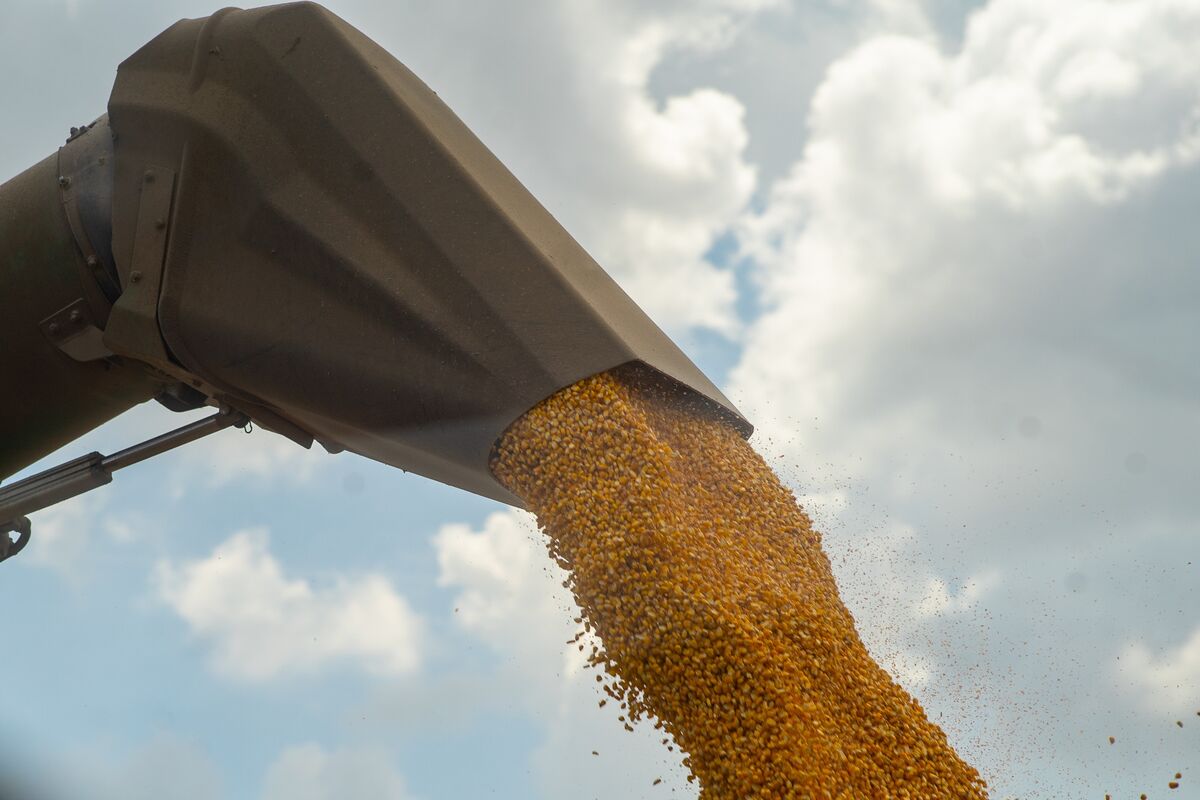
Chinese corn futures rallied more than 1% in Dalian to reach the highest level since September as heavy rains damaged crops in northern China and prompted buyers to secure good‑quality supplies. Feed producers and pig farmers are seeking new‑harvest corn from the northeast — the country's top producing region — heightening near‑term supply concerns and supporting prices, according to Guolian Futures. The move signals potential upside pressure on domestic feed costs and margins for hog producers if supply tightness persists.
Market structure: A north‑China quality shortage shifts short‑term pricing power to merchants, exporters and storage owners able to deliver good‑quality corn, pressuring downstream hog and feed margins by an incremental 5–15% over the next 1–3 months if premiums persist. Importers and global exporters gain negotiating leverage to widen basis spreads versus CBOT; expect Chinese domestic basis to trade 5–12% above global parity intermittently until new‑harvest flows resume.
Risk assessment: Tail risks include a Chinese state release of reserve corn or expedited imports (low probability, high impact) that could erase premiums in 2–6 weeks, and an ASF resurgence that concurrently collapses demand and prices over 1–3 months. Hidden dependencies: logistics bottlenecks and quality grading will amplify regional price dispersion; currency moves (CNY weakening >2% in 30 days) would raise import competitiveness and cap upside.
Trade implications: Favor directional long exposure to corn fundamentals via liquid instruments and volatility buys, while hedging protein processors/hog equities that cannot fully pass on feed cost shocks; expect knee‑jerk correlations between Dalian and CBOT to tighten but not converge fully within 90 days. Use pair trades to isolate input squeeze vs demand weakness and size tactical positions to 0.5–3% of portfolio with explicit stop thresholds.
Contrarian angles: Consensus pricing assumes a persistent supply gap; this may be overdone if rains slow and northeast harvest quality is revised up or policy releases reserves—price mean reversion of 8–20% is plausible in 2–8 weeks. Historical parallels (short China weather scares in 2016–2018) show rapid policy response; the safest asymmetric plays are time‑limited option structures rather than naked longs.
AI-powered research, real-time alerts, and portfolio analytics for institutional investors.
Request DemoOverall Sentiment
mildly positive
Sentiment Score
0.27
