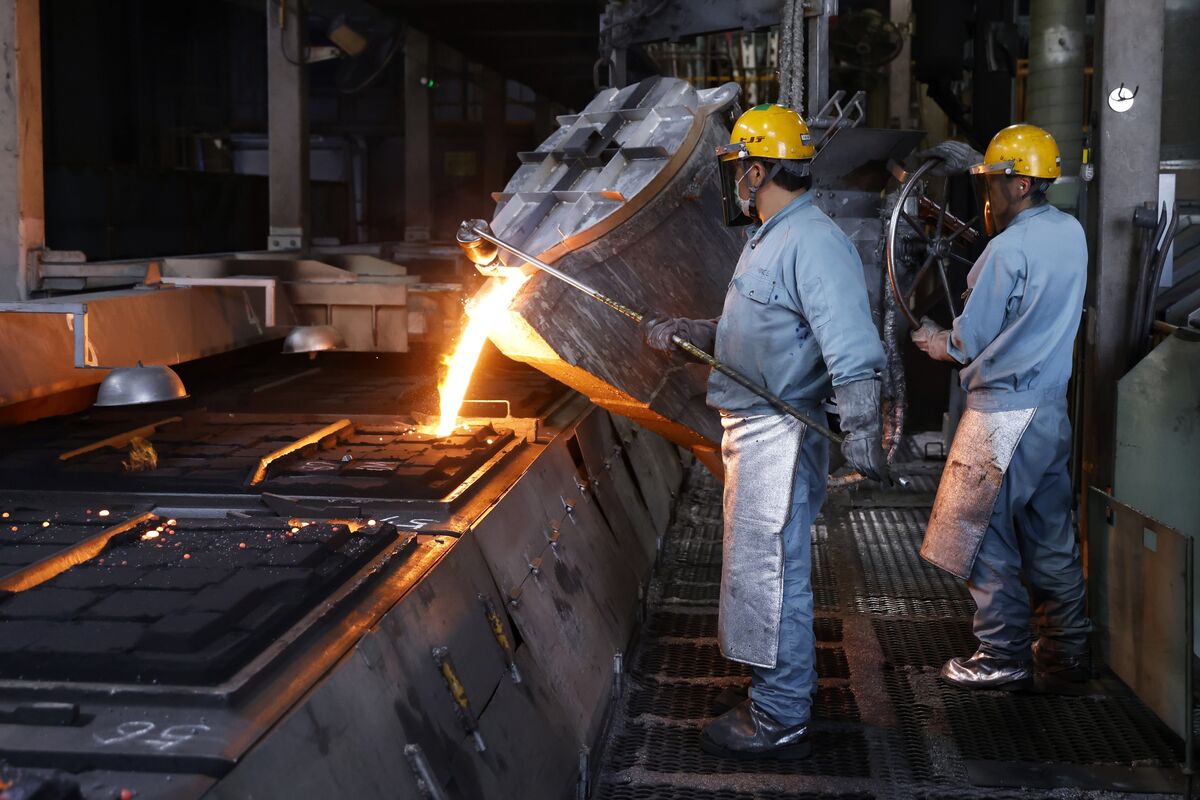
Japan's factory output declined for a second consecutive month in August, falling 1.2% month-over-month and 1.3% year-over-year, exceeding economists' forecasts for a shallower drop. This contraction, driven by weakness in metal products and electronic machinery, is attributed to the murky global outlook stemming from ongoing US tariff campaigns, highlighting the tangible impact of trade tensions on a major industrial economy.
Japan's industrial production contracted for a second consecutive month in August, providing clear evidence of the tangible impact of US tariff policies on the global economy. The 1.2% month-over-month decline matched the pace of July's fall and was significantly worse than the median forecast for a 0.9% drop. On a year-over-year basis, output fell 1.3%, also missing expectations for a 0.9% decline. This underperformance highlights a faster-than-anticipated deterioration in the manufacturing sector. The weakness was led by declines in metal products and electronic machinery, directly linking the downturn to sectors highly sensitive to international trade flows and supply chain stability. The data reinforces a cautious business outlook amid a murky global environment shaped by trade protectionism, as indicated by the moderately negative sentiment signal.
AI-powered research, real-time alerts, and portfolio analytics for institutional investors.
Request DemoOverall Sentiment
moderately negative
Sentiment Score
-0.65
