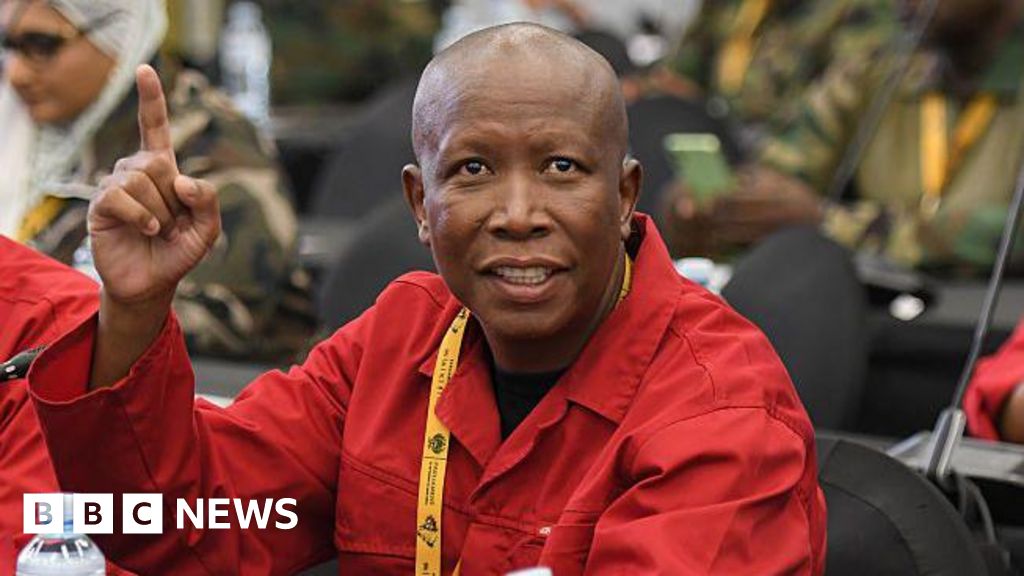
Julius Malema has been handed a five-year prison sentence for unlawful firearm possession and firing a weapon in public, though he will not go to prison until appeals are exhausted. The ruling creates a significant political overhang for the EFF leader, but he can remain an MP and campaign while the case works through the courts, potentially for several years. The article suggests the sentence could either damage or politically energize Malema ahead of local and future national elections.
This is less a near-term legal event than a multi-quarter political volatility shock. The market implication is not incarceration risk, but the elongation of Malema’s relevance: appeals, procedural delays, and eventual constitutional review create a slow-moving headline engine that can keep the EFF’s base mobilized while opponents are forced to react to him rather than govern. That tends to increase policy noise around land reform, expropriation rhetoric, and coalition bargaining, which matters more for South African duration and domestic cyclicals than the sentence itself.
The second-order effect is on the opposition map. A weakened EFF raises the odds of further voter migration either to Zuma’s vehicle or to abstention, both of which can fragment the anti-ANC protest vote and make local coalition outcomes less predictable. In practice, that increases the probability of short-lived municipal governance coalitions, delayed budgets, and weaker service-delivery signaling—negative for domestically exposed names with revenue sensitivity to municipal execution, and mildly positive for firms that benefit from policy inertia rather than reform.
Contrary to the knee-jerk read, this may be net supportive for South African assets over a 3-6 month horizon if investors had priced a more radical EFF re-acceleration. The bigger risk is if the case becomes a rallying point for youth unemployment anger and turns the EFF into a martyr brand; that would not show up in fundamentals immediately, but it could widen risk premia into 2026 election positioning. The key reversal trigger is any legal win that restores his fully active campaign posture sooner than expected, which would reintroduce tail risk around property-rights rhetoric and coalition volatility.
AI-powered research, real-time alerts, and portfolio analytics for institutional investors.
Request TrialOverall Sentiment
mildly negative
Sentiment Score
-0.15
