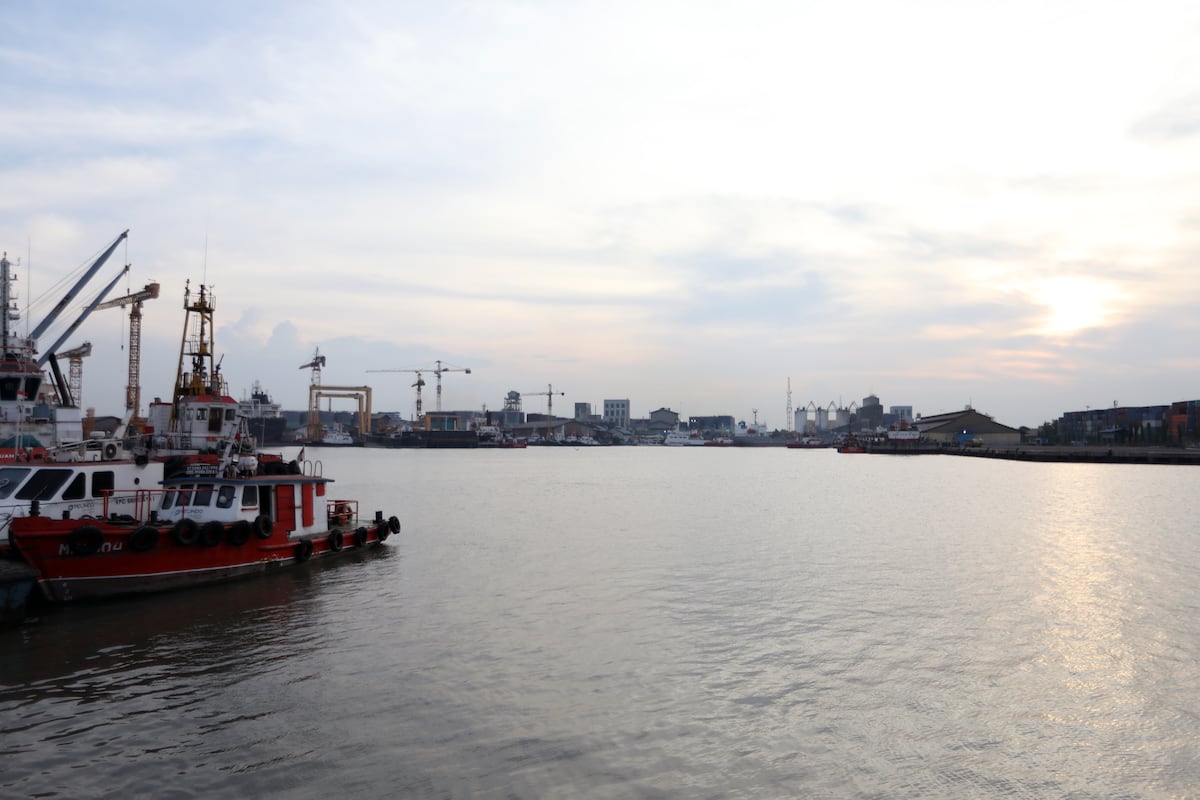
India is moving ahead with a $9 billion Great Nicobar infrastructure project covering over 160 square kilometers in three phases, including an international container trans-shipment terminal, dual-use airport, power plant, and township. The plan is designed to strengthen India’s military and maritime presence near the Malacca Strait, a chokepoint handling more than a quarter of global sea trade and nearly three-quarters of China’s imported crude oil. The project has strategic implications for Indo-Pacific security and China competition, but the article is primarily geopolitical and not directly company-specific.
The market is likely underestimating how quickly a “strategic island” buildout can translate into a premium on regional logistics, security, and insurance rather than just a construction story. The first-order beneficiary is India’s own defense-industrial ecosystem, but the second-order winners are the firms that monetize persistent higher friction: port operators, naval electronics, satellite surveillance, marine insurers, and ship-routing software providers across the Indo-Pacific. If this project materially raises the credibility of an Indian forward base near a chokepoint, it strengthens the pricing power of adjacent hubs that can offer redundancy to shippers seeking diversification away from concentrated routes.
The bigger medium-term impact is on China-sensitive supply chains. Even if the base is years from full operational readiness, the signaling effect can push Chinese logistics planners to preemptively reroute, over-contract capacity, and build inventory buffers, which is a hidden tax on trade efficiency. That tends to favor Singapore-linked transshipment, Indian coastal logistics, and defense-adjacent beneficiaries while pressuring margin-sensitive carriers and commodity importers whose landed costs rise with every extra basis point of geopolitical risk premium.
The main tail risk is execution: environmental/legal delays, local opposition, and budget slippage could turn this into a headline-only catalyst for 6-18 months. A second-order reversal would come if regional de-escalation in Hormuz compresses the perceived need for alternative chokepoint deterrence; the trade is most powerful if investors believe this is the start of a multi-year Indo-Pacific hardening cycle rather than a transient response to one crisis. Contrarian view: the asset may be less valuable as a military base than as optionality embedded in India’s bargaining power with shipping lines and allies, which means the real monetization could be through policy influence rather than direct revenue.
AI-powered research, real-time alerts, and portfolio analytics for institutional investors.
Request DemoOverall Sentiment
neutral
Sentiment Score
0.10
