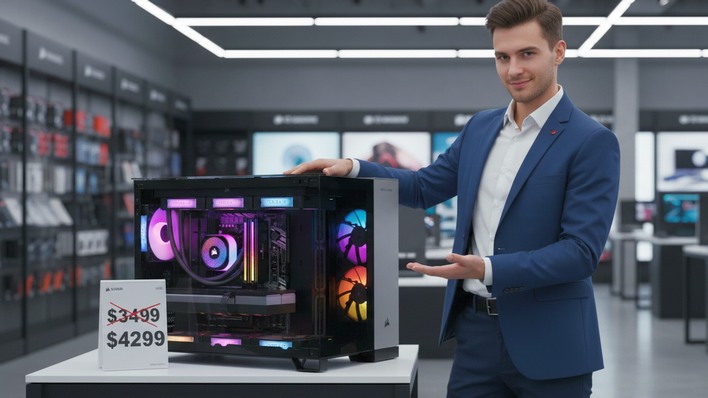
A Reddit user posted screenshots alleging Corsair canceled a paid $3,499.99 order for a high-end gaming PC and then immediately relisted the same configuration at $4,299.99, a roughly $800 (≈23%) markup. Corsair has reached out to the buyer in the forum, and the incident comes amid rising component costs for GPUs, SSDs and memory; the episode creates reputational and potential contract/legal risk for the company in the retail channel but is unlikely to produce a material market-moving effect.
Market structure: This incident spotlights pricing-power divergence between brand OEMs and boutique builders — a relist at +$800 (+23%) vs prior paid invoice is a raw signal that sellers are attempting immediate cost pass-through. Winners are large OEMs/retailers (HPQ, DELL) and upstream semiconductor suppliers (NVDA, MU) that can sell volume or extract pricing; losers are consumer‑facing boutique brands (Corsair/CRSR) which risk order cancellations and reputational damage that can depress unit sales by an estimated 5–15% over several quarters. Cross-asset impact is small but directional: higher consumer‑tech prices modestly inflationary (supporting short-term nominal yields) and raises near-term IV in equity options for impacted names. Risk assessment: Tail risks include class‑action litigation or regulatory enforcement (consumer protection) that could force order fulfilment or penalties and hit margins; contagion to other boutique sellers is possible if practice is systemic. Time horizons: immediate (days) social-media backlash and CX remediation; short-term (4–12 weeks) potential sales volatility; long-term (2–8 quarters) brand erosion and market‑share shifts if competitors capitalize. Hidden dependencies: inventory accounting, channel-return flows, and supplier contract clauses (price‑pass protections) can magnify P&L effects. Trade implications: Direct: consider establishing a 2–3% short position in CRSR (or small‑cap comparable) and buy 3‑month CRSR puts 10% OTM to hedge reputational risk; conversely, establish 3–5% longs in HPQ and DELL to capture demand shift to large OEM pre‑builts. Pair trade: long HPQ (3%) / short CRSR (2%) to isolate consumer‑hardware retail execution risk. Options: sell 2–3 week OTM calls on HPQ/DELL to collect premium if volatility remains elevated; target entries within 1–6 weeks while monitoring IV spikes >40% vs 90‑day median. Contrarian angles: The market may overreact — if Corsair remedies orders within 7–30 days with reimbursements/freebies, reputational hit could be transitory and CRSR could mean‑revert; historical PR missteps in retail often reprice within 30–60 days absent systemic operational failures. If implied vol for CRSR rises >50% and shares drop >20%, add to put positions; if management publicly resolves customer complaints with visible remediation and order fulfilment, flip to tactical long for a 4–12 week rebound trade.
AI-powered research, real-time alerts, and portfolio analytics for institutional investors.
Request DemoOverall Sentiment
moderately negative
Sentiment Score
-0.45
