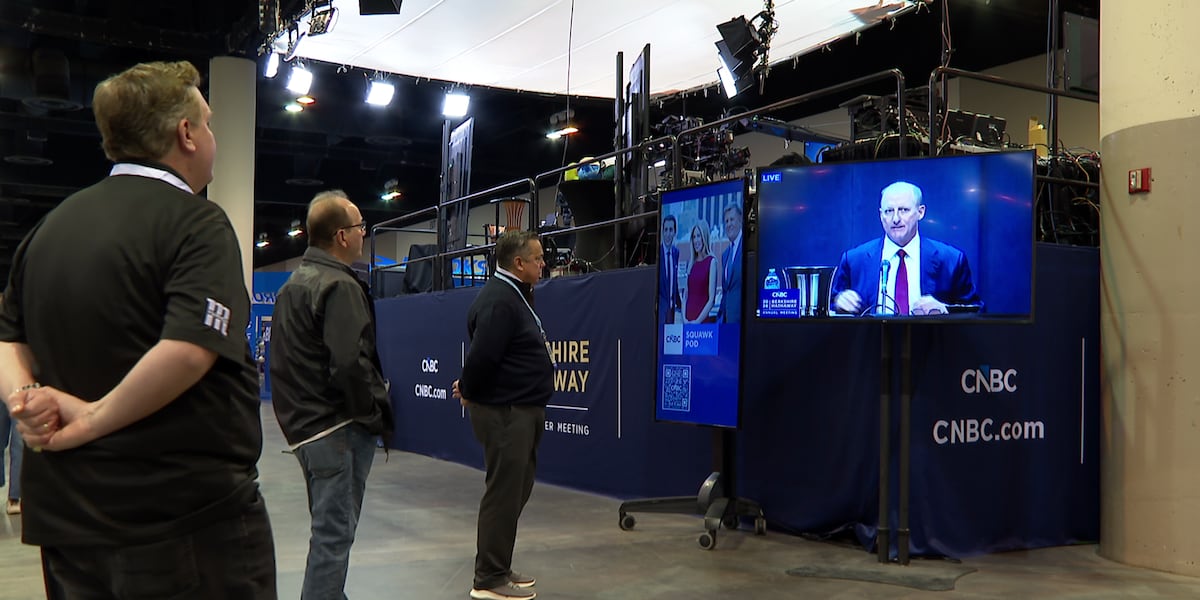
Greg Abel made his first appearance as Berkshire Hathaway CEO at the annual shareholder meeting, formally marking the transition from Warren Buffett after Buffett's retirement. Investors highlighted Berkshire's nearly $400 billion cash pile and were focused on how new management may deploy capital, including potential cautious moves into AI and technology. The article is largely a leadership-transition update and is unlikely to drive near-term price action materially.
The market is likely underestimating how much of Berkshire’s near-term equity optionality sits in capital allocation rather than operations. With a balance sheet this large, even a modest rotation from cash into public equities or structured deals can move several hundred basis points of alpha, but the bigger second-order effect is signaling: Abel can telegraph a willingness to deploy without needing to “win” on headline size. That should support the name in periods of market stress because Berkshire remains one of the few mega-caps whose dry powder is itself a strategic asset.
The core debate is not continuity versus change, but speed versus patience. A slower, more process-driven handover reduces governance risk and should compress the “key-man discount,” yet it also means investors may need to wait months, not days, for evidence of a new investment edge. The main risk is that the cash balance becomes a source of criticism if risk assets keep rallying; however, if markets sell off 10-15%, Berkshire’s relative attractiveness improves quickly because it can buy duration and convexity when others are forced sellers.
The most actionable angle is that AI exposure may come indirectly through capital allocation rather than a dramatic strategic pivot. If Abel treats tech as a barbell—large, durable platforms plus infrastructure/energy beneficiaries—then Berkshire can participate without paying peak multiples. The contrarian miss is that the stock can still outperform in a duller macro because investors are likely pricing in a smoother transition than feared, while underpricing the value of disciplined buyback and redeployment capacity over the next 6-18 months.
AI-powered research, real-time alerts, and portfolio analytics for institutional investors.
Request DemoOverall Sentiment
neutral
Sentiment Score
0.12
Ticker Sentiment
