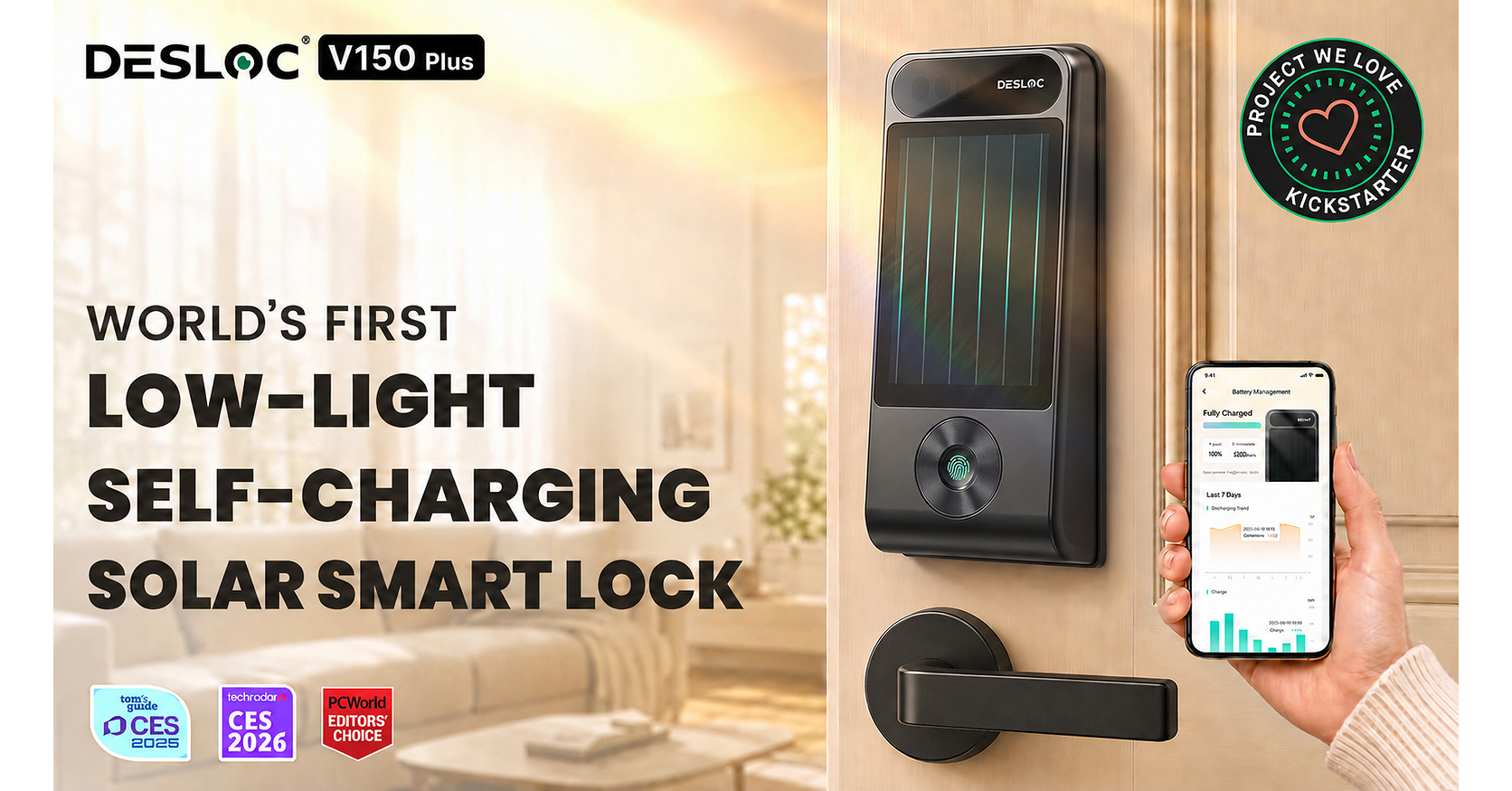
DESLOC’s DESLOC V150 Plus Kickstarter campaign was selected as a Kickstarter “Project We Love,” after reaching 100% funding within the first hour of launch. The lock combines a perovskite solar panel that recharges a removable 10,000mAh battery (including in low-light/shaded entryways) with 3D face recognition with liveness detection and an AI fingerprint sensor (claimed ~0.15s recognition), plus built-in Wi-Fi for app control. The company also highlighted positive reception at the 2026 ALOA Convention & Security Expo and mentions V150 Plus inclusion in an ALOA New Product Showcase, supporting a narrative of product differentiation rather than financial results.
This reads more like a category-narrative catalyst than a fundamentals event. The only economically meaningful pathway is if lower-maintenance power management reduces return rates, support costs, and consumer friction enough to lift premium smart-lock attach rates; that would favor ecosystem-heavy platforms and premium incumbents, not the launch brand itself. For AMZN and GOOGL, the upside is indirect: more installed smart-home devices improve stickiness of Alexa/Assistant, but the earnings impact is de minimis unless the product gains real retail traction.
The bigger second-order question is whether this forces incumbents to re-rate their product roadmaps. If a solar-assisted lock proves reliable across weather and low-light conditions, it could pressure battery-dependent SKUs at the margin and improve premium mix for brands with stronger software stacks, channel reach, and install support; if it fails in the field, warranty and reputational damage will be front-loaded within 1-3 months of shipping. The supply-chain beneficiaries would be component vendors with low-power sensors, Wi-Fi modules, and biometric subsystems, but that is too small to move large caps absent broad adoption.
Contrarian view: the market may be over-extrapolating launch-day enthusiasm into durable demand. Home security buyers care more about false rejects, offline reliability, and privacy concerns than about feature density, so Kickstarter success is a weak proxy for mass-market conversion. The thesis is falsified quickly if post-launch reviews show charging instability, app friction, or installation complaints; it becomes more credible only if channel sell-through and return rates validate the claims over a 1-2 quarter window.
AI-powered research, real-time alerts, and portfolio analytics for institutional investors.
Request DemoOverall Sentiment
mildly positive
Sentiment Score
0.15
Ticker Sentiment
