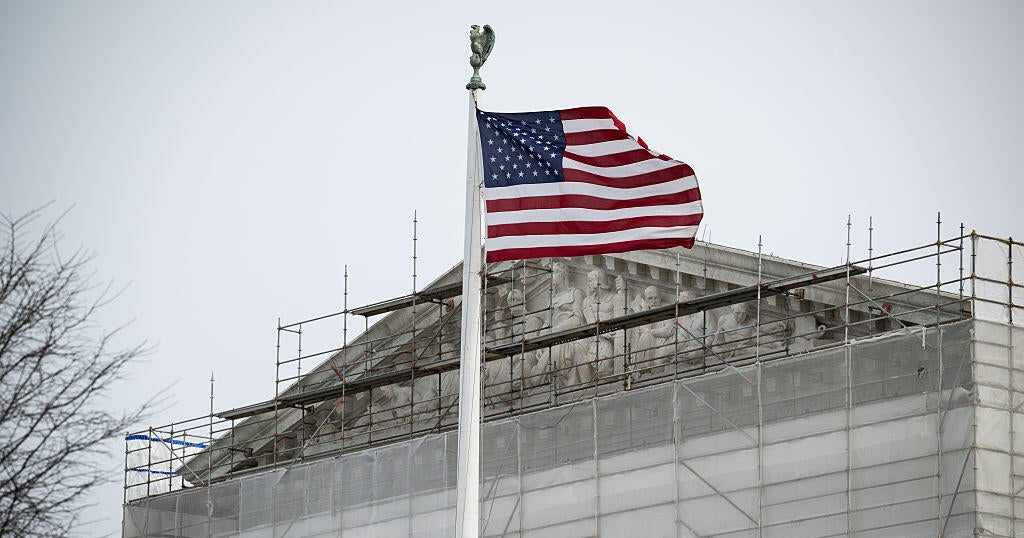
The Supreme Court heard NRSC v. FEC, a GOP-backed challenge to federal limits on coordinated party expenditures under the Federal Election Campaign Act — rules that in the 2023–24 cycle capped party spending at roughly $61,800–$123,000 for House races and $123,600–$3.7 million for Senate contests — with conservative justices appearing inclined to strike the caps as First Amendment violations and liberal justices warning that repeal would open avenues for corruption and circumvention of contribution limits. The Trump-era FEC has concluded the limits are unconstitutional and supports striking them down, while the court appointed an advocate to defend the rules and Democratic committees intervened; justices debated whether the case is ripe given enforcement changes and the lead plaintiff’s current political status. If the caps are invalidated the decision could shift fundraising power back to parties versus outside groups, trigger broader attacks on campaign‑finance restrictions and materially alter political fundraising dynamics and regulatory risk ahead of the 2026 midterms, with a ruling expected by the end of June.
The Supreme Court heard NRSC v. FEC, a GOP-backed challenge to coordinated-party spending caps under the Federal Election Campaign Act; for the 2023–24 cycle those caps ranged roughly $61,800–$123,000 for House races and $123,600–$3.7 million for Senate contests. Plaintiffs include JD Vance, Steve Chabot and the NRSC/NRCC; a federal appeals court upheld the limits based on a 2001 precedent, the Department of Justice under the Trump administration and the FEC signaled that the caps burden party and candidate speech, while the Court appointed counsel to defend the statute and Democrats intervened.
Oral argument displayed a likely 3-justice conservative bloc (Thomas, Alito, Kavanaugh) inclined to invalidate the caps as First Amendment violations, with Kavanaugh explicitly framing the issue as restoring party competitiveness vs. outside groups; liberal justices (Sotomayor et al.) warned invalidation would increase corruption risks and circumvention of contribution limits. The court-appointed lawyer raised mootness and enforcement concerns, noting a Trump-era executive order and the lead plaintiff’s current non-candidate status, but several justices questioned those defenses.
A ruling expected by end of June could reallocate fundraising power toward parties, invite further attacks on other campaign-finance rules, and alter regulatory and political risk ahead of the 2026 midterms. Investors should treat this as a policy/regulatory event that increases near-term political-uncertainty risk rather than an immediate market shock, and monitor post-ruling enforcement clarity and party fundraising flows.
AI-powered research, real-time alerts, and portfolio analytics for institutional investors.
Request DemoOverall Sentiment
mixed
Sentiment Score
0.00
