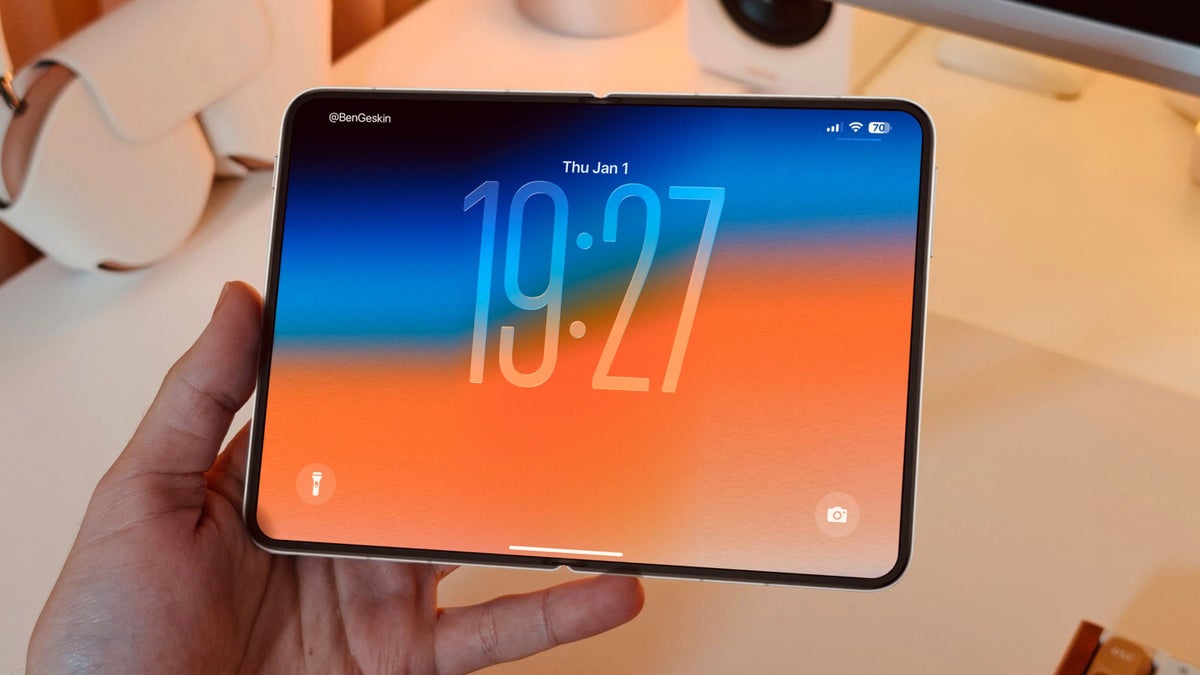
Apple’s first foldable iPhone Ultra is facing two product-quality issues: a rattling hinge after repeated folding/unfolding and a display crease that is only nearly invisible under ideal viewing conditions. The report says the hinge still fails Apple’s standards and could force a delay from the expected launch alongside iPhone 18 Pro models later this year into next year. While manufacturing is advanced, the article frames the product as a risk to Apple’s premium brand rather than a near-term revenue catalyst.
The key market issue is not the foldable itself; it is Apple’s willingness to ship a visibly non-premium first-generation hardware category. That raises the probability of a launch slip or a tightly managed initial rollout, which would push revenue contribution further out and reduce the chance of a true 2026 hardware catalyst. For AAPL, this is more about sentiment compression than near-term earnings: the stock can absorb a product miss, but repeated delays damage the optionality premium investors assign to future form factors.
Second-order effects likely accrue to the supply chain rather than direct competitors. If Apple pauses or trims initial builds, hinge, display, and assembly vendors tied to the program face order deferrals that can cascade into component inventory write-downs and lower utilization over the next 1-2 quarters. That creates a better relative setup for incumbent foldable ecosystems, which may benefit from Apple’s delay by extending the window where “good enough” Android foldables remain the category standard.
The contrarian read is that the market may already be pricing in an Apple launch that is too clean. A first-gen foldable that ships with known compromises risks becoming a “halo” product with weak replacement intent, which would cap unit demand and make the launch less important to AAPL fundamentals than headline watchers expect. The bigger risk is not one bad review cycle, but the possibility that Apple normalizes a compromise-heavy foldable and then needs an extra product cycle to restore the premium narrative.
Catalyst-wise, the next 4-8 weeks matter most for any launch timing confirmation and supplier commentary; beyond that, the issue becomes a 2026 consensus-reset story. If Apple does ship, initial sell-through will likely be driven by enthusiasts rather than mass upgraders, which limits upside to revenue mix but increases downside if returns or quality chatter emerge. For traders, this is a classic event-driven fade: high expectations, low tolerance for execution noise, and limited patience for another delay.
AI-powered research, real-time alerts, and portfolio analytics for institutional investors.
Request DemoOverall Sentiment
moderately negative
Sentiment Score
-0.35
Ticker Sentiment
