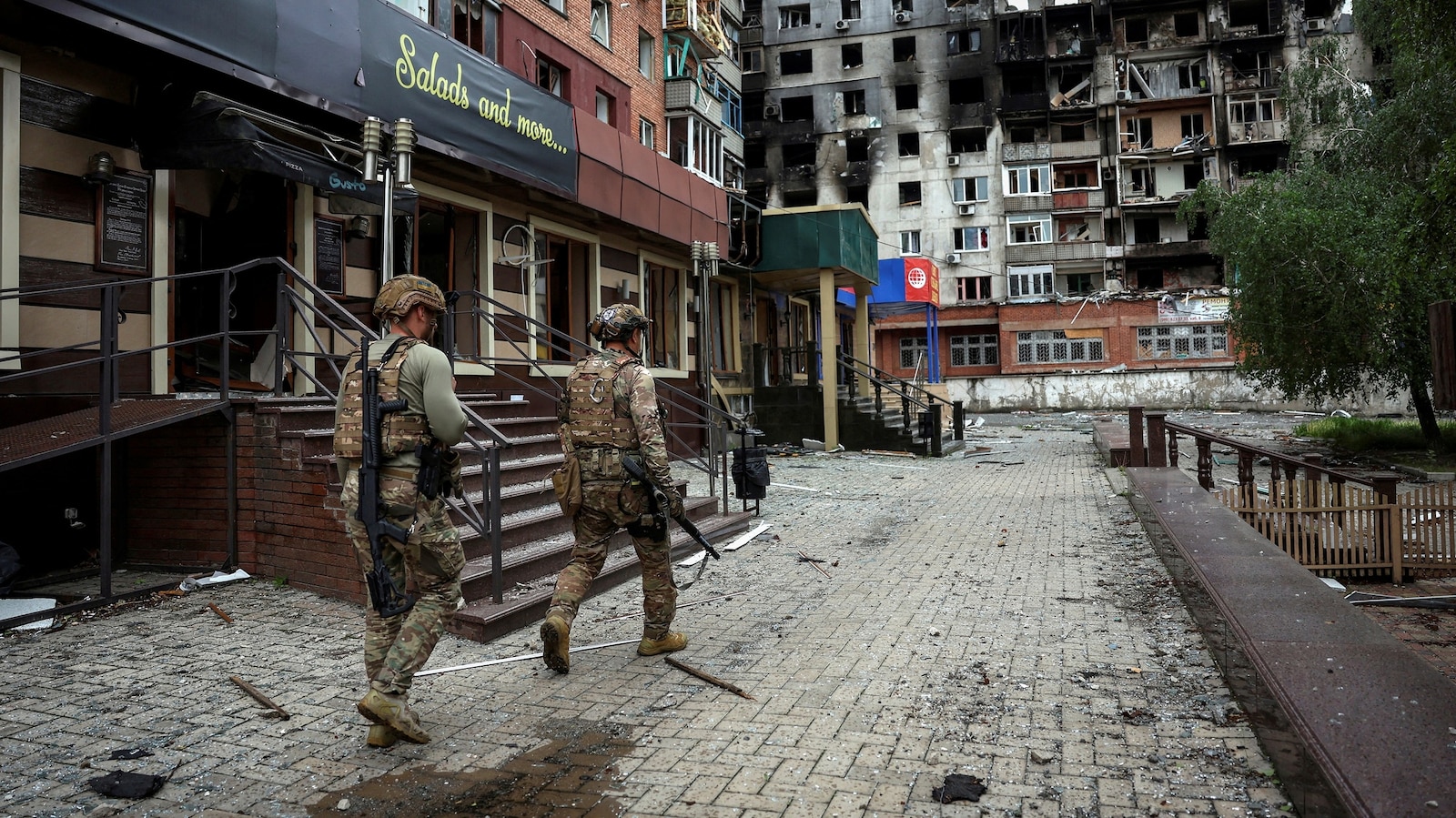
Ukraine is at increasing risk of losing Pokrovsk, a strategically vital city in eastern Donetsk Oblast, as Russian forces are nearing its encirclement and disrupting key supply routes after 18 months of attrition. This potential defeat, where Ukrainian forces are reportedly outnumbered eight-to-one, would represent a significant setback for Kyiv, impacting morale and potentially opening routes for further Russian advances into the Donbas region. While some military analysts suggest a tactical withdrawal could be beneficial if new defensive lines are established, the situation highlights ongoing internal debate within Ukraine regarding the strategic and political costs of holding embattled cities, with a Russian victory likely bolstering Moscow's position in future peace negotiations.
The potential fall of Pokrovsk, a critical stronghold in eastern Donetsk Oblast, represents a significant and imminent strategic setback for Ukraine after an 18-month battle of attrition. Russian forces are reportedly close to encircling the city, with key supply routes under fire, making resupply and withdrawal perilous for Ukrainian defenders, who are outnumbered eight-to-one according to President Zelenskyy. This development mirrors previous withdrawals from Bakhmut and Avdiivka, highlighting a recurring pattern in the Donbas conflict.
A loss of Pokrovsk would severely impact Ukrainian morale and could open a direct route for further Russian advances towards other major Donbas cities like Kostyantynivka, Kramatorsk, and Sloviansk. While the Institute for the Study of War (ISW) suggests Russia may lack the reserves for rapid exploitation, the event would undoubtedly bolster Russian morale and strengthen Moscow's negotiating position in any future peace talks. The "strongly negative" sentiment and "pessimistic" tone associated with this news underscore the gravity of the situation.
Internally, Ukraine faces a critical debate regarding the tactical value of holding embattled cities versus preserving forces through strategic withdrawals. Some military analysts suggest a withdrawal could be beneficial if new defensive lines are prepared, while others argue for continued defense to inflict maximum casualties on Russian forces. This internal divergence highlights the complex trade-offs between political symbolism, military strategy, and human cost.
AI-powered research, real-time alerts, and portfolio analytics for institutional investors.
Request DemoOverall Sentiment
strongly negative
Sentiment Score
-0.75
