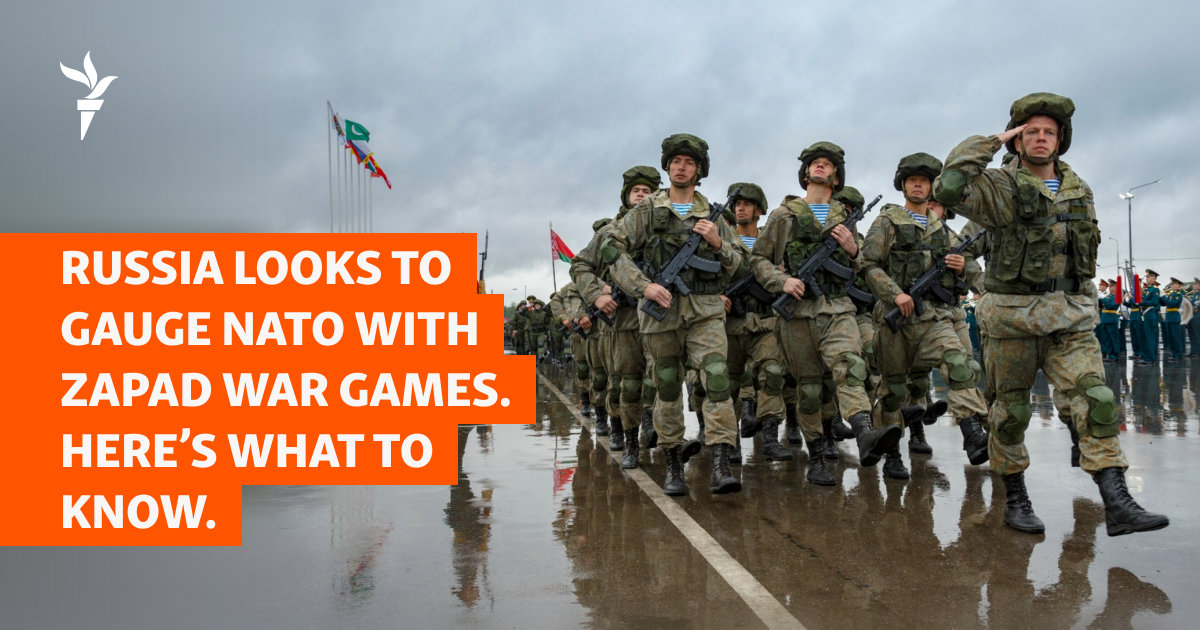
Russia and Belarus have initiated the Zapad-2025 joint military drills, simulating enemy repulsion and notably incorporating planning for the use of Russian nuclear weapons, amidst heightened regional tensions and the ongoing war in Ukraine. Although significantly smaller in scale than previous exercises, these strategic maneuvers are perceived by analysts as both a demonstration of Russian military capability and a potential indicator of Moscow's future war concepts against NATO, prompting close monitoring by the alliance. Concurrently, Belarusian President Lukashenko is signaling a willingness to de-escalate and improve relations with the West, adding a complex geopolitical dimension to the exercises.
Russia and Belarus have commenced the Zapad-2025 joint military drills, an event carrying significant geopolitical weight despite its reduced scale compared to previous iterations. The exercises, involving an estimated 7,000-8,000 personnel—a sharp decrease from the 200,000 in 2021—are perceived as a Russian attempt to project strength amidst the protracted war in Ukraine. Critically, the drills include practicing the decision-making process for the use of tactical nuclear weapons stationed in Belarus, a clear signal to NATO and a first for these exercises. While NATO states it sees no immediate military threat, it is monitoring the situation with caution, citing Russia's history of using such drills as a guise for aggressive actions, as was the case prior to the 2022 invasion of Ukraine. This military posturing is complicated by concurrent diplomatic signals from Belarusian President Lukashenko, who is simultaneously pushing a de-escalation narrative, releasing political prisoners, and engaging with Western political figures, creating a complex and uncertain environment. The conduct of these drills is therefore a key barometer for near-term regional stability, with the potential to either escalate tensions or, if transparent, open avenues for further dialogue.
AI-powered research, real-time alerts, and portfolio analytics for institutional investors.
Request DemoOverall Sentiment
strongly negative
Sentiment Score
-0.65
