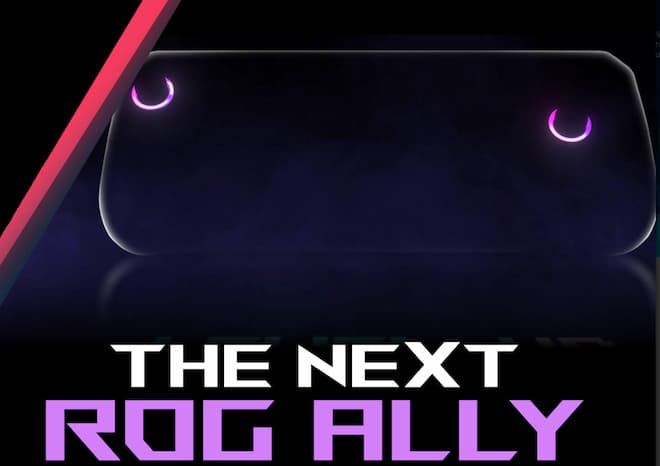
Asus may unveil a next-generation ROG Ally 2 handheld at Computex 2026, but the report is based on rumors and remains unconfirmed. The article suggests any refresh could involve an AMD Z2 APU update, though an Intel-based surprise is also being discussed amid broader handheld-console announcements. Overall, this is speculative pre-event coverage with limited near-term market impact.
This reads less like a single-product rumor and more like a potential platform reset across the handheld PC stack. The first-order takeaway is modestly negative for AMD because any genuine shift in ASUS’ next flagship toward Intel would pressure the perception that AMD owns the premium handheld category; more importantly, it would weaken the “default choice” moat that helps AMD win follow-on design wins at other OEMs. The second-order effect is on software and channel partners: if OEMs believe the handheld segment is becoming a two-CPU race rather than an AMD-led category, procurement leverage improves and ASPs on custom mobile silicon could come under pressure over the next 2-3 refresh cycles.
Intel’s upside is not the rumor itself, but the possibility that Panther Lake creates a credible battery-life/performance narrative in a category where thermal efficiency is everything. Even a partial win with a visible branded device can matter disproportionately because handhelds are marketing showcases, not unit-scale drivers; that means one successful launch can move enterprise perception and downstream OEM negotiations over the next 6-12 months. The risk is that any Intel surprise is still a proof-of-concept until real-world gaming benchmarks and power curves are public, so the stock reaction could fade if the product looks like a spec-sheet win without meaningful UX gains.
The contrarian angle is that the market may be overestimating how quickly ASUS can or will pivot away from AMD. Ecosystem inertia, Xbox-aligned partnerships, and board-level validation cycles make a clean switch unlikely on a single generation timeline; a mid-cycle refresh is more plausible than a true platform migration. That creates a two-sided setup: AMD may only face a temporary sentiment hit unless Intel shows repeatable OEM traction, while Intel’s multiple expansion would be premature until there is evidence of a broader design-win funnel beyond one handheld announcement.
AI-powered research, real-time alerts, and portfolio analytics for institutional investors.
Request DemoOverall Sentiment
neutral
Sentiment Score
0.05
Ticker Sentiment
