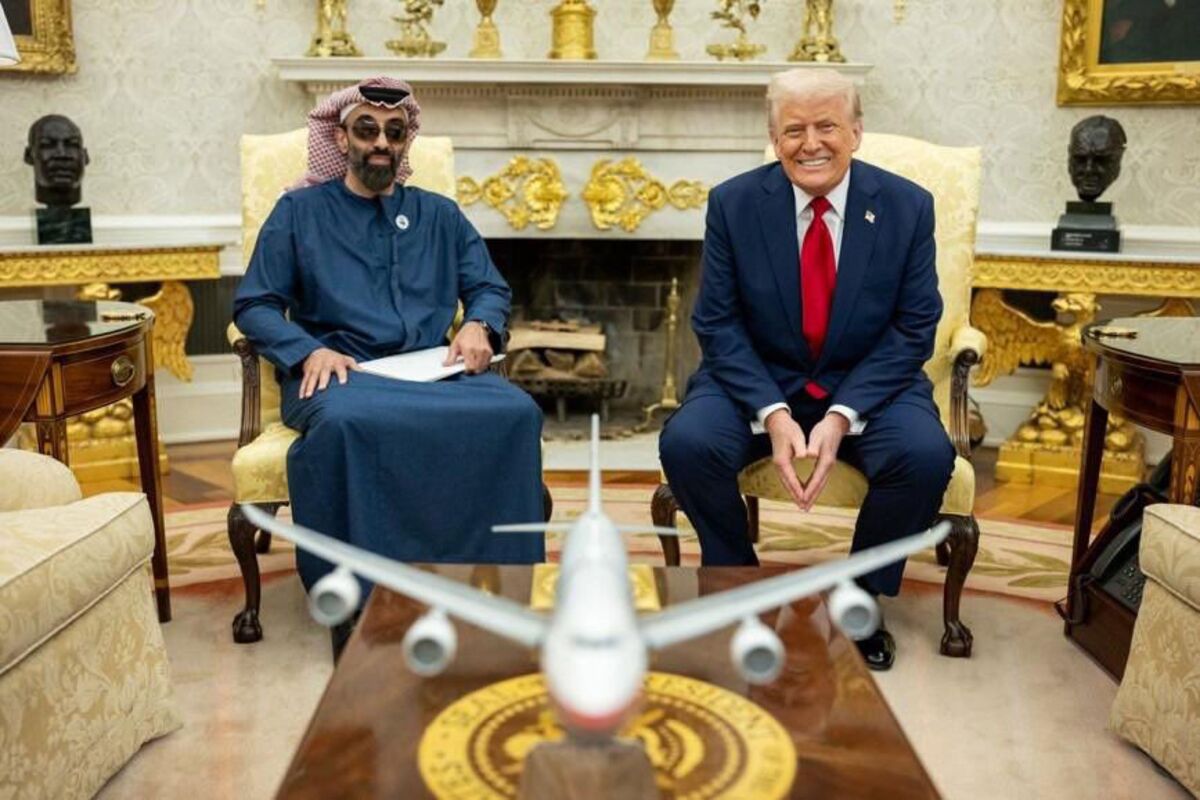
Sheikh Tahnoon bin Zayed Al Nahyan is emerging as the UAE’s key diplomatic emissary to Iran amid a shift from an initially hawkish stance to a more pragmatic engagement strategy during the regional war. The article highlights his dual role as Abu Dhabi’s de facto business chief and national security advisor, underscoring the geopolitical significance of UAE-Iran relations. No direct market-moving policy, sanctions, or economic measures are reported.
The key market implication is not diplomacy per se, but a lower near-term probability of Gulf infrastructure disruption. A more pragmatic UAE-Iran channel reduces tail risk around shipping lanes, air defense miscalculation, and proxy escalation, which should modestly compress regional risk premia across energy, insurers, and EM sovereign credit over the next 1-3 months. The effect is subtle but important: when a regional shock fails to materialize, implied volatility tends to decay faster than spot fundamentals improve.
Second-order beneficiaries are the Gulf’s trade-and-logistics ecosystem and any asset exposed to transshipment confidence. Dubai-linked property, ports, airlines, and regional banks should see a small but durable de-risking bid if investors conclude the UAE is becoming a stabilizing intermediary rather than a frontline participant. The loser is the persistent “geopolitical hedge” trade—long defense and long oil as an Iran escalation proxy—because the market may be paying too much for protection against an event path that is now less probable than feared.
The contrarian view is that rapprochement can be misread as peace. A calmer channel can also make sanctions workarounds, gray-market flows, and selective trade normalization more efficient, which is positive for Gulf commercial hubs but not necessarily for Western enforcement objectives. If that thesis is right, the best expression is not a blanket EM risk-on trade, but selective exposure to intermediaries that monetize friction reduction while staying insulated from direct security shocks.
Catalyst-wise, watch for follow-on diplomacy, shipping insurance rate drift, and any stabilization in regional freight spreads over the next quarter. The main reversal risk is a single high-casualty incident or proxy strike that forces the UAE back into a harder line; that would reprice quickly, likely in days, not months. Until then, the market should expect a slow bleed lower in geopolitical premium rather than a dramatic rerating.
AI-powered research, real-time alerts, and portfolio analytics for institutional investors.
Request DemoOverall Sentiment
neutral
Sentiment Score
0.00
