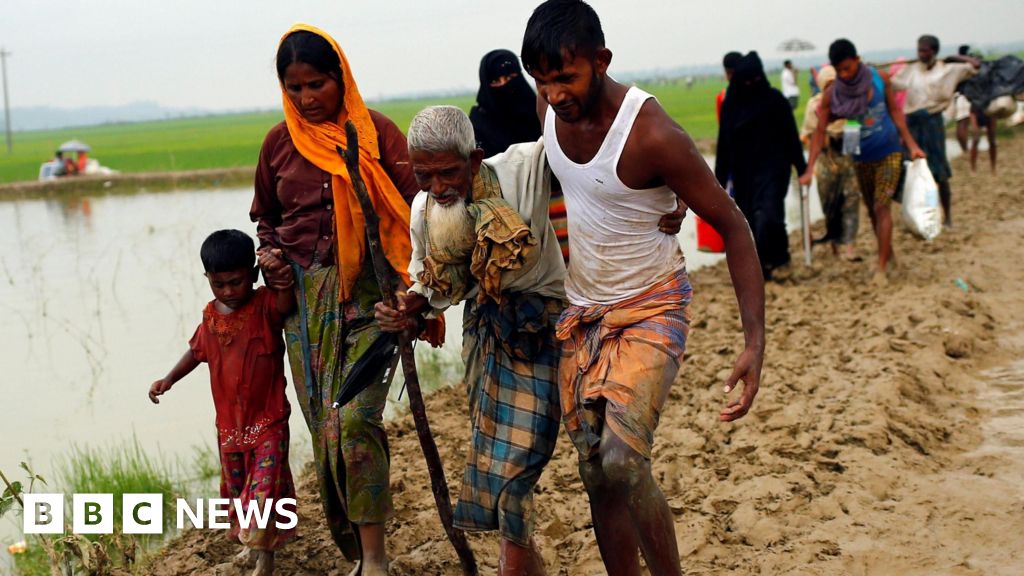
Myanmar has denied genocide allegations at the International Court of Justice, arguing The Gambia has not provided sufficient proof, while The Gambia contends Myanmar’s 2017 military crackdown on the Rohingya showed genocidal intent. More than 700,000 Rohingya fled in 2017 and over a million now live in Bangladesh’s Cox's Bazar; the case, launched in 2019 and backed by the 57-nation OIC, includes closed witness testimony and a final ruling expected toward the end of 2026 that could set international legal precedent.
Market structure: Immediate winners are traditional safe-havens (long-duration US Treasuries, gold, USD, JPY) as headline legal risk boosts risk-off flows; losers are frontier/emerging-market sovereign credit and EM equity allocations (capital flight, wider spreads). Competitive dynamics shift marginally toward global liquidity providers and custody banks handling sanctions/asset freezes; commodity supply effects are localized (Myanmar palm/energy) but could pressure regional commodity exporters and shipping routes. Cross-asset: expect FX pressure on frontier/ASEAN currencies, EMB/HYG underperformance vs. TLT/GLD; implied vols in EM equity and credit should rise 15–40% near headline windows.
Risk assessment: Tail risks include targeted US/EU sanctions, asset seizures of Myanmar-linked holdings, or wider ASEAN trade disruptions—low-probability but >10% conditional on adverse ICJ interim orders. Time horizons: immediate (days) = knee-jerk EM outflows; short-term (weeks–months) = sustained spread widening if provisional measures/sanctions appear; long-term (to end-2026+) = legal precedent raising compliance costs for multinationals in conflict zones. Hidden dependencies: bank correspondent exposures, insurer reinsurers, and ESG mandate flows that could auto-de-risk EM positions. Catalysts: ICJ provisional measures, US/EU sanctions announcements, and leaked witness testimony.
Trade implications: Direct plays: overweight GLD (GLD) and long TLT for 3–6 months; trim EEM/EM equities and EMB sovereign bonds by 2–4% of AUM. Pair trades: long TLT (2–3% AUM) / short EMB (2–3%) to capture spread dislocation; options: buy 3-month EEM puts 7.5% OTM sized to hedge 2–3% portfolio risk, and 3–6 month GLD call spreads to capture safe-haven rallies. Sector rotation: shift 3–5% from EM cyclicals into US staples and select defensive names; act within 48–72 hours of major ICJ or sanctions news.
AI-powered research, real-time alerts, and portfolio analytics for institutional investors.
Request DemoOverall Sentiment
moderately negative
Sentiment Score
-0.40
Contrarian angles: The consensus overstates direct market contagion from Myanmar proper; what is underpriced is the multi-year legal/regulatory premium that litigation precedent creates for corporates operating in conflict zones—expect higher insurance and compliance costs that compress EM-risk premia persistently by 50–150bps. Historical parallels (Balkans/Rwanda) show market reaction front-loaded and policy actions slow; if no sanctions arrive in 3–6 months, EM assets can mean-revert and present re-entry points. Beware crowded safe-haven trades (TLT/GLD) that can unwind violently on US macro surprises.
