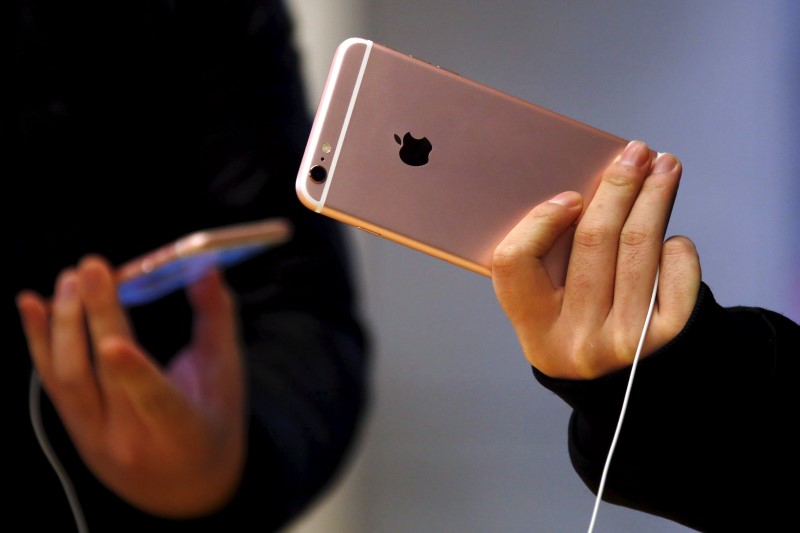
Intel shares rose 10.3% to $105.80 after reports of exploratory discussions with Apple about manufacturing processors for Apple devices. Apple also reportedly visited Samsung's Texas chip plant, underscoring ongoing reshuffling in semiconductor supply chains. Intel is up roughly 160% year-to-date, versus about 22% for the S&P 500 semiconductors index, though analyst coverage remains cautious with a median price target of $80.
The market is treating this as a credibility inflection for Intel, but the bigger signal is optionality on U.S.-based advanced packaging and foundry capacity rather than near-term earnings. Even a preliminary Apple dialogue matters because Apple is one of the few customers capable of forcing ecosystem validation, which can compress the timeline for other marquee accounts to test Intel as a second source. That said, the path from “talks” to meaningful wafer share is long, so the first-order upside is mostly sentiment-driven while the second-order upside is a higher probability of future utilization and capex de-risking.
For competitors, this is more dangerous for pure-play foundries than the headline suggests. If Intel gains even limited Apple-related work, it strengthens the narrative that strategic customers want geographic diversification and non-TSMC supply, which could nudge other OEMs toward multi-sourcing and weaken pricing discipline across the outsourced semiconductor chain. The knock-on effect is most relevant over 6-18 months: a small design-win today can alter procurement behavior for an entire cohort of enterprise and consumer chip buyers.
The contrarian view is that the move may be over-enthusiastic relative to execution risk. Intel still has to prove yields, node competitiveness, and packaging reliability at scale, and Apple is notoriously ruthless about supplier qualification; many such discussions never survive product-cycle constraints. The short-term risk is a classic multiple expansion trap: if no follow-up evidence emerges within the next 1-2 quarters, the stock can give back a material portion of the squeeze even if fundamentals keep improving.
For Apple, this is less about incremental financial impact and more about bargaining leverage. The company benefits from preserving negotiating pressure on its incumbent supply base, but any real diversification effort is a years-long operational project that could raise transition costs before it lowers them. In the near term, the main effect is improved supply-chain resilience optionality, not a meaningful P&L change.
AI-powered research, real-time alerts, and portfolio analytics for institutional investors.
Request DemoOverall Sentiment
moderately positive
Sentiment Score
0.42
Ticker Sentiment
