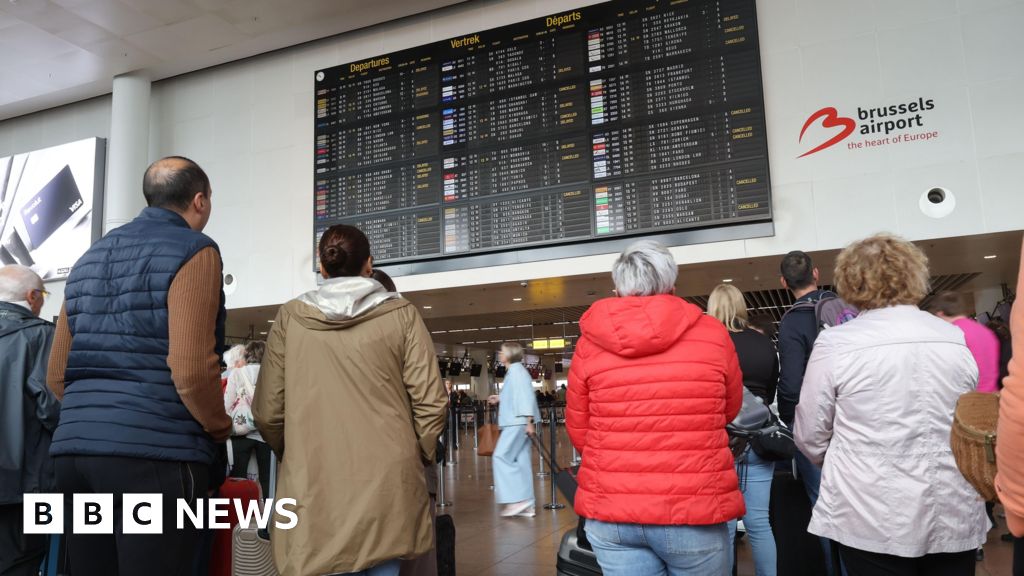
European airports continue to grapple with operational disruptions following a Friday cyber-attack on automatic check-in and boarding software, with Brussels Airport requesting airlines to cancel nearly half (140 of 276) of its Monday flights. While some airports like Heathrow are stabilizing, the incident underscores a 600% increase in aviation cyberattacks over the past year, signaling heightened systemic risk and potential for ongoing operational challenges across the sector.
A cyber-attack targeting check-in and boarding software from Collins Aerospace (COLI) has triggered significant, ongoing operational disruption across major European airports, underscoring a critical vulnerability in the aviation sector's infrastructure. The impact is most acute at Brussels Airport, which requested the cancellation of nearly half its outbound flights (140 of 276) for Monday, indicating severe and immediate economic consequences for airlines. While operations are reportedly stabilizing at hubs like London Heathrow, the persistence of manual processing at Berlin Airport and an "unclear" resolution timeline from the software provider create continued uncertainty. This event should be viewed within the broader context of a 600% year-over-year increase in cyberattacks on the aviation industry, as reported by Thales. The incident transitions cybersecurity from a theoretical risk to a tangible, recurring operational threat capable of inflicting direct financial damage through flight cancellations, delays, and reputational harm, as reflected in the moderately negative sentiment signal (-0.6) for Collins Aerospace.
AI-powered research, real-time alerts, and portfolio analytics for institutional investors.
Request DemoOverall Sentiment
moderately negative
Sentiment Score
-0.55
Ticker Sentiment
