
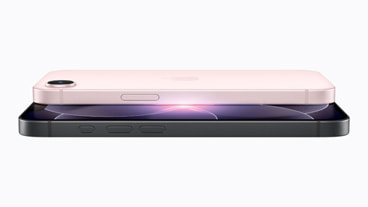
Apple launched a refreshed iPad Air powered by the M4 SoC (8‑core CPU, 9‑core GPU) with 12GB unified memory, 120GB/s memory bandwidth and a 16‑core Neural Engine, advertising up to 30% faster CPU/GPU performance vs. M3 and up to 2.3x vs. M1; M4 also adds hardware ray tracing and improved on‑device AI performance. The 11‑inch and 13‑inch models support Wi‑Fi 7, N1 and C1X connectivity, keep prior starting prices ($599 and $799 Wi‑Fi), are available to pre‑order March 4 with delivery March 11, and include environmental claims (30% recycled content, 40% renewable supply‑chain electricity); the combination of upgraded specs at unchanged entry pricing positions Apple to drive upgrade cycles and reinforce its AI/creative device positioning without raising entry price points.
Market structure: Apple (AAPL) is the clear direct winner — an unchanged $599/$799 price with upgraded M4, 12GB unified memory and Wi‑Fi 7 positions iPad Air to defend volume while lifting ASP via higher-storage and cellular attach. Suppliers with exposure to Apple silicon demand (TSMC/TSM) and accessory ecosystems (keyboard/Pencil vendors, premium app ecosystem) also benefit; Qualcomm (QCOM) and third‑party modem/wireless chipset vendors are the primary losers as Apple internalizes C1X. Cross‑asset: expect AAPL equity upside and near‑term IV compression; small downward pressure on QCOM equity; negligible macro bond impact but potential modest AUD/SEK/NZD currency flows into USD if iPad drives US retail strength.
Risk assessment: Tail risks include regulatory antitrust scrutiny from further Apple vertical integration, a C1X performance or certification setback with carriers, or supply constraints for N1/C1X causing launch delays — low probability but >20% P(impact) would be material. Timing: immediate (days) — sentiment lift around Mar 4 preorders; short (weeks) — sell‑through through Mar 11–31 will determine inventory build; long (quarters) — potential to raise tablet revenue mix and gross margins by +3–7% if higher storage/5G attach persists. Hidden dependency: demand hinges on developer adoption of iPadOS 26 windowing and pro apps optimizing for M4.
Trade implications: Favored direct play is a modest long in AAPL sized 1–2% of portfolio into the preorder window (Mar 4), with profit target +8–12% in 3 months and stop at −8%; pair trade: long AAPL vs short QCOM (2% notional) over 6–12 months anticipating modem share loss. Use options to asymmetric‑leverage: buy a 3‑month AAPL call spread (e.g., buy 6% OTM / sell 18% OTM) sized to 0.5% notional to cap premium and capture launch upside. Rotate modestly out of commodity PC OEM exposure into premium device/semiconductor names.
Contrarian angles: Consensus understates BOM risk — 12GB memory + N1/C1X could raise per‑unit costs and compress margins if mix toward lower configurations fails; early sell‑through could disappoint despite specs. History: prior iPad refreshes often produced muted share gains; if developer ecosystem fails to exploit M4 AI/mesh shading, upgrade rate may be only +5–7% vs. consensus 10–15%, creating a 5–10% downside to AAPL relative trades. Also consider strategic retaliation from incumbents (QCOM/AVGO) via pricing or carrier incentives as a non‑linear downside catalyst.
AI-powered research, real-time alerts, and portfolio analytics for institutional investors.
Request TrialOverall Sentiment
moderately positive
Sentiment Score
0.45
Ticker Sentiment
