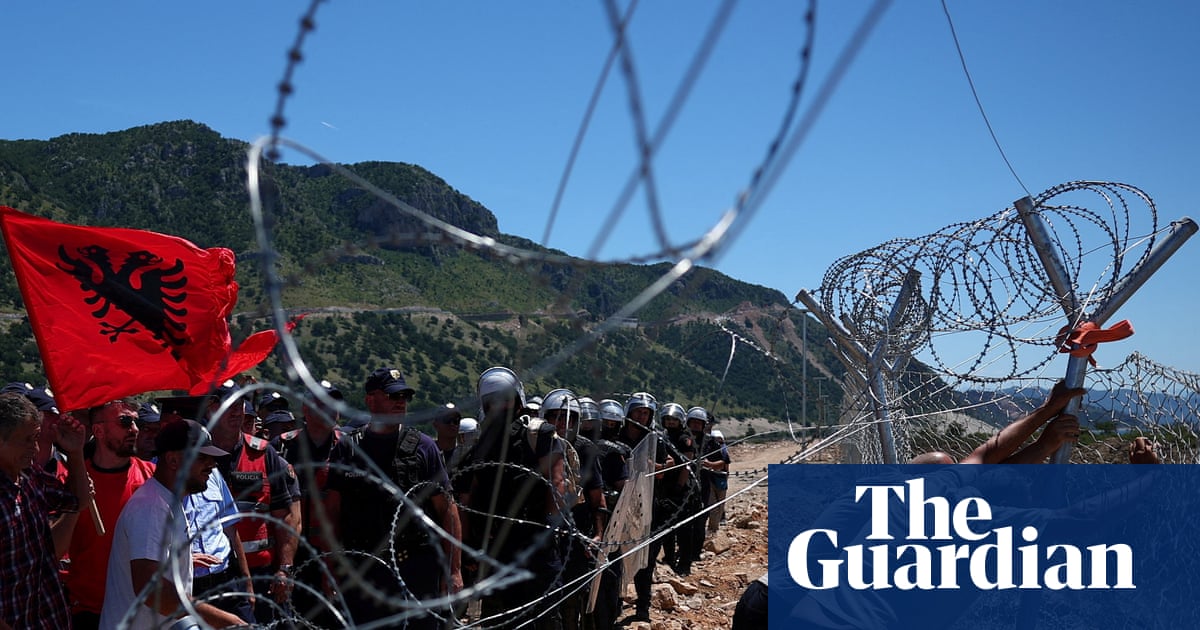
About 200 protesters tore down fencing at a luxury resort site in northern Albania, escalating opposition to construction on environmentally sensitive and reportedly confiscated land. The dispute centers on a five-star tourist resort granted special investor status by the Albanian government, underscoring rising political and social risk around coastal development. While notable for local real estate and tourism projects, the article is unlikely to move broader markets.
This is less a single-project headline than a signal that permitting risk in frontier European leisure/real-estate is becoming unhedgeable. Once communities learn that direct action can freeze or reprice projects, the expected value of “special status” approvals falls: developers face longer pre-construction timelines, higher security/legal costs, and a greater probability of forced concessions or redesigns. That tends to hit the weakest balance sheets first — smaller local sponsors and land-consolidation vehicles — while advantaging operators with deep political networks, patient capital, and the ability to wait out 6-18 month approval cycles.
The second-order effect is on coastal luxury supply, not just this site. If opposition broadens, high-end Albanian shoreline capacity may get pushed into a stop-start pattern, which supports ADRs for existing resort inventory but compresses returns on new-build projects already capitalized at optimistic occupancy assumptions. It also raises the cost of capital for developers across the Adriatic/Balkan leisure corridor as lenders reprice execution risk rather than pure demand risk.
The policy catalyst set is binary: stronger policing and compensation schemes would calm protests within weeks, but any perception of government retreat can invite copycat action at other environmentally sensitive sites over the next 3-6 months. The tail risk is not project cancellation alone; it is a broader social-license reset that forces investors to budget for local buy-in upfront, effectively converting cheap land into a negotiation asset. That is a structurally bearish setup for speculative coastal real estate, but potentially bullish for incumbent hospitality owners with stabilized footprints.
Consensus may be over-focusing on ESG optics and underpricing the legal/operational friction premium. The bigger issue is that land-title disputes and environmental resistance can delay cash flows long enough to destroy IRR even if the underlying tourism thesis is intact. In that sense, the market should treat these projects more like emerging-market infrastructure with community-risk optionality than like conventional resort development.
AI-powered research, real-time alerts, and portfolio analytics for institutional investors.
Request DemoOverall Sentiment
moderately negative
Sentiment Score
-0.35
