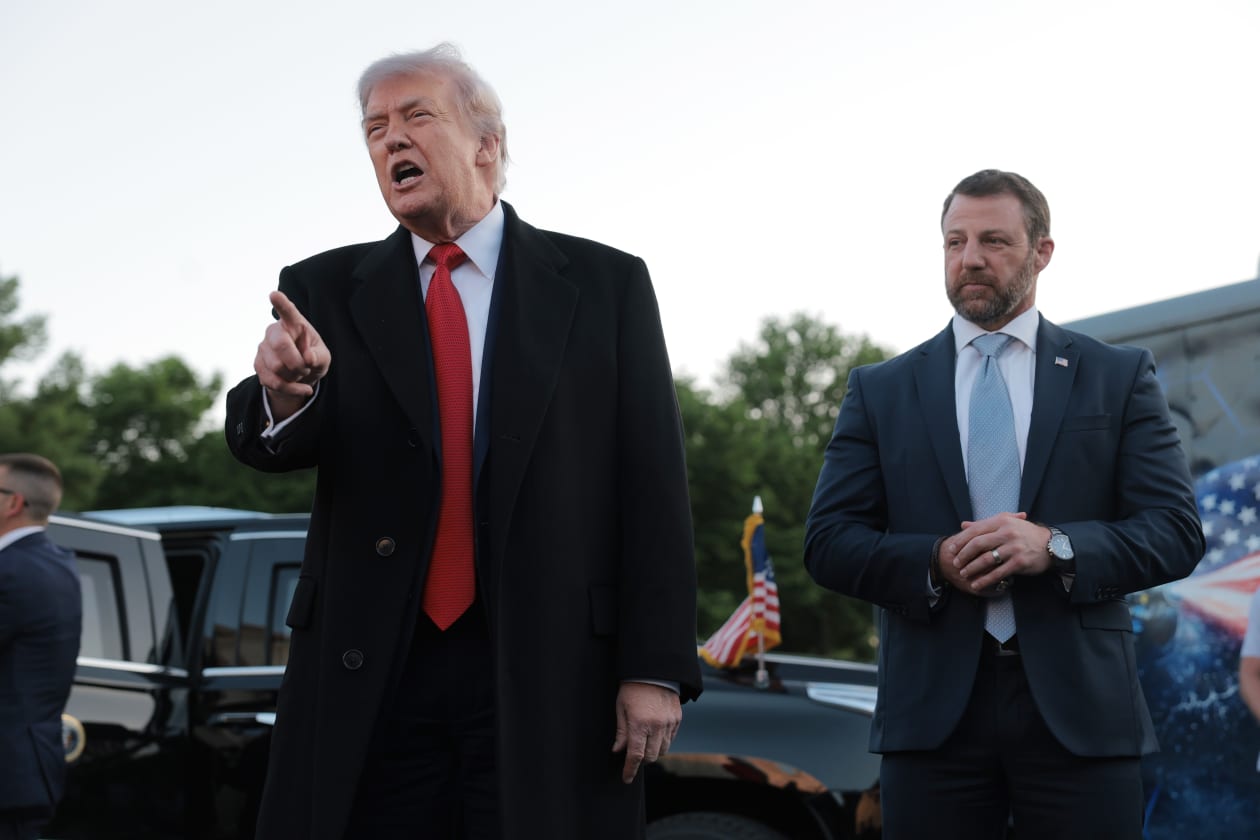
A federal trade court struck down President Trump's latest global tariff plan, creating a fresh legal setback for his trade agenda. The article says Trump is expected to fast-track new tariffs anyway, suggesting continued tariff volatility and ongoing uncertainty for businesses exposed to trade policy. The ruling is meaningful for markets because it keeps tariff risk elevated across import-dependent sectors and supply chains.
The market is likely underpricing how quickly tariff risk can re-emerge through process rather than policy substance. Even if one tariff vehicle is knocked out, the administration can pivot to narrower legal authorities, so the relevant variable for supply chains is not "tariffs gone" but "tariff optionality preserved," which keeps procurement teams from fully normalizing inventories or capex plans. That tends to favor domestic substitutes and firms with local production capacity, while penalizing import-heavy retailers, apparel, autos, and industrials with low pricing power.
Second-order effects are most important in the next 1-3 months: if companies fear a fast-track reimplementation, they will front-load imports, temporarily boosting freight, port activity, and working capital needs. That can create a deceptive near-term lift in logistics and ocean carriers, followed by a demand air pocket if tariffs do not materialize or are delayed. The bigger beneficiary is actually pricing discipline among domestic manufacturers; even the threat of tariffs can widen spreads versus foreign competitors without any formal rate hike.
The main tail risk is legal whiplash: a rapid reinstatement would hit consumer discretionary margins before companies have time to re-route supply chains, while a prolonged court fight would unwind the risk premium and force a sharp repricing lower in domestic-protection trades. Over the next several months, election optics matter because tariff rhetoric is politically useful even when implementation is messy, so volatility around trade headlines should stay elevated. The consensus may be overfocused on binary legality and underfocused on how much tariff uncertainty itself acts like a tax on inventory efficiency, capex timing, and cross-border sourcing decisions.
AI-powered research, real-time alerts, and portfolio analytics for institutional investors.
Request DemoOverall Sentiment
mildly negative
Sentiment Score
-0.25
