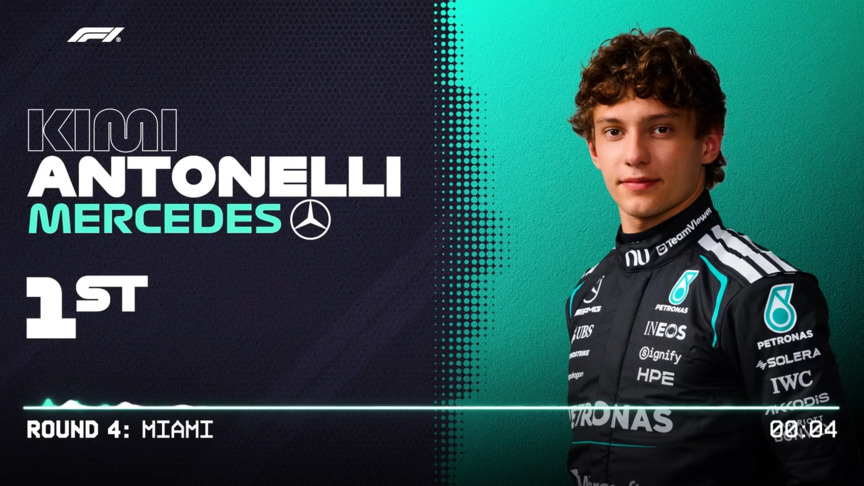
Kimi Antonelli won the Miami Grand Prix by 3.264s over Lando Norris, taking his third consecutive victory and extending his championship lead to 20 points. Oscar Piastri finished third, while post-race penalties reshuffled the lower points positions, with Charles Leclerc dropped from fourth to eighth after a 20-second penalty. The article is race-reporting rather than market-moving financial news, so direct market impact is minimal.
The market signal here is not the race result itself but the widening gap between execution quality and underlying pace across the grid. A clean conversion from pole-to-win after multiple lead changes suggests Mercedes has a real one-lap/low-degradation edge, which matters more than headline wins because it reduces reliance on chaotic race states. For RACE, the direct equity read is neutral-to-slightly positive: Monaco-style brand exposure is helpful, but the article is really about how much value can be created when a team’s strategic call beats raw tire life, which is a reminder that results volatility can stay high even if the sponsor ecosystem remains stable.
Second-order effects point to pressure on McLaren and Ferrari in the title narrative: both showed competitive pace, but neither could consistently control tire windows or avoid costly operational mistakes. That matters because sponsorship and manufacturer prestige tend to reward perceived reliability, not just podium counts; over a few race weekends, the franchise with fewer self-inflicted penalties usually captures more media share and commercial leverage. Red Bull’s recovery pace remains strong, but repeated officiating/operational setbacks increase the odds of points leakage in tracks with tighter pit-window execution.
The contrarian view is that this is probably an overreaction if investors extrapolate one race into a durable performance hierarchy. Miami’s early start, weather risk, and Safety Car timing likely amplified variance; the next few races should normalize the distribution and compress the gap between the front three teams. For trading, the better setup is to fade any momentum premium that gets attached to the weekend’s winner and instead focus on whichever team consistently converts tire strategy into points over the next 3-5 race sample.
AI-powered research, real-time alerts, and portfolio analytics for institutional investors.
Request DemoOverall Sentiment
neutral
Sentiment Score
0.10
Ticker Sentiment
