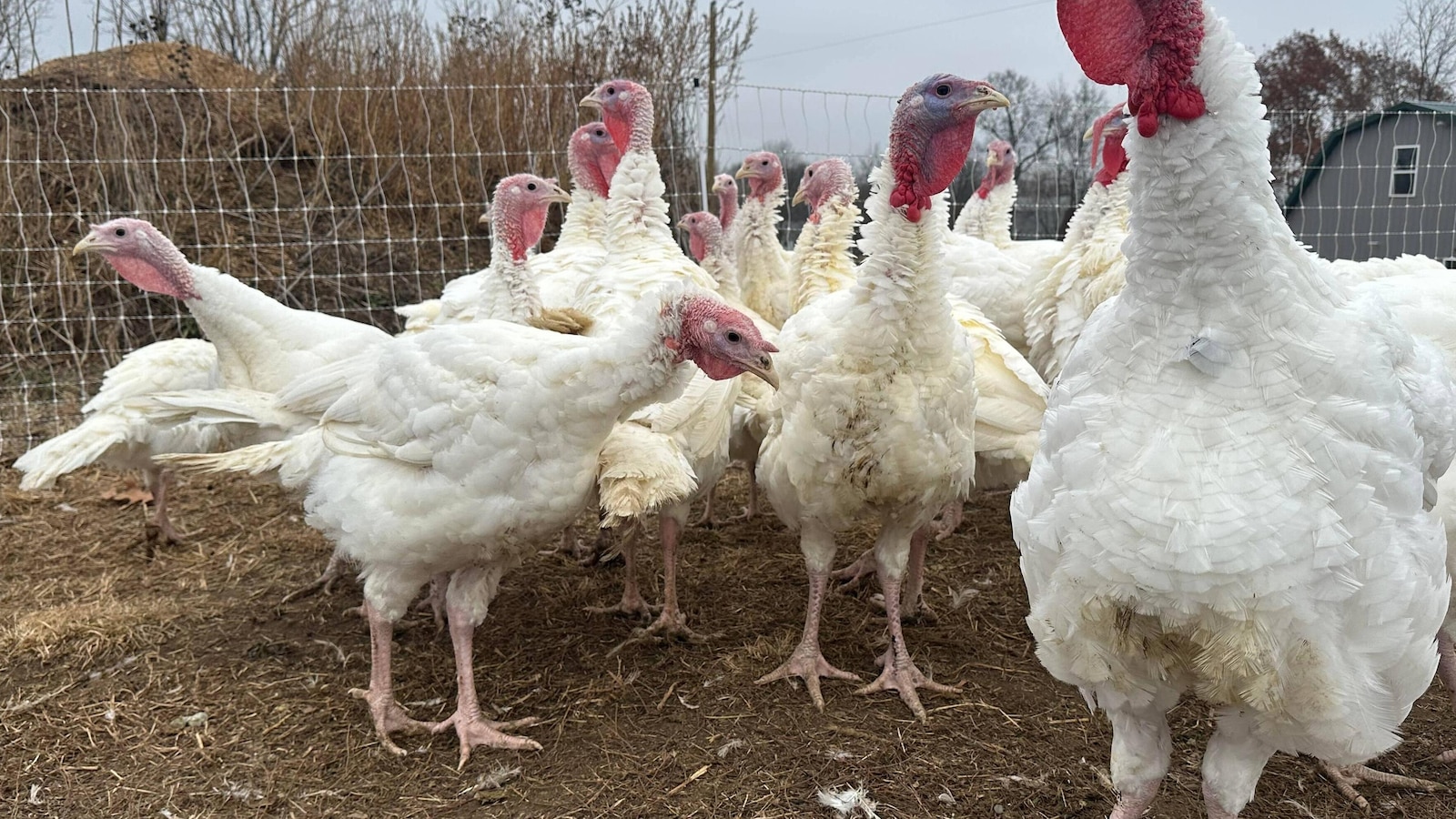
U.S. turkey flocks have fallen to a 40-year low amid avian influenza and avian metapneumovirus, prompting the USDA to forecast a 44% jump in wholesale turkey prices this year even as some retailers promote discounted or free turkeys. Retail data are mixed: Datasembly’s Thanksgiving basket was $58.81 (up 4.1% YoY) while it showed a 2% decline in the retail price of a 10-lb turkey; Leap Market Analytics reported frozen 8–16 lb hens averaging $1.77/lb (up 81% YoY). Tariffs on imported steel and weather-related crop impacts (cranberry production down ~9%, cranberry sauce prices up 38%) are adding upward pressure on canned and ancillary holiday items, creating input-cost and consumer-price risks for grocery and food suppliers.
Market structure is bifurcating: packaging and branded processors with pricing power (e.g., can-makers, legacy turkey processors) are positioned to capture a near-term price pass‑through, while high-volume grocers face margin compression and potential share shifts as they choose between promotions and margin defense. Expect substitution effects into chicken, pork and plant-based proteins to cap volume declines — model a 10–20% seasonal volume drop for turkey-specific SKUs over the next 3 months, with partial recovery by Q2 2026.
Key risks include a tail avian‑flu wave or tariff escalation that forces multi-quarter supply shocks or input-cost shocks; either would widen protein spreads and push food CPI higher, pressuring short-term rates. Immediate (days) catalysts are retailer promotional calendars; short term (weeks–months) are quarterly earnings and USDA flock updates; long term (quarters) is consumer repricing and substitution. Hidden links: feed-corn/soy prices and cold‑chain logistics amplify margin moves and can reverse apparent winners within 1–3 quarters.
Trade-wise, favor structural longs in packaging (CCK) and branded processors (HRL/TSN) for 3–9 months to capture price pass-through, hedged by small protective puts; tactically hedge large-cap grocer exposure (WMT, KR) into December results and CPI prints. Use calendar or debit spreads to monetize elevated implied vol around holiday promotions and USDA data releases.
Contrarian view: the market may overestimate permanent demand destruction; prior avian‑flu shocks normalized within 6–18 months as restocking and price elasticity adjusted. Therefore short-term panic trades (deep shorts in retailers) are likely overstated — the better mispricing is under-owned mid-cap processors and can-makers that can sustain margins if tariffs persist.
AI-powered research, real-time alerts, and portfolio analytics for institutional investors.
Request DemoOverall Sentiment
moderately negative
Sentiment Score
-0.25
Ticker Sentiment
