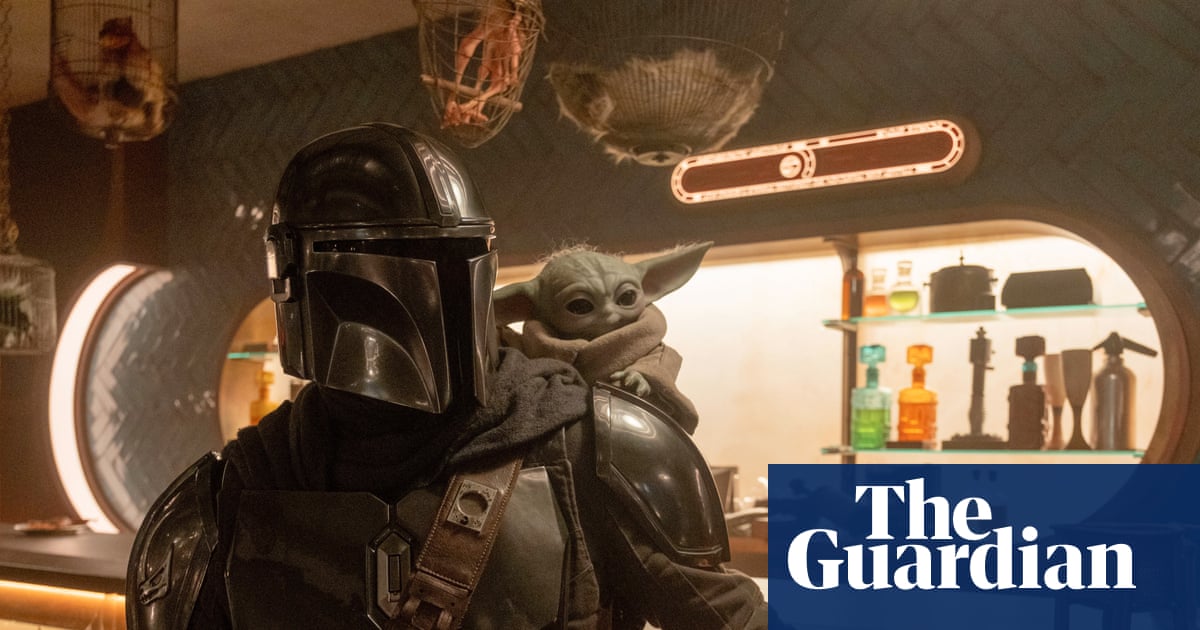
The Mandalorian and Grogu opened with $102m domestically and $165m globally over Memorial Day weekend, but still recorded the weakest Star Wars theatrical launch since Disney bought the franchise. Its $165m global debut fell below Solo: A Star Wars Story's $171m opening and comes against a backdrop of possible Star Wars fatigue, though the film's $165m budget is far lower than Solo's $275m. The piece is mainly a box-office comparison and is unlikely to move markets materially beyond sentiment around Disney's Star Wars franchise.
The key read-through is not “Star Wars is broken,” but that Disney’s theatrical monetization on franchise spinoffs is likely being repriced lower than the company’s internal hurdle rate. A softer-than-expected opening reduces the probability that this becomes a fast payback asset, which matters because Disney has been leaning on a franchise flywheel where films feed streaming retention, merchandise, and parks; if the film underperforms, the halo effect likely shifts from linear synergy to a slower, less certain ROI stack. For DIS, the market should focus on whether this is an isolated comp issue or evidence that brand fatigue is now leaking into adjacent monetization buckets over the next 1-2 quarters.
The second-order effect is on slate strategy: a weaker opening makes Disney more likely to de-risk future theatrical Star Wars budgets and emphasize content with broader four-quadrant appeal. That could be positive for margin discipline, but it also implies fewer event-style release windows, which lowers the tail of upside for the studio segment and could pressure investor sentiment around 2026-2027 franchise pipeline expectations. In other words, the problem is less this single title and more the option value of future franchise launches being marked down.
A near-term offset is that the economics may still work on an absolute basis because the budget is comparatively contained; that makes this more of a multiple/headline risk than a near-term earnings disaster. The larger risk sits in the months ahead: if weekend holds are merely average rather than strong, the market will infer that Disney’s cross-sell thesis into Disney+, toys, and parks is less elastic than hoped. That would matter for DIS because the stock often trades on confidence in ecosystem monetization, not just box office P&L.
Contrarian view: the consensus may be over-penalizing a spin-off for not behaving like a tentpole. For Disney, a mid-tier theatrical result that still supports licensing, merchandising, and streaming engagement can be preferable to a megabudget miss; in that sense, the market may be anchoring on legacy Star Wars benchmarks that are no longer the right comp set. The real tell will be whether the title sustains audience scores into weeks 2-4, because a durable run would validate the lower-budget, ecosystem-led model and partially reverse the sentiment hit.
AI-powered research, real-time alerts, and portfolio analytics for institutional investors.
Request DemoOverall Sentiment
mildly negative
Sentiment Score
-0.15
Ticker Sentiment
