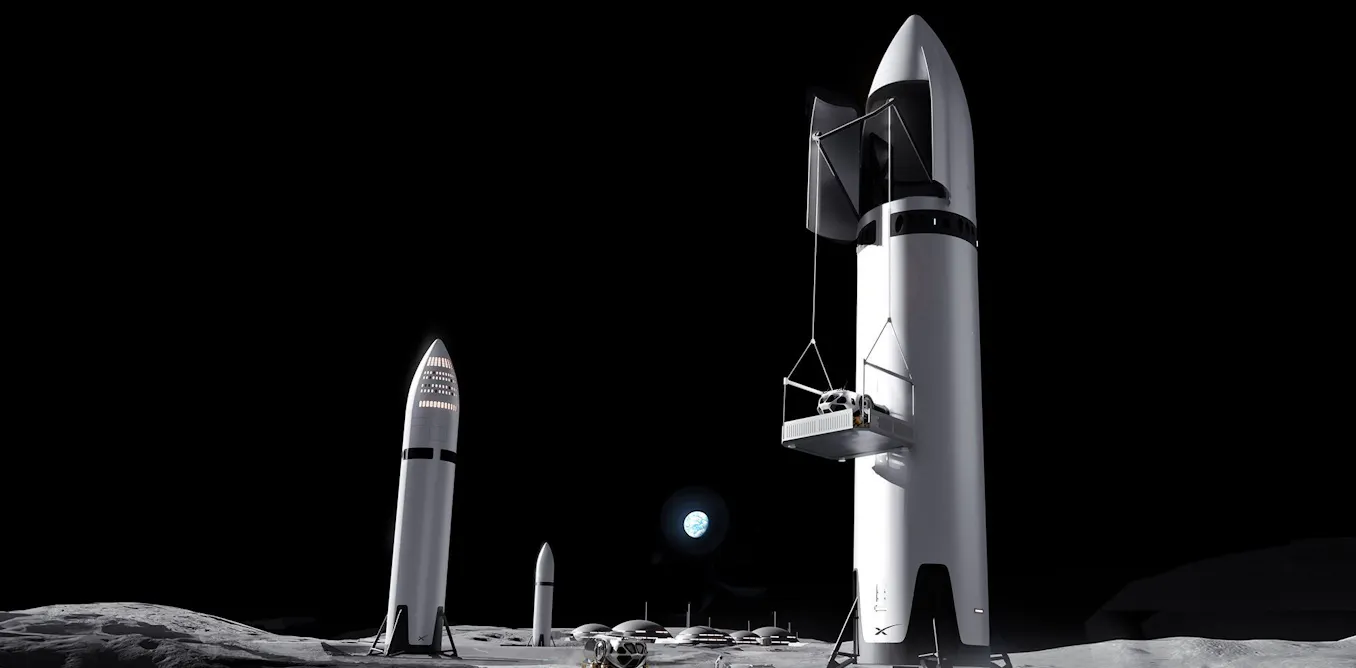
SpaceX's Starship program is encountering significant development delays and technical setbacks, prompting NASA to reopen the lunar lander contract for the Artemis III mission to competitors like Blue Origin, despite SpaceX's initial award. NASA officials have voiced concerns over Starship's progress and its unproven payload capacity, indicating potential financial and operational risks for SpaceX in fulfilling high-profile government contracts. This development underscores the competitive pressures and technical hurdles within the commercial space sector, further complicated by potential instability in NASA's long-term budget and mission planning.
SpaceX's Starship program is encountering significant development hurdles, leading NASA to reopen the Human Landing System (HLS) contract for the Artemis III mission to competitors like Blue Origin. NASA acting administrator Sean Duffy cited Starship delays, despite SpaceX's claim of completing 49 milestones and achieving the "vast majority" on time. This indicates a divergence in assessment between SpaceX and NASA regarding the program's readiness for the 2027 mission.
The Starship's extensive test flight program, characterized by numerous failures including re-entry breakups and explosions, highlights persistent technical challenges. Its advertised 100,000kg payload-to-orbit capacity remains unproven, with the most recent test carrying only 16,000kg, significantly less than the Falcon 9's 22,000kg maximum. This suggests a substantial gap between current performance and the requirements for a lunar mission, which also necessitates multiple orbital refueling launches.
Starship's "do-anything" design philosophy, rather than a focused lunar lander approach, contributes to its complexity and delays, contrasting with the specific problem-solving typical of successful space missions. Furthermore, the Artemis program itself faces instability due to frequent reconfigurations and potential US budget cuts, which could jeopardize international partnerships crucial for elements like the Orion service module and Lunar Gateway. This political and budgetary uncertainty adds another layer of risk to the lunar ambitions.
AI-powered research, real-time alerts, and portfolio analytics for institutional investors.
Request DemoOverall Sentiment
moderately negative
Sentiment Score
-0.50
