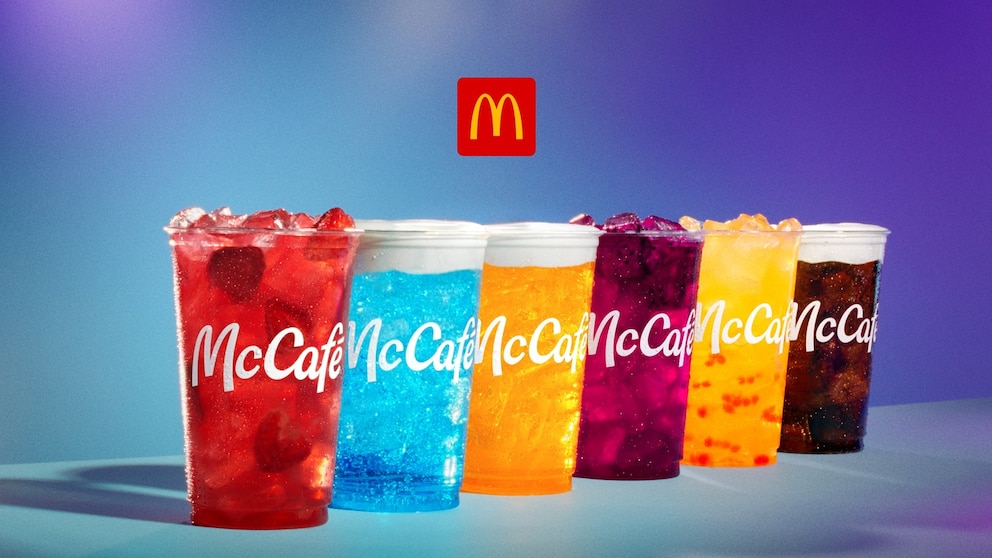
McDonald's will roll out 6 new beverage items nationwide on May 6, including 3 Refreshers and 3 crafted sodas with cold foam, as part of a broader push into the fast-growing specialty drink category. The launch targets younger, customization-oriented consumers and expands a beverage line that management says is already a meaningful growth area across nearly 14,000 U.S. restaurants. The news is modestly positive for McDonald's, but it is primarily a product and marketing update rather than a material financial catalyst.
McDonald’s is not really selling a new drink line; it’s monetizing a higher-margin daypart extension with a format that is operationally easier to scale than food innovation. The first-order read is incremental beverage mix, but the second-order effect is traffic insulation: if these items create even a modest attach-rate uplift among younger consumers, the company can defend same-store sales with less dependence on discounting burgers and fries. That matters because beverages are one of the few categories where price increases are less visible in the total ticket, making them a cleaner lever for margin expansion.
The competitive threat is broader than Starbucks. Chainwide beverage platforms are becoming a weapons race for incremental occasions, and McDonald’s has an underappreciated advantage: distribution density and drive-thru speed. If the launch resonates, it can pressure regional beverage concepts and force rivals to spend harder on promotion, customization, and labor-intensive cold drink execution. The supply-chain consequence is also non-trivial: flavor syrups, cold foam inputs, and boba-like add-ons are lower-ticket but more SKU-complex, which can lift working-capital needs and execution risk across franchise systems if demand spikes unevenly.
The market may be overestimating how fast this becomes a meaningful P&L contributor. Beverage trials often show strong initial social engagement but fade unless they translate into repeat purchase, and that usually takes 2-3 menu refresh cycles over 6-12 months. The key risk is cannibalization: if these drinks mainly substitute for existing fountain sales rather than expanding occasions, the gross margin headline will look better than the true economic impact. Conversely, if the mix skews toward breakfast and afternoon snacking, the launch can quietly improve labor productivity by smoothing throughput outside core meal peaks.
AI-powered research, real-time alerts, and portfolio analytics for institutional investors.
Request DemoOverall Sentiment
mildly positive
Sentiment Score
0.25
Ticker Sentiment
For Starbucks, the threat is not direct share loss overnight but category normalization: once a mass-chain like McDonald’s popularizes ‘custom cold drinks,’ the premium drink moat narrows and consumers become less willing to pay up for branded beverage novelty. The more important tell is whether this changes traffic patterns in the 18-34 cohort; if yes, the category can sustain a longer-than-expected comp tailwind for McDonald’s while pressuring specialty beverage chains to spend more per acquired customer.
